The simple answer is that it can be difficult to tell on your own, but there are certain red flags that may suggest adenomyosis.

While all period pain can feel similar, adenomyosis pain is often much more severe and long-lasting. You might experience a deep, chronic ache that can occur even after your period, or a sharp, knifelike pain during menstruation. Other key signs include heavy bleeding (needing to change a pad or tampon every one to two hours), prolonged periods (lasting more than seven days), passing large blood clots, a constant feeling of bloating, or pain during intercourse. This kind of period pain, along with other symptoms, is a major red flag that should prompt a conversation with a gynaecologist to check for underlying conditions like adenomyosis

As estimated 2.35 crore women in India suffer from adenomyosis.

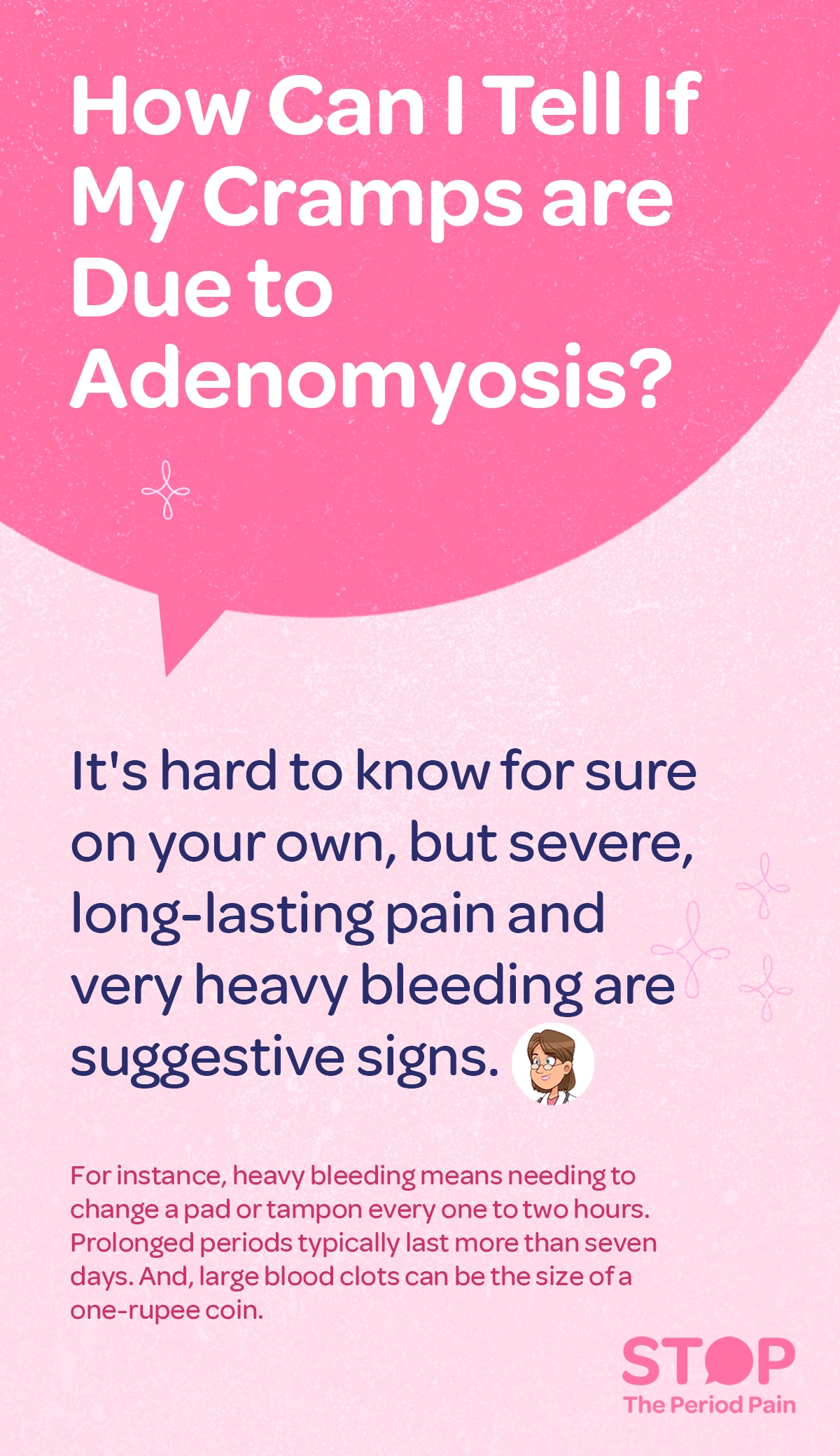
The image features a pink background with bold white and dark blue text asking, "How Can I Tell If My Cramps Are Due to Adenomyosis?" It explains that it’s hard to know for sure on your own, but severe menstrual cramps, long-lasting pelvic pain, and very heavy menstrual bleeding are suggestive signs of adenomyosis symptoms. A small illustration of a female doctor is shown next to the text. Additional details mention heavy period bleeding, such as needing to change a pad or tampon every one to two hours, prolonged menstrual periods lasting more than seven days, and large blood clots the size of a one-rupee coin. The graphic ends with the campaign message "STOP The Period Pain." Which is a knowledge initiative campaign by Blue Cross Laboratories the makers of meftal spas.

Your Journey to #StopThePeriodPain Starts Here

Every month, millions of Indian girls & women suffer in silence, told that their severe period pain (dysmenorrhea) is “normal.” Our mission is to break that silence. #StopThePeriodPain campaign is here to empower you with 3 simple truths:
Period Pain Calculator Section

Hit Up Our Period Pain Calculator

For real, how bad is your pain? Our interactive tool uses a 1-10 pain scale and a few quick questions to help you get the full picture. In just a few clicks, you’ll know if your pain is a chill or a major red flag.