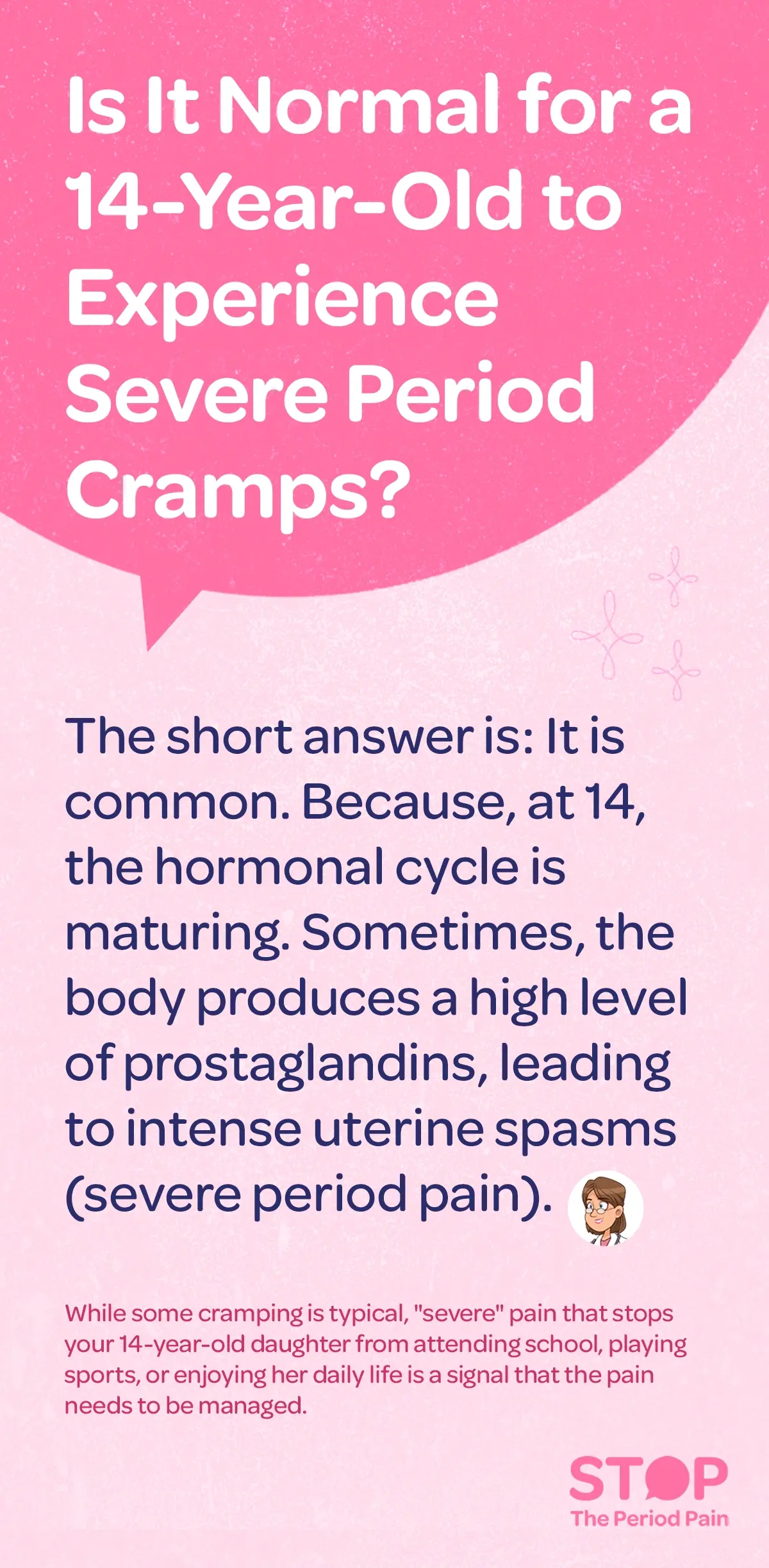
The short answer is: It is common, but it is not something you should have to “just live with.”
Many young girls experience Primary Dysmenorrhea shortly after they begin having periods. This is because the body is still adjusting to the production of prostaglandins—the natural chemicals that cause the uterus to contract. While some cramping is typical, “severe” pain that stops your 14-year-old daughter from attending school, playing sports, or enjoying her daily life is a signal that the pain needs to be managed.
Key points for parents and young patients:
- The Biological Cause: At 14, the hormonal cycle is maturing. Sometimes, the body produces a high level of prostaglandins, leading to intense uterine spasms (severe period pain).
- Validation of Pain: If the pain is severe enough to cause nausea, dizziness, or complete bed rest, it should be treated as a real medical condition, not a “rite of passage.”
- Treatment is Available: You don’t have to wait until you are older to seek relief. Non-hormonal, anti-spasmodic treatments (NSAIDs) are specifically designed to target these cramps and are safe for adolescents when used as directed by a doctor.
The Goal:
Your 14-year-old daughter should be able to go about her day without being sidelined by pain. Clinical relief is a safe and effective way to ensure her period doesn’t interrupt her life.