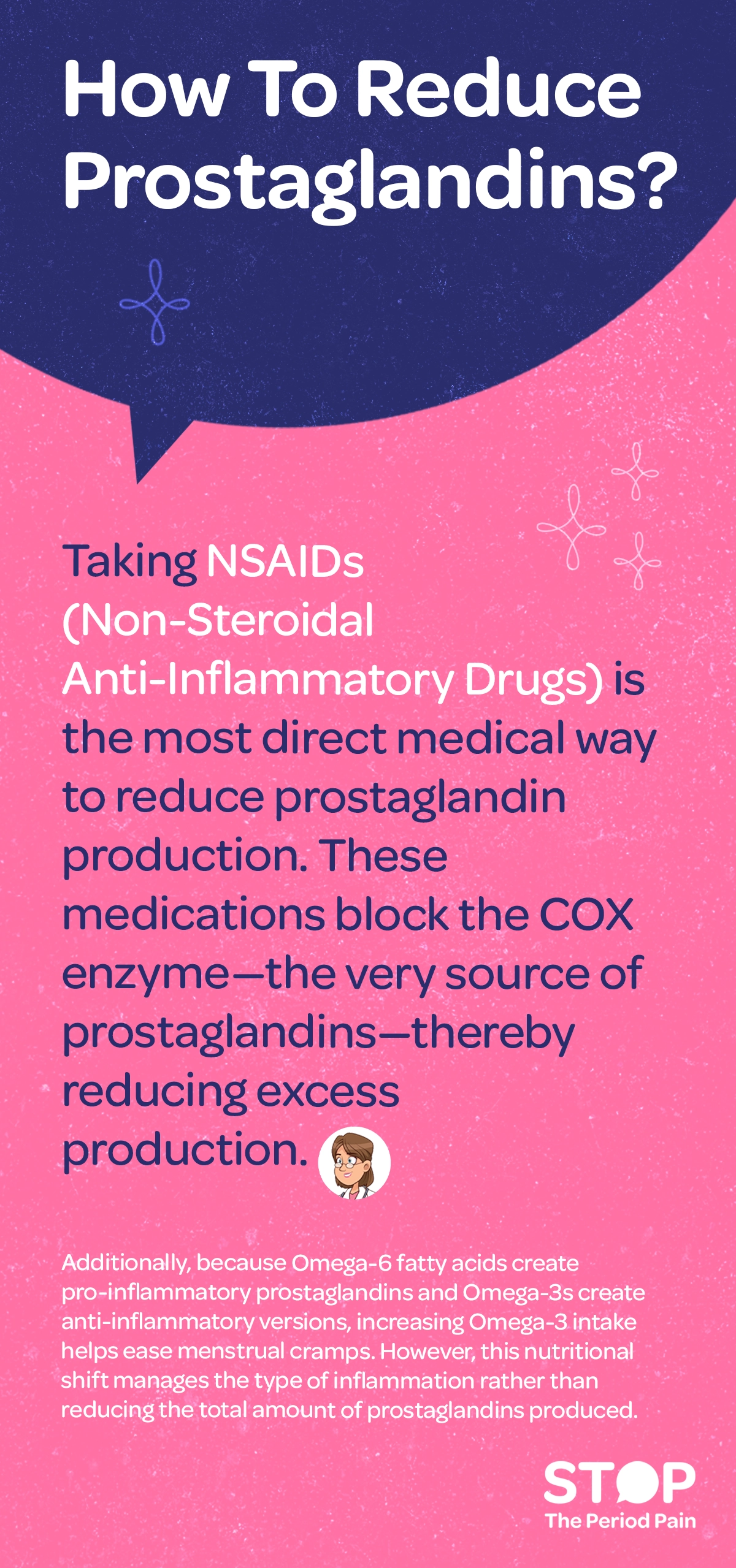
To reduce the amount of prostaglandins your body produces, you must target the chemical process that creates them. Taking NSAIDs (Non-Steroidal Anti-Inflammatory Drugs) is the most direct medical way to inhibit prostaglandin production.
Increasing Omega-3s and reducing Omega-6s in your body changes the chemical makeup of the prostaglandins produced, but it doesn’t reduce the prostaglandins production.
1. Take Prostaglandin Inhibitors (NSAIDs)
This is the most effective medical method to lower production. NSAIDs block the COX enzymes—the biological “source”—from creating prostaglandins in the first place. For NSAIDs to work effectively for excessive period pain, gynaecologists often recommend taking them 12–24 hours before your period cramps begin. This prevents the “prostaglandin storm” from building up.
2. Create Nutritional Shift: Increasing Omega-3 and Reducing Omega-6
Your body builds prostaglandins from the fatty acids stored in your cell membranes.
- The Science: Omega-6 fats (found in many vegetable oils) are the building blocks for “pro-inflammatory” prostaglandins. These prostaglandins create inflammation and increase period pain.
- The Shift: By increasing Omega-3s (found in fish oil or flaxseed) and reducing Omega-6s, your body is forced to build “anti-inflammatory” prostaglandins instead. This literally changes the chemical makeup of what your uterus produces during menstrual cramps.
Note: It is important to remember that a nutritional shift changes the quality of the prostaglandins but does not stop the excess production.
3. Hormonal Contraceptives
In cases of secondary dysmenorrhea, gynaecologists may prescribe hormonal contraceptives. These work by thinning the uterine lining (endometrium). Since the lining is where prostaglandins are produced, a thinner lining results in a significant reduction in the total amount of prostaglandins released.