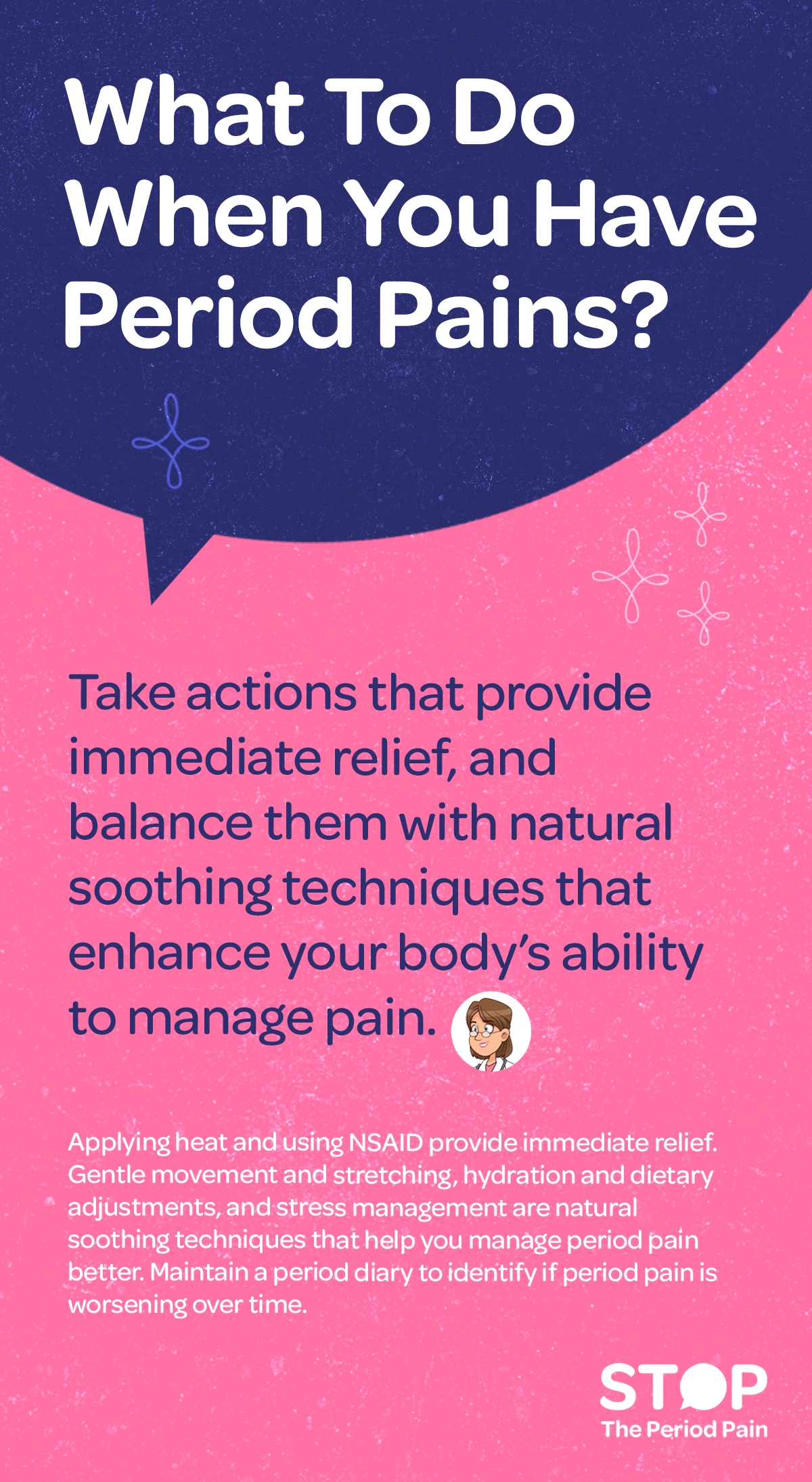
Take actions that provide immediate relief, and balance them with natural soothing techniques that enhance your body’s ability to manage pain.
Here is a step-by-step guide for period pain:
Step 1. Applying Heat (Immediate Relief)
Heat is one of the most effective ways to relax a spasming muscle. Applying a heating pad to the area below your belly button increases blood flow, which helps ease uterine contractions.
Step 2. Taking Period Pain Relief Medications (Immediate Relief)
Gynecologist-prescribed NSAIDs (Non-Steroidal Anti-Inflammatory Drugs) work by blocking the overproduction of prostaglandins before they can cause the uterus to squeeze too hard.
Timing Advise: NSAIDs are most effective when taken at the very first sign of a cramp, rather than waiting for the pain to become severe.
Step 3. Gentle Movement and Stretching
Low-impact activities like walking or ‘Child’s Pose’ (a yoga position for period pain relief) release endorphins—the body’s natural painkillers—which help decrease the intensity of cramps.
Step 4. Hydration and Dietary Adjustments
Step 5. Stress Management
The brain’s perception of pain is heightened when the body is stressed or exhausted. Deep breathing exercises or meditation can help lower stress levels and improve your pain threshold.
Step 6. Maintain A Period Diary
Tracking your pain levels helps identify if period pain is worsening over time or if specific remedies are more effective for you. This data is invaluable when consulting a gynaecologist.