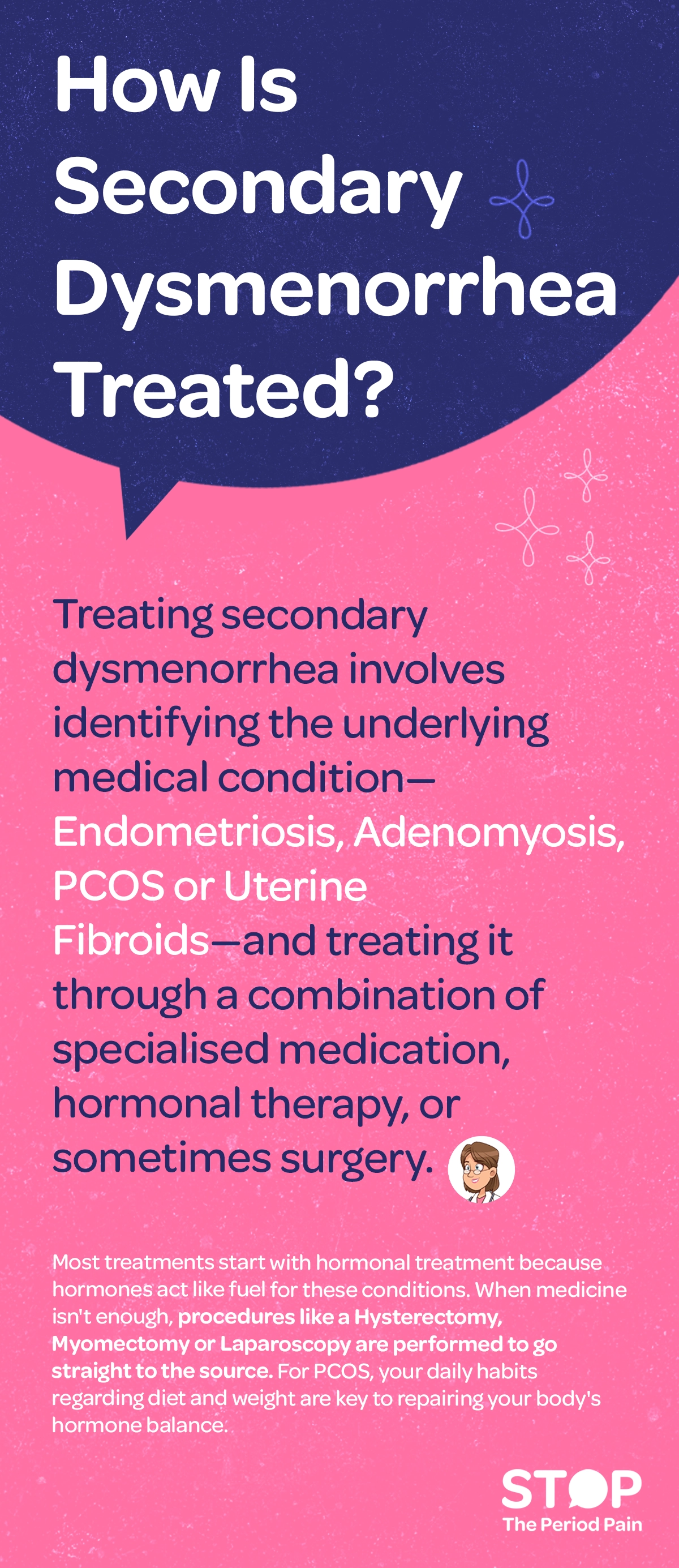
Treating secondary dysmenorrhea involves identifying and treating the underlying medical condition— Endometriosis, Adenomyosis, PCOS or Uterine Fibroids—through a combination of specialised medication, hormonal therapy, or sometimes surgery.
Because this pain is caused by a physical issue in your reproductive system, gynaecologists prescribed NSAISs often aren’t enough. Here is how doctors typically treat secondary dysmenorrhea:
For Endometriosis
- Hormonal Treatment: Medications like birth control pills or hormonal IUDs are used to thin the uterine lining and stop the growth of the misplaced tissue.
- Laparoscopic Surgery: A minimally invasive procedure where a doctor removes the endometrial tissue growths and scar tissue to provide long-term pain relief.
For Adenomyosis
- Hormonal Treatment: The first-line therapy for managing the symptoms of adenomyosis is usually hormonal contraceptives. These help thin the uterine lining and reduce the heavy, painful cramping during your cycle.
- Hysterectomy: The only way to fully stop adenomyosis is with a hysterectomy—a surgery to remove the uterus. This is usually considered a final option for those who have severe symptoms and do not plan on future pregnancies.
PCOS (Polycystic Ovary Syndrome)
PCOS affects everyone differently, so getting an accurate medical diagnosis is the first step. The most common ways to treat PCOS are:
- Hormonal Regulation: Oral contraceptives are often used to regulate the cycle and prevent the formation of new cysts.
- Medications to block androgens: Some medications can block the effects of androgens (male hormones), which helps control symptoms like acne or unwanted hair growth.
- Lifestyle changes: Changes in diet and reduction of weight are recommended, especially for overweight women.
For Uterine Fibroids
- Medication: Drugs used to temporarily shrink the fibroids by blocking the hormones that make them grow.
- Non-Invasive Procedures: Using MRI-guided ultrasound waves to break down the fibroid tissue without surgery.
- Myomectomy: A surgical procedure to remove the fibroids while leaving the uterus intact, which significantly stops the “heavy” cramping sensation.