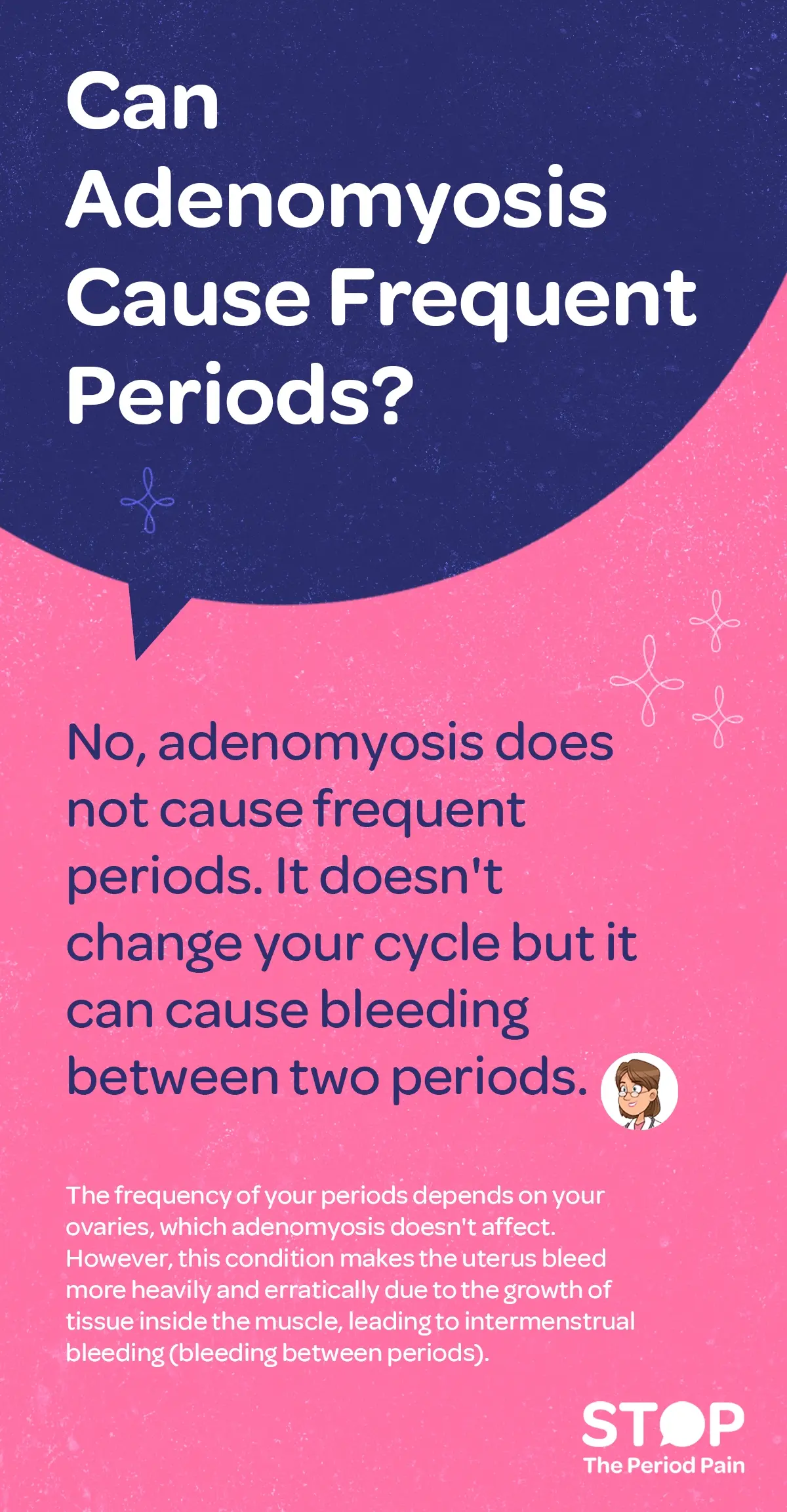
No, adenomyosis does not cause frequent periods.

The frequency of your periods depends on the functioning of your ovaries. Adenomyosis is a condition of the uterus and doesn’t affect your ovaries. However in adenomyosis, the growth of endometrial tissue inside the uterine muscle makes the uterus bleed more heavily and erratically, causing bleeding between periods (known as intermenstrual bleeding).

An estimated 2.35 crore women in India suffer from adenomyosis.

An informational graphic with a pink and dark blue background addresses the question: "Can Adenomyosis Cause Frequent Periods?" in large white and light blue text. The answer, written in dark blue font on the pink background, states: "No, adenomyosis symptoms do not cause frequent periods. It doesn't change your cycle but it can cause bleeding between two periods." Below this, a smaller paragraph explains that the frequency of menstrual periods is controlled by the ovaries, which adenomyosis does not affect. However, adenomyosis causes the uterus to bleed more heavily and unpredictably due to the growth of tissue inside the uterine muscle, resulting in intermenstrual bleeding (bleeding between periods). Decorative line graphics of stars and flowers are scattered in the background. A small illustration of a woman is included next to the main text, and the bottom of the graphic features the phrase "Stop The Period Pain" in bold white and pink text. This image provides clear information about adenomyosis bleeding symptoms and clarifies that adenomyosis does not cause changes in the menstrual cycle frequency but can lead to abnormal uterine bleeding.

Your Journey to #StopThePeriodPain Starts Here

Every month, millions of Indian girls & women suffer in silence, told that their severe period pain (dysmenorrhea) is “normal.” Our mission is to break that silence. #StopThePeriodPain campaign is here to empower you with 3 simple truths:
Period Pain Calculator Section

Hit Up Our Period Pain Calculator

For real, how bad is your pain? Our interactive tool uses a 1-10 pain scale and a few quick questions to help you get the full picture. In just a few clicks, you’ll know if your pain is a chill or a major red flag.