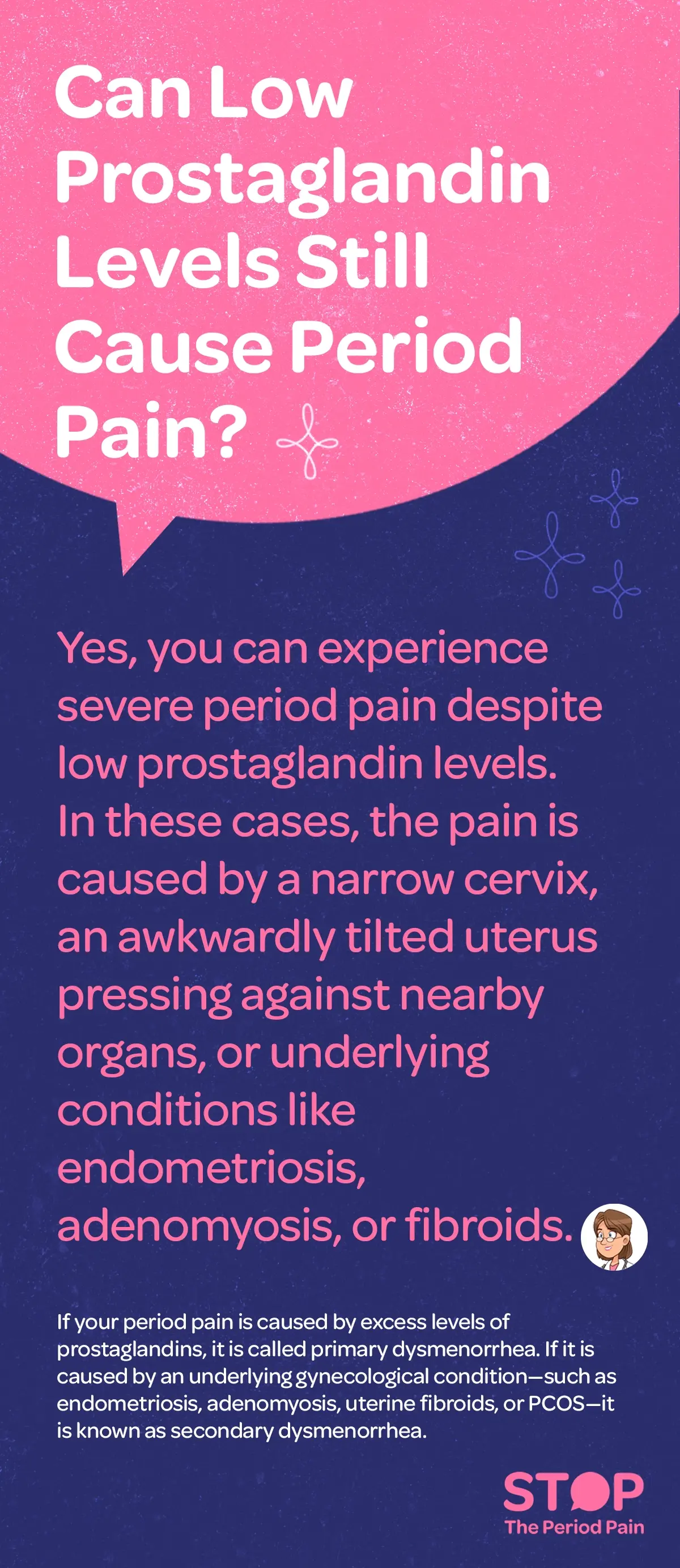
Yes, you can experience severe period pain even with low prostaglandin levels. In such cases, the source of the pain is not the prostaglandins themselves. The factors may include a narrow cervical opening (the door between the uterus and vagina), the anatomical positioning of the uterus (if it is tilted or pressing against the bladder or bowel), or gynaecological conditions such as endometriosis, adenomyosis, or uterine fibroids.
Narrow Cervical Opening
If your cervical opening is narrow, your uterus has to exert more physical force to push the lining out, which results in more intense period pain. Conversely, girls who do not experience period cramps typically have an efficient cervical opening that is just wide enough to allow the lining to pass effortlessly.
Infavourable Uterine Position
If your uterus is tilted (retroverted) or pressing against your bladder or bowels, it creates a constant, dull, dragging sensation during your period. This type of pain is not caused by prostaglandins, but rather by the uterus pressing on nearby organs or nerves as it contracts and becomes inflamed during your periods. For girls with no period cramps, the uterus is positioned perfectly straight and doesn’t press against nearby nerves or organ
Gynaecological Conditions & Diseases
If you have gynecological conditions such as endometriosis, adenomyosis, or uterine fibroids, the source of your period pain is the abnormal growth of the uterine lining, which presents differently in each case.
Did you know? If your period pain is caused by excess levels of prostaglandins, it is called primary dysmenorrhea. If it is caused by an underlying gynecological condition—such as endometriosis, adenomyosis, uterine fibroids, or PCOS—it is known as secondary dysmenorrhea.