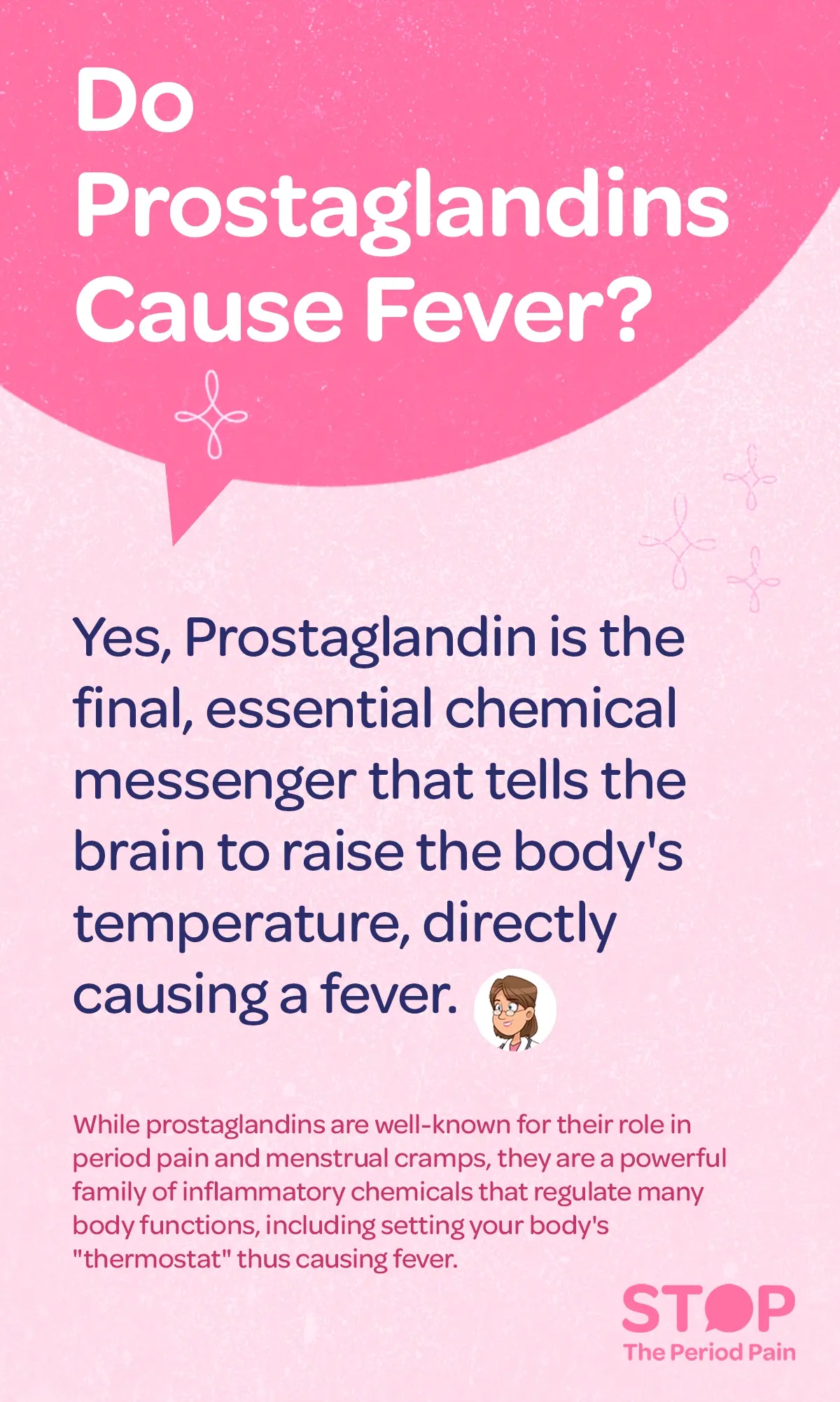
Yes, Prostaglandin is the final, essential chemical messenger that tells the brain to raise the body’s temperature, directly causing a fever.
While prostaglandins are well-known for their role in period pain and menstrual cramps, they are a powerful family of inflammatory chemicals that regulate many body functions, including setting your body’s “thermostat” thus causing fever.
1. Progesterone (The Main Relaxer)
The process that causes a fever (whether from an infection, an injury, or inflammation) always ends with Prostaglandin E2 (PGE2).
- The Brain’s Thermostat: Your body temperature is regulated by a part of the brain called the hypothalamus. It acts like a thermostat, constantly checking the ideal temperature setting.
- The Signal: When your body detects an infection or a large amount of inflammation, it releases prostaglandins. The prostaglandins travel to the hypothalamus and bind to specific receptors.
- The Result: The binding of prostaglandins to the hypothalamus essentially tells the thermostat to raise the temperature set point. Your body then starts generating heat (through muscle tightening and shivering) to reach this new, higher temperature, resulting in a fever.