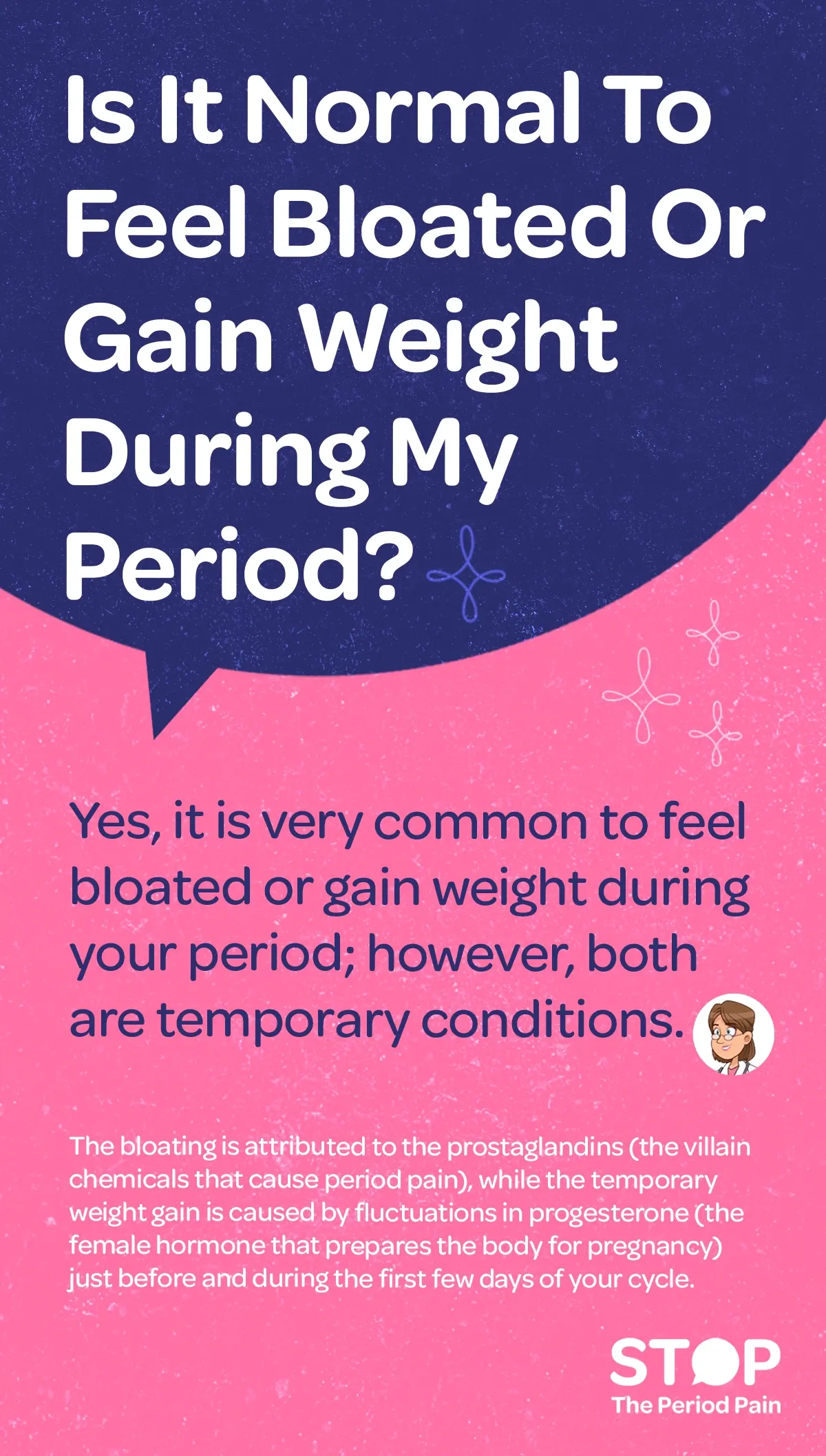
Yes, it is very common to feel bloated or gain weight during your period; however, both are temporary conditions. It is important to note that this weight gain is simply water-weight rather than an accumulation of body fat. This weight gain typically reverses itself once your period is over.
The bloating is attributed to the prostaglandins (the villain chemicals), while the temporary weight gain is caused by fluctuations in progesterone (the female hormone that prepares the body for pregnancy) just before and during the first few days of your cycle.
Here’s a deeper explanation of the science:
Why Do You Feel Bloated During Periods?
While prostaglandins primarily stay in the uterus, excess production can leak into the bloodstream and reach the intestines. Once in the digestive tract, they can slow down food movement, leading to constipation and trapped gas which make you feel bloated. Additionally, when gut bacteria ferment sugary foods (which you may consume in excess because of cravings), they produce extra gas, intensifying that heavy, stomach bloated sensation.
Why Do You Gain Weight During Periods?
- Just before your period, progesterone levels in your body increase rapidly.
- Interestingly, the progesterone hormone is structurally very similar to aldosterone—the salt-retaining-hormone that signals your kidneys to hold onto sodium.
- Because they are so similar, progesterone actually blocks the aldosterone receptors, which initially results in a loss of sodium and water.
- Your body senses this loss and reacts by producing even more aldosterone to compensate.
- By the time your body has produced this extra aldosterone, your progesterone levels suddenly drop. This leaves your system with an excess of aldosterone, which forces your body to retain salt and water. This results in temporary weight gain—often between 1 to 2 kg—and noticeable puffiness in your face, hands, and feet, commonly linked to bloating during period weight gain.