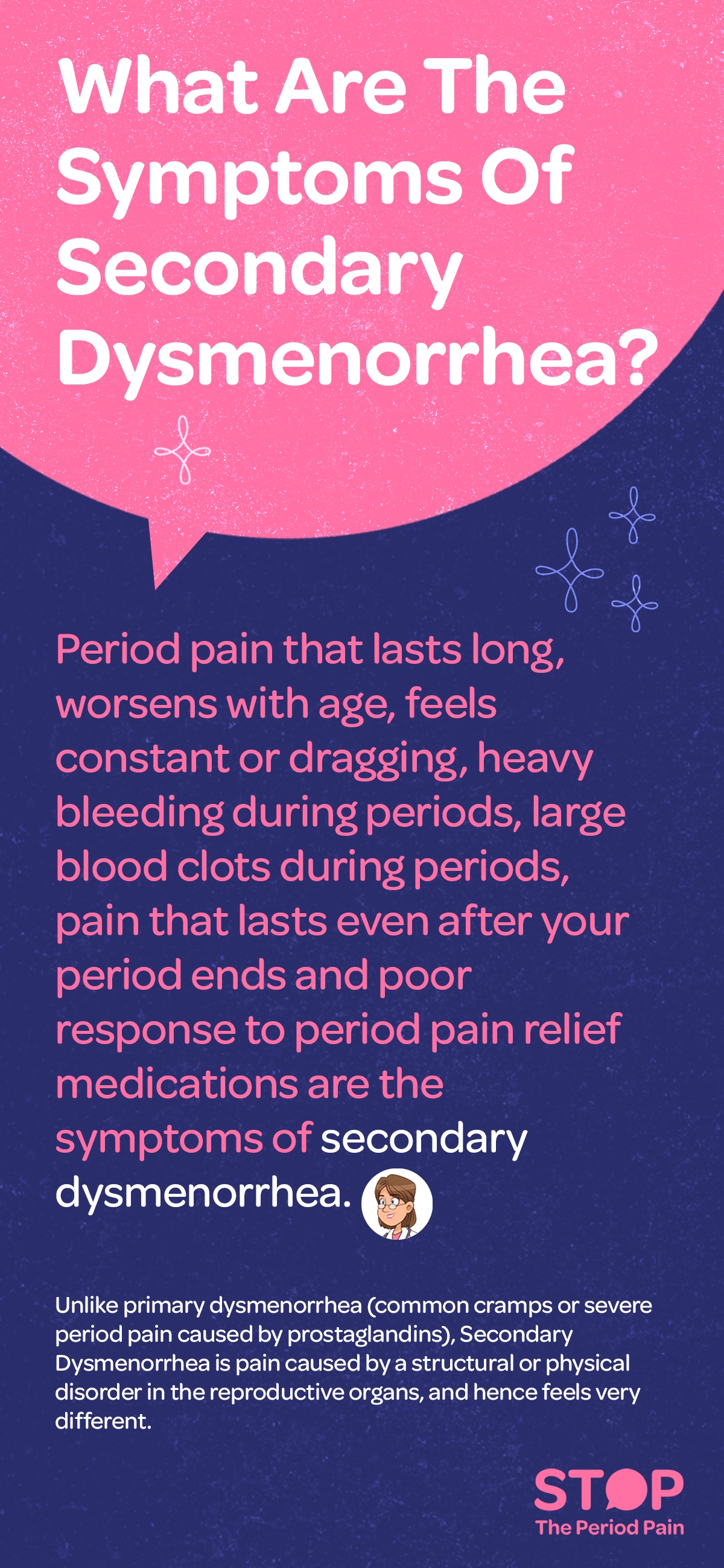
Period pain that lasts long, worsens with age, feels constant or dragging, heavy bleeding during periods, large blood clots during periods, pain that lasts even after your period ends and poor response to period pain relief medications are the symptoms of secondary dysmenorrhea.
Unlike primary dysmenorrhea (common cramps or severe period pain caused by prostaglandins), Secondary Dysmenorrhea is pain caused by a structural or physical disorder in the reproductive organs. Because the cause is physical, the symptoms often feel different and are usually more resistant to standard period pain relief tips.
Understanding Common Signs of Secondary Dysmenorrhea
If you are experiencing any of the following, your period pain may be secondary dysmenorrhea:
- Period pain that starts earlier and lasts longer The pain often begins several days before your period starts and can continue even after your flow has stopped.
- Period pain is worsening with age While common period cramps often improve as you get older, secondary dysmenorrhea tends to get progressively worse over time.
- Period pain that is not just crampy In secondary dysmenorrhea, your period pain may feel like a constant, heavy, or dragging pressure in the pelvic area or lower back.
- Heavy or prolonged bleeding Many women with secondary dysmenorrhea also experience flooding (soaking through pads quickly) or passing large blood clots.
- Pain outside the period You may experience pelvic pain during ovulation, during bowel movements, or during/after sexual intercourse.
- Poor response to period pain relief medication
If gynaecologist-prescribed NSAIDs provide little to no relief, it is usually a major indicator of secondary dysmenorrhea.
What causes symptoms of secondary dysmenorrhea?
Secondary dysmenorrhea is a signal from your body that one of the following conditions may be present:
- Endometriosis: Tissue similar to uterine lining abnormally grows outside the uterus, causing inflammation and scarring.
- PCOS: Cysts on ovaries prevent them from releasing egg regularly.
- Adenomyosis: The uterine lining abnormally grows into the muscle wall of the uterus, causing the uterus to become bulky and tender.
- Uterine Fibroids: Non-cancerous growths that develop within or on the walls of the uterus putting pressure on the pelvic cavity.