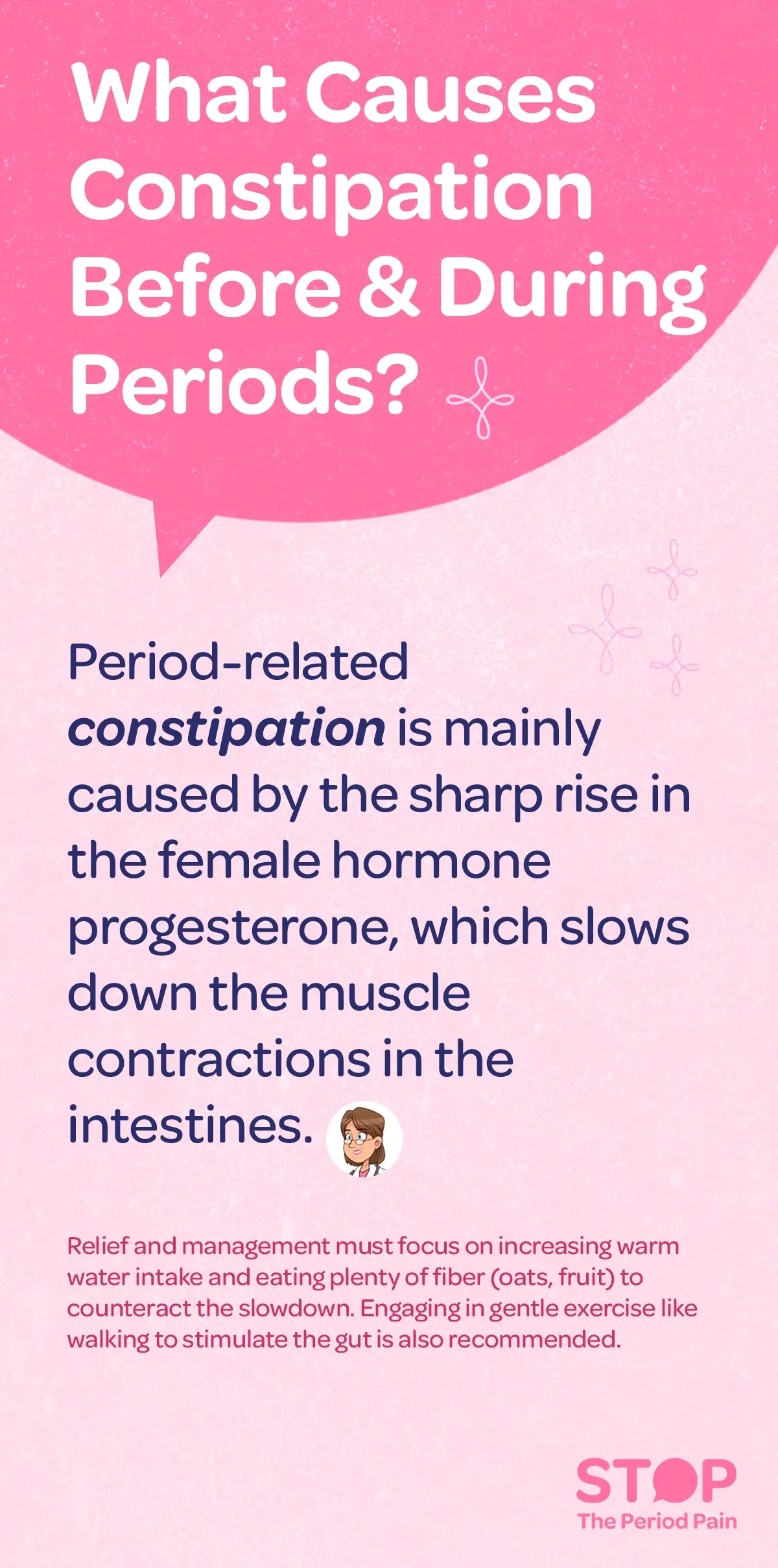
Period-related constipation is mainly caused by the sharp rise in the female hormone progesterone, which slows down the muscle contractions in the intestines.

Constipation and difficult bowel movements are common in the days leading up to and during the start of your period. While diarrhea during periods is due to excess production of prostaglandins, the preceding constipation is caused by hormonal shifts.

The Cause: Progesterone Slowdown

    1. Progesterone Rises: After you ovulate (mid-cycle), your body raises the level of the hormone progesterone. Its main job is to keep your uterus relaxed and still, preparing it for a possible pregnancy.
    2. The Slowdown Effect: This hormone affects all smooth muscles in your body, including the muscles in your intestines (gut). Progesterone makes these muscles slow down.
    3. The Result: Hard, Dry Stool: When the gut muscles move slowly:
      1. Stool stays in your intestines longer.
      2. Your body pulls too much water out of the stool.
      3. This makes the stool harder, drier, and very difficult to pass, causing constipation.

Quickest Relief and Management

The best way to manage period-related constipation is to counteract the slowing effect of progesterone through diet and hydration.

  1. Increase Hydration: Drink plenty of warm water throughout the day. Warm water helps relax the digestive muscles and adds moisture to the stool, making it easier to pass.
  2. Fiber Power: Increase your intake of soluble fiber (oats, beans, fruits). This fiber adds bulk and softness to the stool.
  3. Gentle Movement: Regular gentle exercise, even just a 20-minute walk, helps to gently stimulate intestinal muscle movement.
Illustration explaining why constipation occurs before and during menstruation, incorporating period constipation, hormonal constipation, and PMS digestive symptoms. The image shows a woman holding her lower abdomen with a mildly uncomfortable expression, reflecting menstrual bloating and period digestive issues. Next to her is a simple diagram of the digestive tract with slowed intestinal movement indicated by arrows, emphasizing progesterone and digestion. A label highlights ‘High Progesterone Levels’ as the cause of reduced muscle contractions in the intestines, supporting the concept of hormone-related constipation. Surrounding the main figure are small icons representing recommended relief methods: a steaming mug labeled ‘Warm Water,’ a bowl of oats and fruits labeled ‘High-Fiber Foods,’ and a walking figure labeled ‘Gentle Exercise,’ all aligning with natural constipation relief and period constipation remedies. The graphic portraits the campaign message "STOP The Period Pain." Which is a knowledge initiative campaign by Blue Cross Laboratories the makers of meftal spas

Your Journey to #StopThePeriodPain Starts Here

Every month, millions of Indian girls & women suffer in silence, told that their severe period pain (dysmenorrhea) is “normal.” Our mission is to break that silence. #StopThePeriodPain campaign is here to empower you with 3 simple truths:

Period Pain Calculator Section

Hit Up Our Period Pain Calculator

For real, how bad is your pain? Our interactive tool uses a 1-10 pain scale and a few quick questions to help you get the full picture. In just a few clicks, you’ll know if your pain is a chill or a major red flag.