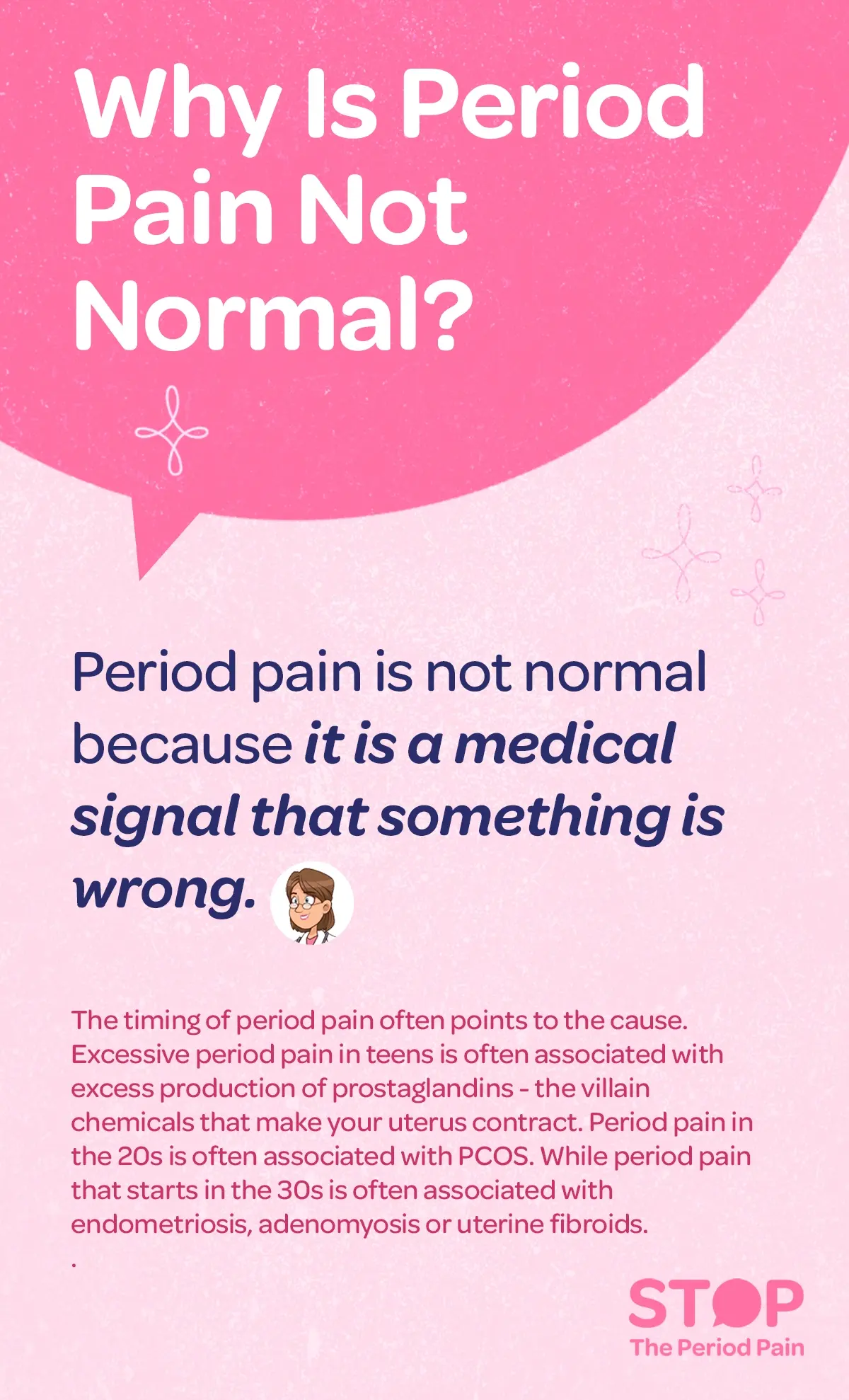
Period pain is not normal because it is a medical signal that something is wrong. The timing of the period pain often points to the cause:

  • If period pain is excessive in teens: It is a signal of the excess production of prostaglandins (the villain chemicals that make the uterus contract).
  • If period pain starts in your mid-20s: It could be a sign of PCOS.
  • If period pain starts in your 30s: It could be a sign of Endometriosis, Adenomyosis, or Uterine Fibroids.

When Does Period Pain Become Not Normal?

Every period will have some pain—that is a medical fact. A period involves inflammation in the body, and inflammation creates pain. However, it should be treated as not normal when:

  • Period pain stops your life: It is so severe that it makes you miss school, college, the office, or social plans.
  • Period pain brings other symptoms: It is severe enough to cause massive headaches, back pain, or leg pain. While a one-off episode might be okay, a repeat pattern is not.
  • Period pain is a new development: You had no pain in your teens, but it started in your 20s or 30s. This usually indicates an underlying physical issue with your reproductive system. The issues could be Endometriosis, Adenomyosis, PCOS, or Uterine Fibroids.

The Cost of Normalising Period Pain
The reason we must stop treating period pain as normal is that doing so delays life-changing medical help. When period pain is dismissed, it results in a delay of diagnosis and severely impacts your quality of life.

Currently, because period pain isn’t taken seriously, there is an average 8 to 11-year delay in diagnosing Endometriosis, and also a delay in diagnosing other conditions such as adenomyosis and uterine fibroids.

Infographic text titled “Why Is Period Pain Not Normal?” explaining that period pain should not be considered normal because it can be a medical signal that something in the body may be wrong. It states that the timing or age when period pain occurs can often point to possible causes. Excessive period pain in the teenage years is commonly linked to high levels of prostaglandins, chemicals that trigger strong uterine contractions and increase pain. Period pain in the 20s is often associated with Polycystic Ovary Syndrome (PCOS), a hormonal condition that affects ovulation and menstrual cycles. Period pain that begins in the 30s may be linked to conditions such as Endometriosis, Adenomyosis, or Uterine Fibroids, which involve abnormal growth of uterine tissue or benign tumors in the uterus and can lead to significant menstrual pain. The message emphasizes that ongoing or severe period pain at different life stages may indicate underlying health issues and should not be ignored.

Your Journey to #StopThePeriodPain Starts Here

Every month, millions of Indian girls & women suffer in silence, told that their severe period pain (dysmenorrhea) is “normal.” Our mission is to break that silence. #StopThePeriodPain campaign is here to empower you with 3 simple truths:

Period Pain Calculator Section

Hit Up Our Period Pain Calculator

For real, how bad is your pain? Our interactive tool uses a 1-10 pain scale and a few quick questions to help you get the full picture. In just a few clicks, you’ll know if your pain is a chill or a major red flag.

Don’t Take Period Pain Lightly.

Period pain (dysmenorrhea) is a real medical issue.
Visit a gynaecologist and #StopThePeriodPain

Don't take period pain lightly