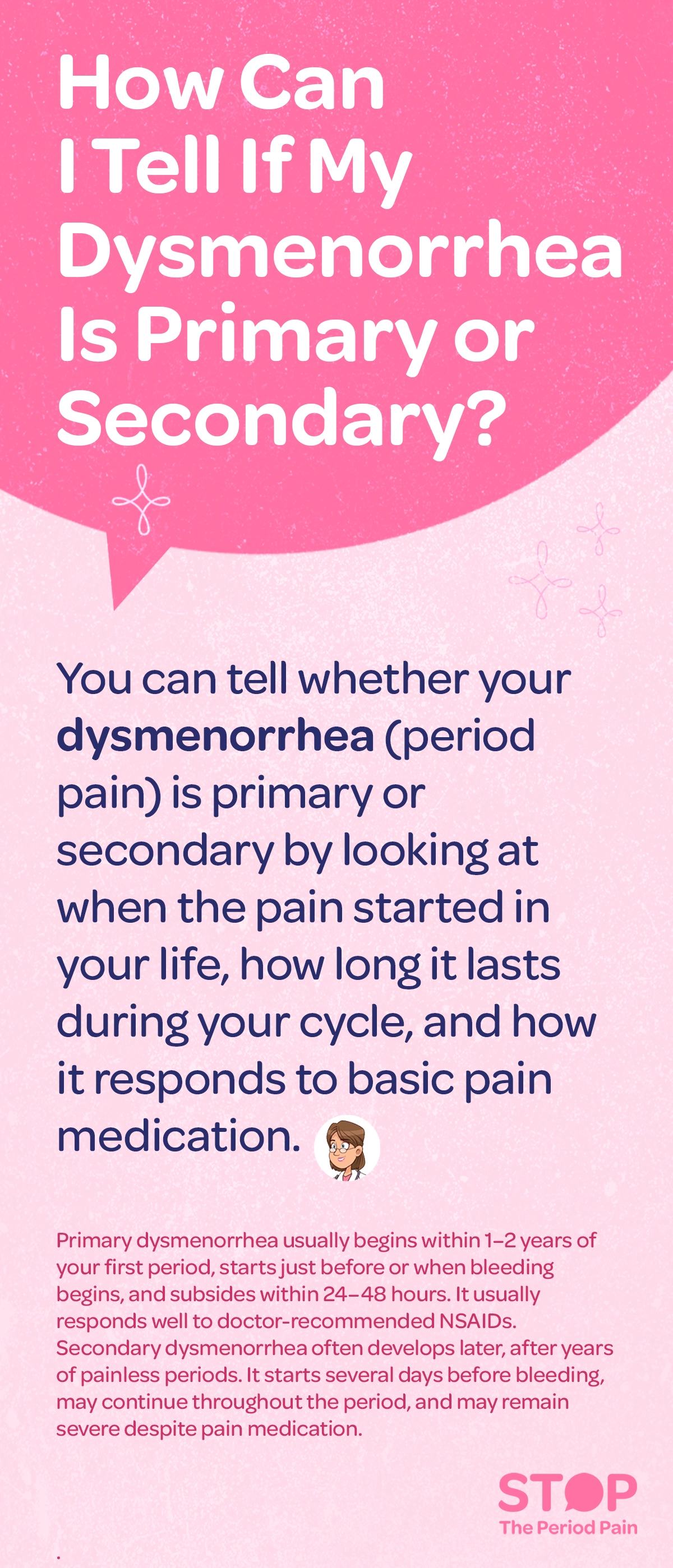
You can tell whether your dysmenorrhea (period pain) is primary or secondary by looking at when the pain started in your life, how long it lasts during your cycle, and how it responds to basic pain medication.

Here are the key differences to help you identify which type you may have:

  • When the Pain Started in Your Life: Primary dysmenorrhea usually starts within 1–2 years of getting your very first period as a teenager. Secondary dysmenorrhea typically develops later in adulthood (in your mid-20s, 30s, or 40s) or suddenly appears after years of painless cycles.
  • How Long the Pain Lasts During Your Menstrual Cycle: Primary dysmenorrhea starts 1–2 days before or right when bleeding begins, and subsides within 24–48 hours. Secondary dysmenorrhea often begins days before bleeding starts, lasts throughout the entire period, and may even cause chronic pelvic pain, irregular bowel movements, and painful sexual intercourse.
  • How the Pain Responds to Basic Pain Medication: Primary dysmenorrhea usually improves significantly with standard doctor-recommended NSAIDs. Secondary dysmenorrhea often remains intense even after taking pain medication.
Infographic comparing primary and secondary dysmenorrhea, highlighting differences in when menstrual pain begins, how long cramps last, associated symptoms, and response to NSAID pain relief. Primary dysmenorrhea typically starts within a few years of the first period and improves within one to three days, while secondary dysmenorrhea may develop after years of painless periods and can involve persistent pelvic pain or painful intercourse.

Your Journey to #StopThePeriodPain Starts Here

Every month, millions of Indian girls & women suffer in silence, told that their severe period pain (dysmenorrhea) is “normal.” Our mission is to break that silence. #StopThePeriodPain campaign is here to empower you with 3 simple truths:
Period Pain Calculator Section

Hit Up Our Period Pain Calculator

For real, how bad is your pain? Our interactive tool uses a 1-10 pain scale and a few quick questions to help you get the full picture. In just a few clicks, you’ll know if your pain is a chill or a major red flag.

References:

Don’t Take Period Pain Lightly.

Period pain (dysmenorrhea) is a real medical issue.
Visit a gynaecologist and #StopThePeriodPain

Don't take period pain lightly