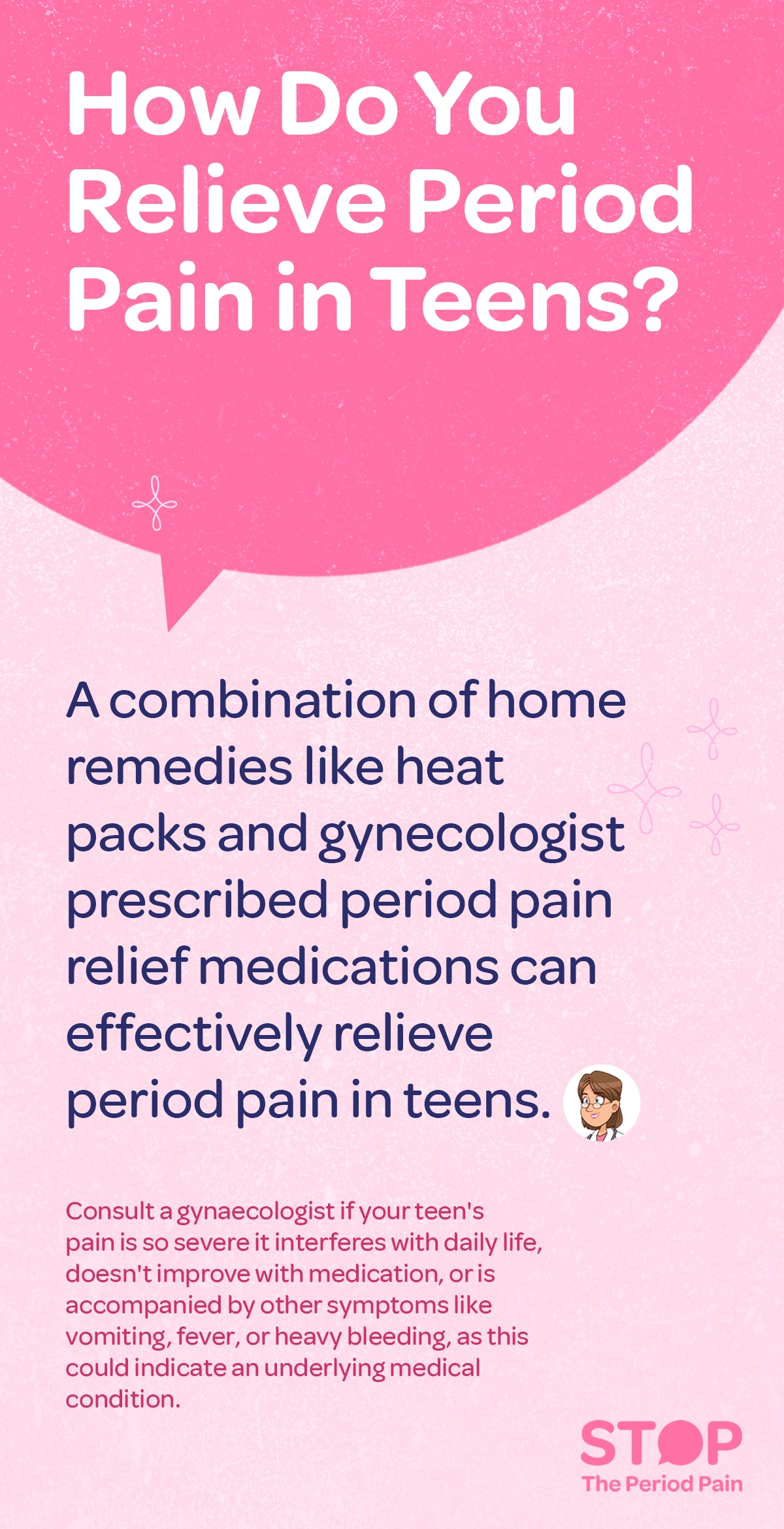
Mild to moderate period pain in teens can often be managed with a combination of heat therapy and period pain relief medications also known as non-steroidal anti-inflammatory drugs (NSAIDs).
The pain is caused by prostaglandins, which are hormone-like chemicals that cause the uterus to contract. These contractions help shed the uterine lining but can lead to cramping and discomfort. Non-steroidal anti-inflammatory drugs (NSAIDs) are highly effective because they block the production of prostaglandins, which cause period cramps.
When to See a Doctor:
It is important to consult a doctor or gynaecologist if the period pain is severe and affects daily activities like going to school or playing sports, if it does not improve with medication, or if it is accompanied by other symptoms like vomiting, fever, or unusually heavy bleeding. These could be signs of an underlying medical condition.
An estimated 60-90% of teenage girls and young women in India experience period pain, yet this discomfort is often dismissed with the phrase, “Period pain sabko hota hai.”