If you are unsure about any aspect of your period (also called menstrual cycle), you are in the right place. While the internet is full of conflicting advice, this is the most comprehensive guide on period problems written especially for Indian girls and women.
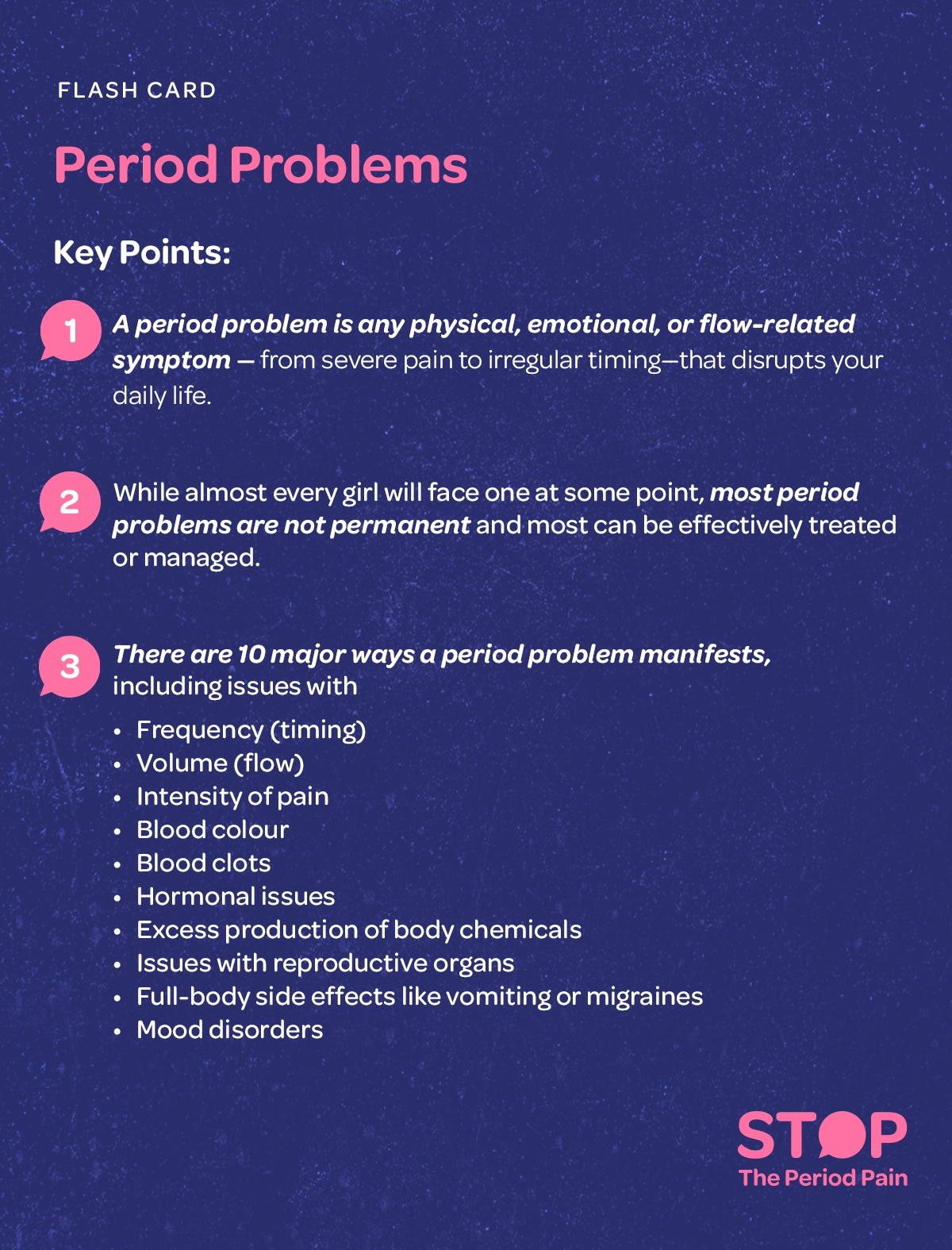
A period problem is more than just a medical term; it is any symptom—whether physical, emotional, or flow-related—that disrupts your quality of life. This guide is designed to help you understand your period problem and seek appropriate help.
Below is everything you need to know to stop guessing and start understanding your period problem.
In This Story
- Introduction
- Period Problems Related to Frequency
- Period Problems Related To Bleeding
- Period Problems Related To Colour of Blood
- Period Problems Related To Intensity Of Pain
- Period Problems Related To Body Chemicals (Prostaglandins)
- Period Problems Related To Hormonal Imbalance: PCOS
- Period Problems Related to Abnormalities in Reproductive Organs
- Period Problems Related to Blood Clots
- Period Problems Beyond The Uterus
- Period Problem Related to Mood Swings & Mood Disorders
- Gynaecologist’s Advise
- The Moral of the Story
- More Stories To Read
- The Answers You’ve Been Looking For
- References
Period Problems Related to Frequency
Before we dive into duration specific period problems, it is important to understand the usual duration of a menstrual cycle. For most women, a healthy cycle lasts between 21 to 35 days. The bleeding itself typically lasts for 3 to 7 days.
Think of your cycle as a clock. If the clock starts ticking too fast, too slow, or stops altogether, it is a signal that something internally needs attention. When your menstrual cycle falls outside these standard windows, it is categorised into one of the following period problems.
Amenorrhea: Absence of Periods (For 3 months or more)
This is often described as a “no-show”. Amenorrhea is the complete absence of periods and is frequently linked to high levels of stress, significant weight changes, or hormonal imbalances like PCOS. If you or someone you know has missed three or more periods in a row, it is a sign that should not be ignored.
Oligomenorrhea: Infrequent Periods (More than 35 days apart)
This is a period problem where your cycles are more than 35 days apart. It is one of the most common symptoms for those dealing with hormonal issues such as PCOS.
Polymenorrhea: Frequent Periods (Less than 21 days apart)
On the opposite end of the spectrum is Polymenorrhea, where your period comes too often—specifically less than 21 days apart. This can be particularly exhausting as frequent blood loss often leads to fatigue and anemia. It usually indicates that the “fine-tuning” of your hormones or ovulation is slightly off-balance.
Period Problems Related To Bleeding
After understanding the timing of your cycle, the next critical period problem to identify is the volume of your flow. Many girls in India struggle to know if their bleeding is “normal” because we rarely talk about the actual amount of blood lost.
How much is a "Normal Flow” in a period?
A typical menstrual period involves a total blood loss of about 30ml to 80ml. Since you won’t measure the volume of blood loss, understand that using 3 to 6 regular-sized pads or tampons per day is generally considered a normal flow.
If your flow requires significantly more or less than this, you may be experiencing one of the following period problems.
Menorrhagia: Heavy Bleeding (Period lasts more than 7 days)
This is when a period turns into a flood. Menorrhagia is defined as bleeding that is excessively heavy or lasts longer than 7 days.
- The Experience: You have to change your pad every hour for several hours in a row or wake up at night to change it.
- Red Flag: Passing blood clots larger than a 1-rupee coin is a major sign of Menorrhagia. This level of blood loss can lead to iron deficiency anemia, causing you to feel constantly tired or weak.
- Causes: It is often linked to conditions like uterine fibroids, endometriosis, or adenomyosis.
Hypomenorrhea: Light Bleeding (Period lasts only 1-2 days)
On the opposite end is Hypomenorrhea, which is unusually light bleeding that may last only a day or two.
- The Experience: Your flow might feel like “spotting” rather than a true period. While this can be normal for some, it is sometimes a signal of low estrogen levels or hormonal shifts.
Metrorrhagia: Bleeding Between Periods
This is the surprise guest of period problems. Metrorrhagia refers to irregular bleeding or spotting that occurs between your expected regular cycles.
- The Experience: You might notice staining or light bleeding a week or two after your period has ended.
- Causes: This can be caused by anything from simple hormonal fluctuations to small growths like uterine polyps or infections.
Period Problems Related To Colour of Blood
The color of your period blood is like a monthly health report card. It is a direct signal of how long the blood has been in your uterus and can even point toward specific period problems. While bright red colour is perfect
Dark Red, Brown, or Black
This is usually older blood that has taken longer to leave the body and has oxidized. It is very common at the very start or end of your cycle.
Pinkish or Watery Blood
This can sometimes be a sign of low estrogen levels or, in some cases, a nutritional deficiency like anemia—which is very common in India.
Orange, Grayish or Green: Major Red Flag
This is a major red flag. If your blood is grayish, greenish or has an orange tint accompanied by a foul smell or itching, it could be a sign of an infection that needs immediate medical attention.
If you are interested for a deeper understanding, please read our blog What Does Your Period Colour Say About Your Health?
Period Problems Related To Intensity Of Pain
After tracking your timing and flow, the most critical period problem to address is the intensity of pain you feel. In many Indian households, severe pain is often dismissed with a simple “beta, period pain sabko hota hai” (everyone has period pain). But just as you wouldn’t guess your body temperature, you shouldn’t guess the intensity of your cramps. Severe period pain (called dysmenorrhea) is India’s biggest period problem with 80% girls suffering from it.
Do you suffer from severe period pain? To move from guessing to knowing, calculate your period pain score using our period pain calculator.
Normal Pain to Mild Pain: Scale 1 - 5
You feel a slight dull ache in your lower belly (below your belly button). You can go to school or work and manage daily chores without needing medication.
Moderate Pain: Scale 6 - 7
The pain is noticeable and distracting. You need a heating bag or a period pain relief tablet like NSAID (Non-Steroidal Anti-Inflammatory Drug) to get through your day, but you are still “functional.”
Severe Pain: Scale 8 - 10
This is excessive period pain. It leaves you unable to attend classes or work. Since the pain keeps you home for consecutive days or makes you feel helpless, it is a major red flag.
Hit Up Our Period Pain Calculator
For real, how bad is your pain? Our interactive tool uses a 1-10 pain scale and a few quick questions to help you get the full picture. In just a few clicks, you’ll know if your pain is a chill or a major red flag.

Period Problems Related To Body Chemicals (Prostaglandins)
As you just learnt that severe period pain is called dysmenorrhea. In a majority of cases, the reason is excess production of prostaglandins. As you know prostaglandins cause the uterus to squeeze and start your period. When they are produced in excess, they cause the uterus to squeeze very tightly and thus cause severe period pain. To treat this period problem, gynaecologists prescribe NSAIDs (Non-Steroidal Anti-Inflammatory Drugs) which stop the excess production of prostaglandins and thus ease period pain.
Why do periods hurt so much? Watch this 45 second video:
Period Problems Related To Hormonal Imbalance: PCOS
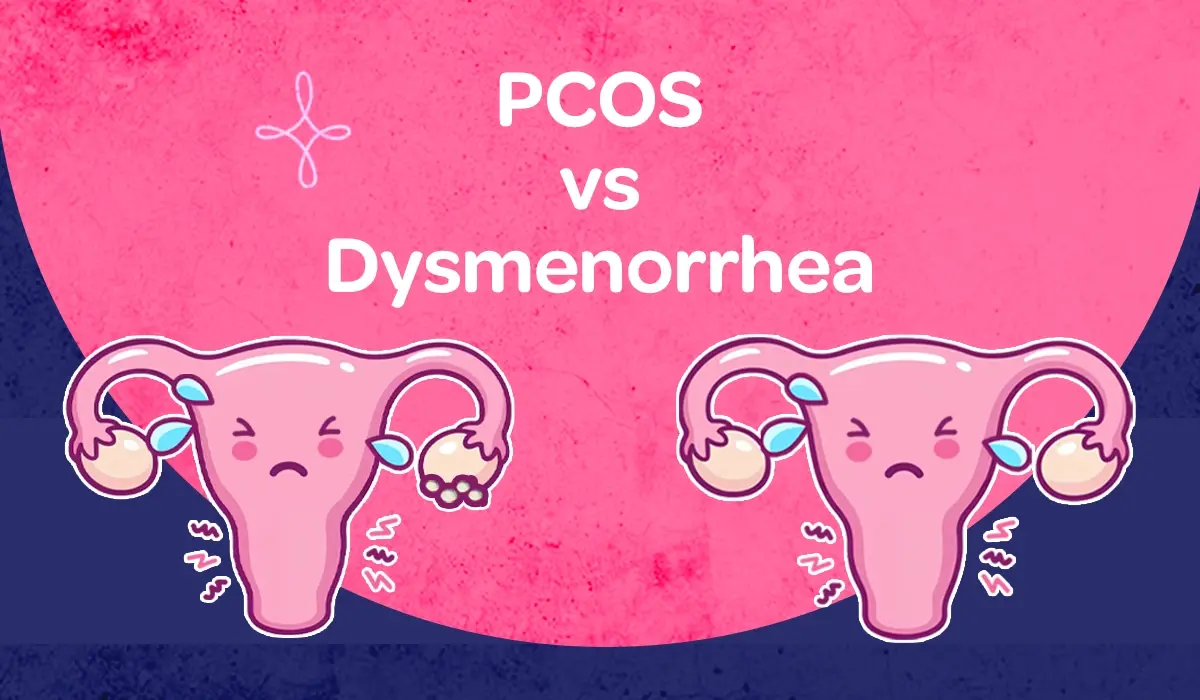
Polycystic Ovary Syndrome (PCOS) is a common hormonal disorder where the ovaries produce higher-than-normal levels of male hormones (androgens). This imbalance often leads to Oligomenorrhea (infrequent periods) or Amenorrhea (absence of periods). And, here’s why PCOS causes painful periods.
Period Problems Related to Abnormalities in Reproductive Organs
When severe pain develops later in life it is often caused by physical abnormalities in the reproductive organs, such as below:
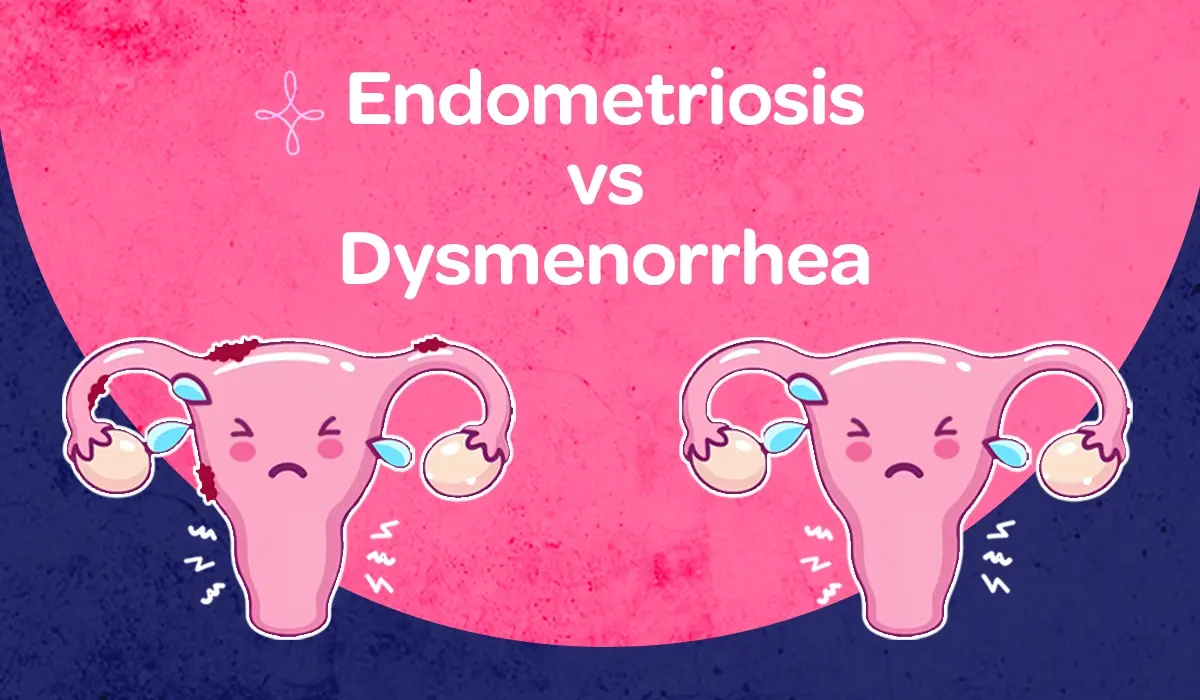
- Endometriosis: This occurs when tissue similar to the uterine lining grows outside the uterus (on ovaries or fallopian tubes), causing intense pain and inflammation. (For 4.2 crore women in India, what seemed like “normal” period pain turned out to be a key symptom of endometriosis. On average, it takes 8 to 11 years from the first symptoms for a girl in India to be correctly diagnosed with endometriosis.)
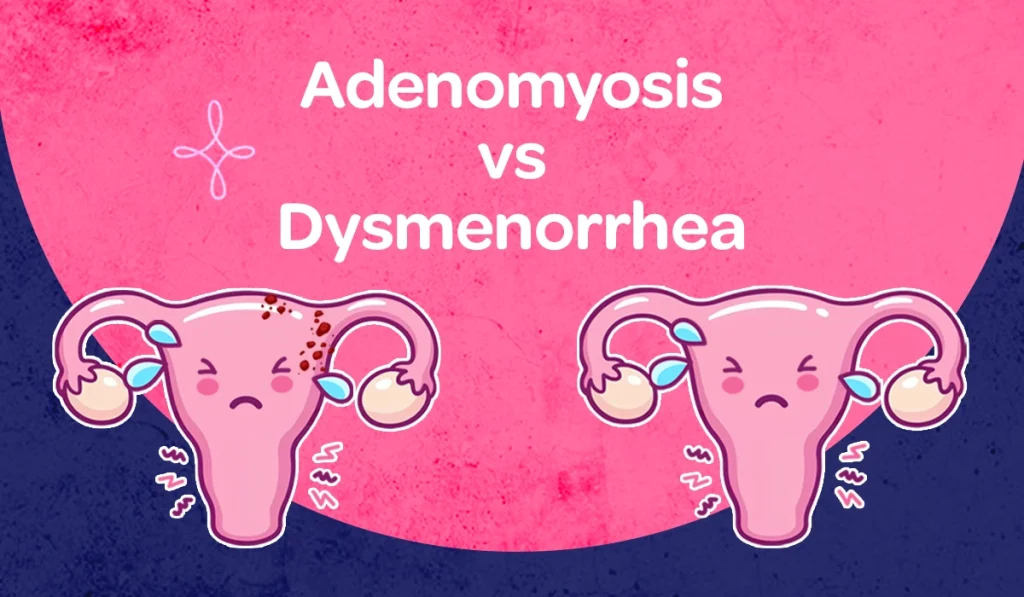
- Adenomyosis: In this condition, the uterine lining begins to grow into the muscular wall of the uterus, making the uterus feel heavy and causing a pain that feels like a heavy stone inside the body. (Adenomyosis affects an estimated 23.5 million women in India. The Indian Journal of Obstetrics and Gynecology Research estimates a prevalence rate of 6- 39% for adenomyosis with the typical age range of 35 years to 50 years.)
- Uterine Fibroids: These are non-cancerous growths in or on the uterus. They can cause the uterus to lose its ability to contract efficiently, leading to both Menorrhagia (heavy bleeding) and severe cramping. (In India, the prevalence of uterine fibroids is reported to be 37.65% among rural populations and 24% among urban populations. When looking at the most affected age groups, women aged 36–50 years show the highest prevalence at 63.5%, followed by those aged 21–35 years at 24.08%, and 12.4% among women between 51–65 years)
For your knowledge, it is important to know that medically, period pain caused by Prostaglandins is called Primary Dysmenorrhea, and period pain caused by PCOS, Endometriosis, Adenomyosis and Uterine Fibroids is called Secondary Dysmenorrhea.
Period Problems Related to Blood Clots
Blood clots are clumps of thickened blood that your body expels during your period. Small, occasional clots during your heaviest flow days are typically your body’s way of managing a fast-moving bleed. But, if you are passing blood clots larger than a 1-rupee coin (approx. 1 inch), it is a sign of Menorrhagia (heavy bleeding). This happens because the blood flow is so heavy that the body’s natural anticoagulants don’t have enough time to break down the blood before it leaves the body. Large blood clots are usually linked to conditions like Uterine Fibroids, Adenomyosis, or hormonal imbalances.
Period Problems Beyond The Uterus
A period problem rarely stays in one place. Because of the way your body’s chemistry changes during your cycle, symptoms often radiate throughout your entire system. Here is how your period can affect your body beyond the usual timing, flow, and pain.
Pain In Thighs, Legs and Lower Back
Periods can cause a deep, thudding ache that radiates down your nerves into your leg, thighs and back. Read our answer to know why my period pain goes down to my thighs?
Diarrhea (Also Called Period Diarrhea)
Excess prostaglandins can leak into your bloodstream and reach your intestines leading to loose bowel movements also called period diarrhea. Read out our answer to know Why Do I Get Diarrhea on My Period?
Constipation and Bloating
Shifting progesterone levels during your periods can cause bloating and constipation. Read our answer to quickly understand What Causes Constipation Before and During Periods?
Nausea and Vomiting
In cases of severe period problems, the high level of prostaglandins in your body can trigger the vomiting reflex, making you feel sick to your stomach or unable to keep food down. Read our answer to know Why Do I Get Nausea and Vomiting with Period Pain and How Can I Stop It?
Dizziness
You feel dizziness when severe period pain causes a temporary drop in blood pressure. To know why this happens, read our answer What Causes Dizziness During Periods?
Period headaches or Menstrual Migraines
Sudden hormonal shifts can lead to intense period headaches or menstrual migraines. Excess levels of prostaglandin can make this worse. To know more, read our answer What Causes Headaches and Migraines During Periods?
Period Problem Related to Mood Swings & Mood Disorders
The impact period problems on your mind are just as real as their impact on your body. When the hormonal and physical stress becomes overwhelming, it can lead to severe mood disruptions such as below:
PMS (Pre-Menstrual Syndrome)
PMS is a combination of physical and emotional symptoms that occur after ovulation (which is a stage in your menstrual cycle) and disappear once your period begins. In India, these are often dismissed as “mood swings,” but they are driven by real hormonal shifts.
Emotional toll include feeling of irritability, experiencing sudden crying spells, or dealing with intense food cravings. The physical toll includes breast tenderness, abdominal bloating, and acne breakouts.
PMDD (Premenstrual Dysphoric Disorder)
This period problem is a severe version of PMS where irritability, anxiety, and depression become so intense that they derail your daily life. Read our blog on PMDD (Premenstrual Dysphoric Disorder) to understand about this period problem in detail.
Depression & Anxiety
In India, it is estimated that 25% of girls feel depressed and 40% feel anxiety due to various period problems. Read our answer to know Why Severe Period Pain Causes Anxiety? and How Menstrual Pain Causes Depression?

Gynaecologist’s Advise:
Your period is a vital sign. Just like your blood pressure or heart rate, your menstrual cycle tells the story of your internal health.
When you experience any of the period problems mentioned in this guide—whether it is pain that stops your day, a flow that feels like a flood, or mood shifts that feel uncontrollable—it is your body’s way of asking for help. In India, we have a long-standing habit of normalising suffering. We tell our daughters and sisters that pain is part of being a woman. But medically, severe period pain and irregular cycles are signals, not rituals.
If you are checking the red flags in this guide, do not self-medicate or wait for the symptoms to disappear. A simple consultation and a few basic tests can help us identify if the cause is biological (chemical), hormonal, or structural. Early diagnosis of conditions like Endometriosis or PCOS doesn’t just stop the pain; it protects your long-term health and fertility.
The Moral of the Story
The journey to a healthier menstrual cycle begins with awareness. You don’t have to “adjust” to a period problem. You deserve a life that isn’t derailed every 28 days. By understanding your cycle, you are taking the first step toward reclaiming your comfort and your confidence.
Your Journey to #StopThePeriodPain Starts Here
Every month, millions of Indian girls & women suffer in silence, told that their severe period pain (dysmenorrhea) is “normal.” Our mission is to break that silence. #StopThePeriodPain campaign is here to empower you with 3 simple truths:
More Stories To Read
Transform your understanding of period pain through engaging and informative stories based on real medical insights.
The Answers You've Been Looking For
Get clear, concise answers to your most pressing questions about period pain.
- What are The Types of Prostaglandins and Their Functions?
- How To Reduce Prostaglandins?
- What Are The Symptoms Of Secondary Dysmenorrhea?
- Why is My Period So Clotty and Painful?
- When to See a Doctor for Painful Periods?
- Why Do I Get Diarrhea on My Period?
- What Causes Constipation Before and During Periods?
- Why Do I Get Nausea and Vomiting with Period Pain and How Can I Stop It?
- What Causes Dizziness During Periods?
Disclaimer:
This content is for informational purposes only and is not a substitute for professional medical advice. The information provided here is based on general trends and may not apply to every individual, as every woman’s body and experience with period pain is unique.
Do not self-diagnose or self-treat. If you are experiencing painful periods, especially if the pain is moderate to severe or accompanied by other concerning symptoms, you must consult with a gynaecologist. Ignoring severe period pain can lead to a significant delay in diagnosing underlying conditions that require proper medical attention. Always prioritise a confident conversation with your gynaecologist over self-treatment.