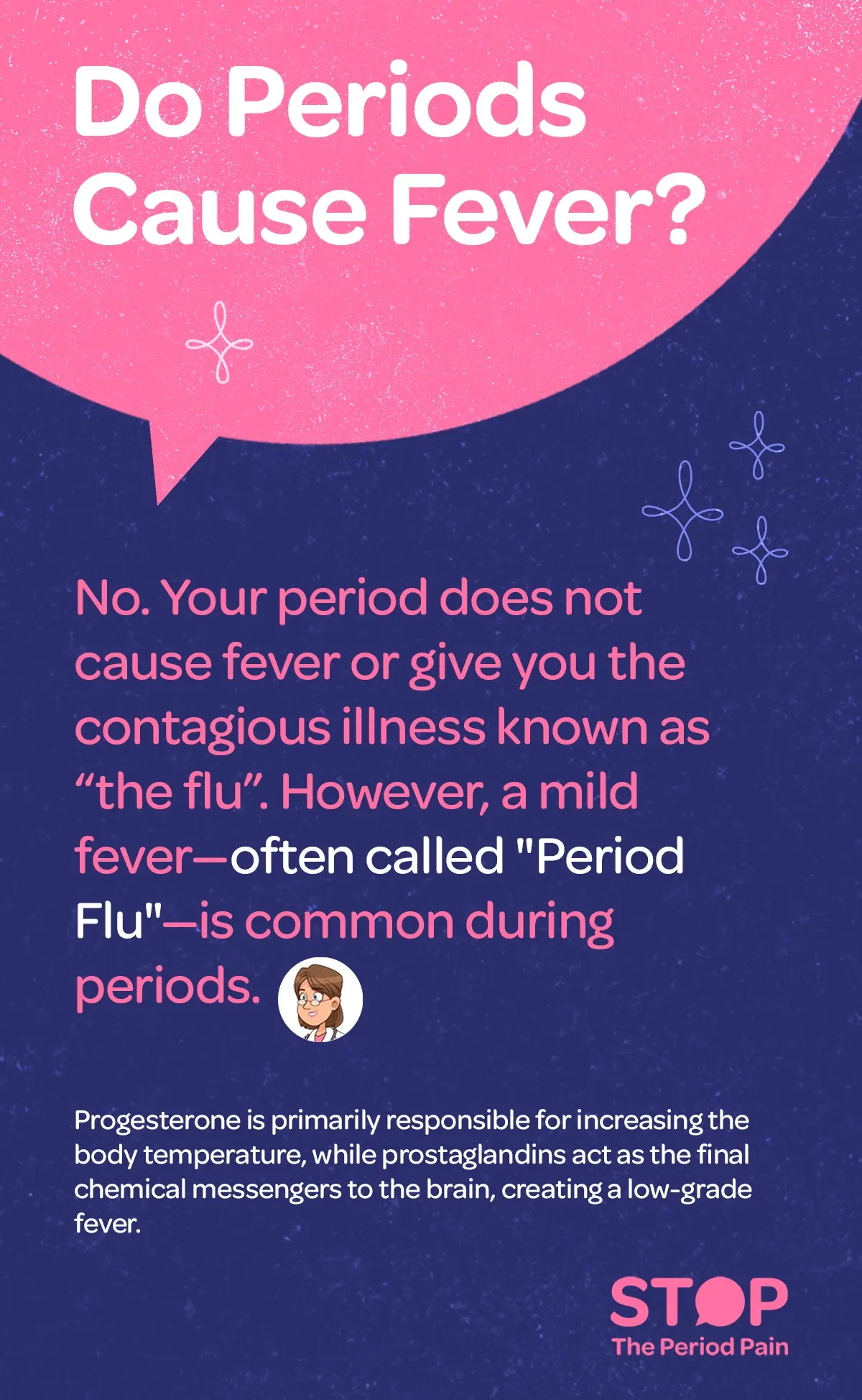
No. Your period does not cause fever or give you the contagious illness known as “the flu”. However, a mild fever—often called “Period Flu”—is common during periods.
The hormonal shifts and prostaglandin production in your body creates flu-like symptoms including a low-grade fever, body aches, and chills. Here’s how it works:
1. Progesterone is the hormone that raises temperature
The primary reason for an elevated temperature before your period is the hormone Progesterone.
- Progesterone levels naturally rise after 10-14 days after your periods end to prepare the uterus for a potential pregnancy.
- Progesterone has a natural thermogenic effect, meaning it slightly raises your body’s core resting temperature by about 0.50 F to 10 F.
- This elevated temperature lasts 10-14 days and then drops sharply right as your next period begins. This temperature change can make you feel hot, feverish, or trigger the chills associated with “Period Flu.”
2. Prostaglandins are the final chemicals messengers for the brain
As you know prostaglandins are released in the uterus lining to trigger contractions (menstrual cramps) that shed the lining.
However, when a large amount of prostaglandins are produced, they spill out of the uterus, leak into the bloodstream, can travel to the brain and signal the “thermostat” (hypothalamus) to increase the body’s temperature, just as they would during an infection. Prostaglandins thus contribute to the feverish feeling and body aches.