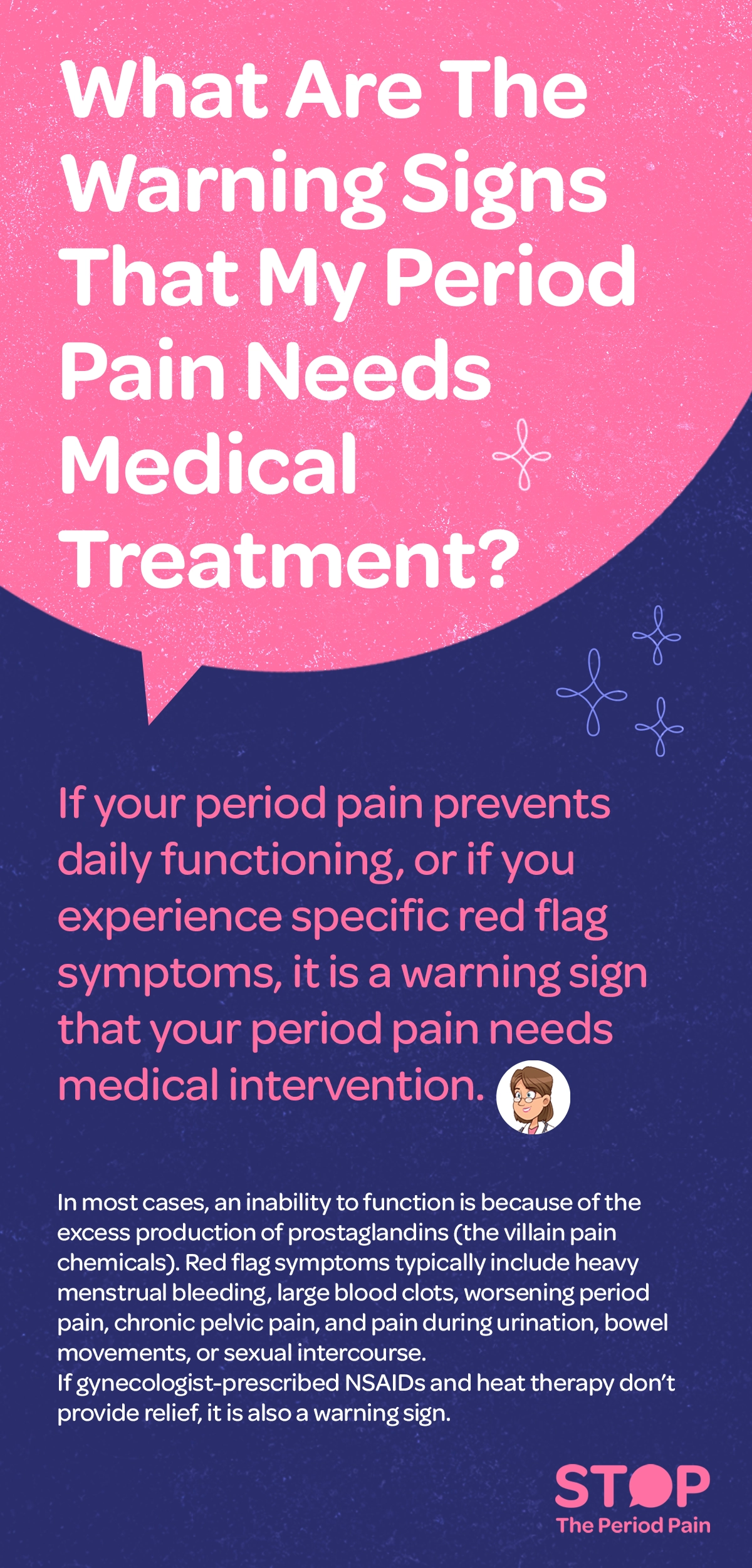
If your period pain prevents daily functioning, it is an indication to seek medical treatment.
Medically, if the production of prostaglandins (the villain pain chemicals) is very high, or if you experience specific red flag symptoms, it is a warning sign that your period pain needs medical intervention.
An inability to function includes missing school, work, or social commitments because you are physically unable to leave your bed, while red flag symptoms include the following:
- Heavy Menstrual Bleeding and Large Blood Clots: You soak through one pad or tampon every hour for several hours, or you pass blood clots larger than a ₹1 coin.
- Worsening Period Pain: A sudden increase in period pain intensity after age 25, or pain that gets progressively worse every year, indicates an underlying condition such as PCOS, Endometriosis, Adenomyosis, or Uterine Fibroids.
- Chronic Pelvic Pain: Feeling a persistent heavy or pulling sensation in your pelvic area even when you are not on your period also indicates a high possibility of endometriosis, adenomyosis, or uterine fibroids.
- Pain during urination, bowel movements, sexual intercourse: If you experience lightning bolt stabbing sensations during urination, bowel movements, or sexual intercourse, it indicates an underlying condition—most likely endometriosis.
- Infections: Sudden, sharp cramps accompanied by a fever (above 100.4°F) or unusual, foul-smelling discharge require immediate evaluation to rule out pelvic inflammatory disease (PID).
- No Relief From Medication: If gynecologist-prescribed NSAIDs and heat therapy fail to provide relief, it indicates underlying conditions such as PCOS, endometriosis, adenomyosis, or uterine fibroids.