The Ultimate Guide To Period Cramps: Causes, Relief, And Myths
Table Of Content
- But is period pain normal?
- Is period pain normal?
- Why Does It Become Excessive Period Cramps?
- Understanding Period Pain Location: Where Exactly Do You Feel Period Cramps?
- What Are The Symptoms of Dysmenorrhea?
- Hidden Reasons for Bad Period Pain
- The Answers You've Been Looking For
- Your Journey to #StopThePeriodPain Starts Here
- References
Priya is 18 and a bright, ambitious college student. Every month, however, she spends the first two days of her periods curled up in bed due to debilitating period cramps, missing classes and cancelling plans. Like so many others, she’s always been told that this level of menstrual cramps is “just a part of being a girl.”
But is period pain normal?
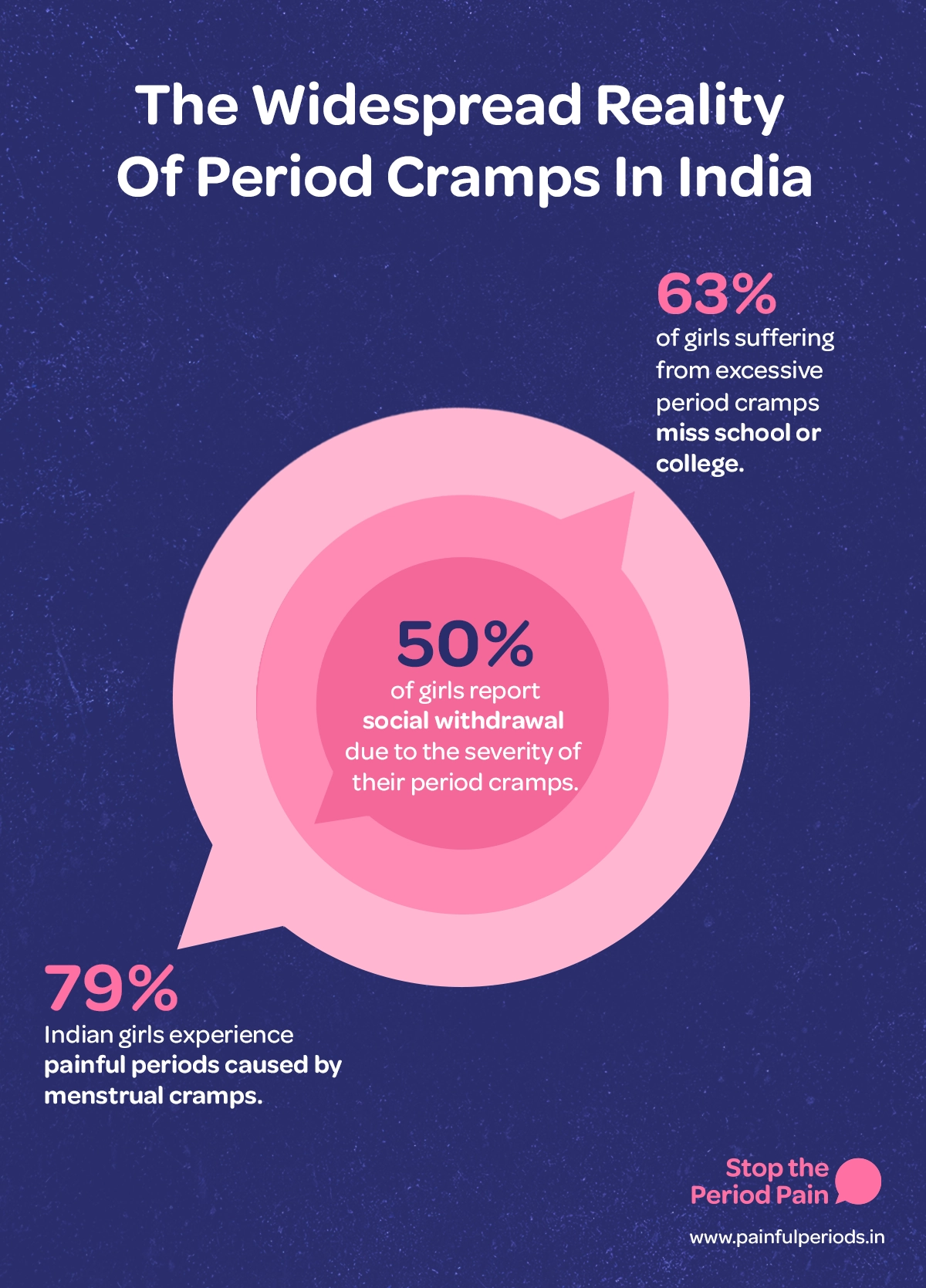
Priya’s experience is a widespread reality for young women across India. A study from NSCB Medical College confirms that a staggering 79% of girls experience painful periods. The impact of these excessive period cramps is significant: over 63% of the girls suffering from severe period cramps miss individual classes, and more than half report social withdrawal.
Whether it is primary dysmenorrhea (common period cramps) or secondary dysmenorrhea (pain due to an underlying condition), what causes painful period cramps shouldn’t be ignored. It isn’t just an inconvenience; it is a leading cause of absenteeism that affects your quality of life.
Is period pain normal?
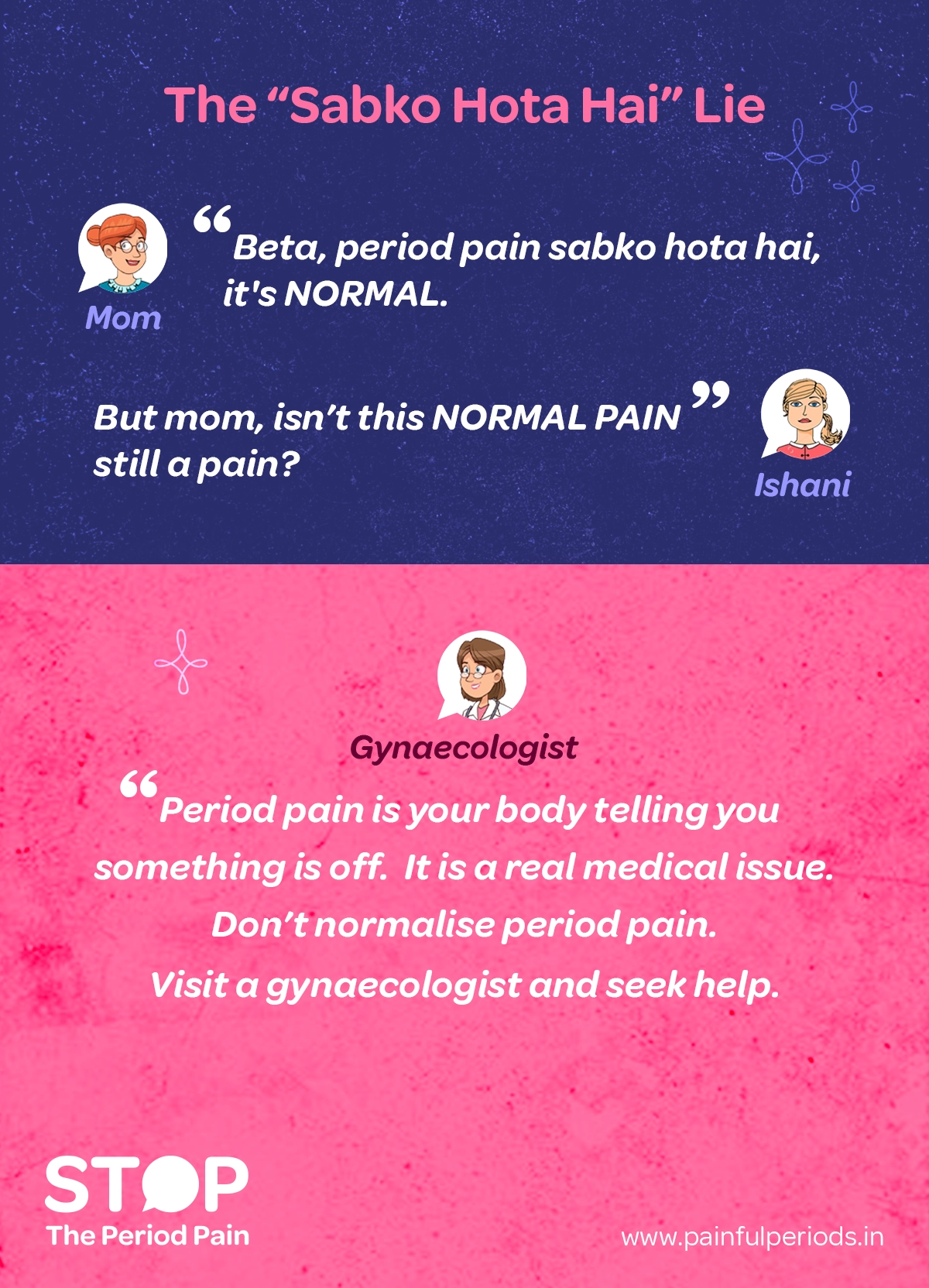
For millions of Indian girls, suffering through period cramps isn’t just a physical experience—it’s a rite of passage surrounded by dismissive phrases. When a young girl first complains of a sharp menstrual cramp, the response is often: “Beta, period cramps sabko hota hai” (Everyone goes through this).
This cultural conditioning dismisses the pain as a necessary part of womanhood. Small aches are brushed off, while excessive period pain is met with advice to simply “manage it.” This normalises suffering, teaching girls across India to silently endure, no matter how severe the reasons for bad period pain might be.
This silence prevents us from asking the most crucial question: Is period pain normal? It is this normalisation that stops us from recognising that debilitating period cramps are a medical issue. Whether your pain is a common cycle or a signal of something deeper, you deserve a conversation. This page is here to break that silence and uncover the real reasons for bad period pain. So here’s the answer.
For years, you’ve likely been using words like “period cramps” or “menstrual cramps” to describe what you feel every month. But for a medical issue this significant, there is an official clinical name: Dysmenorrhea.
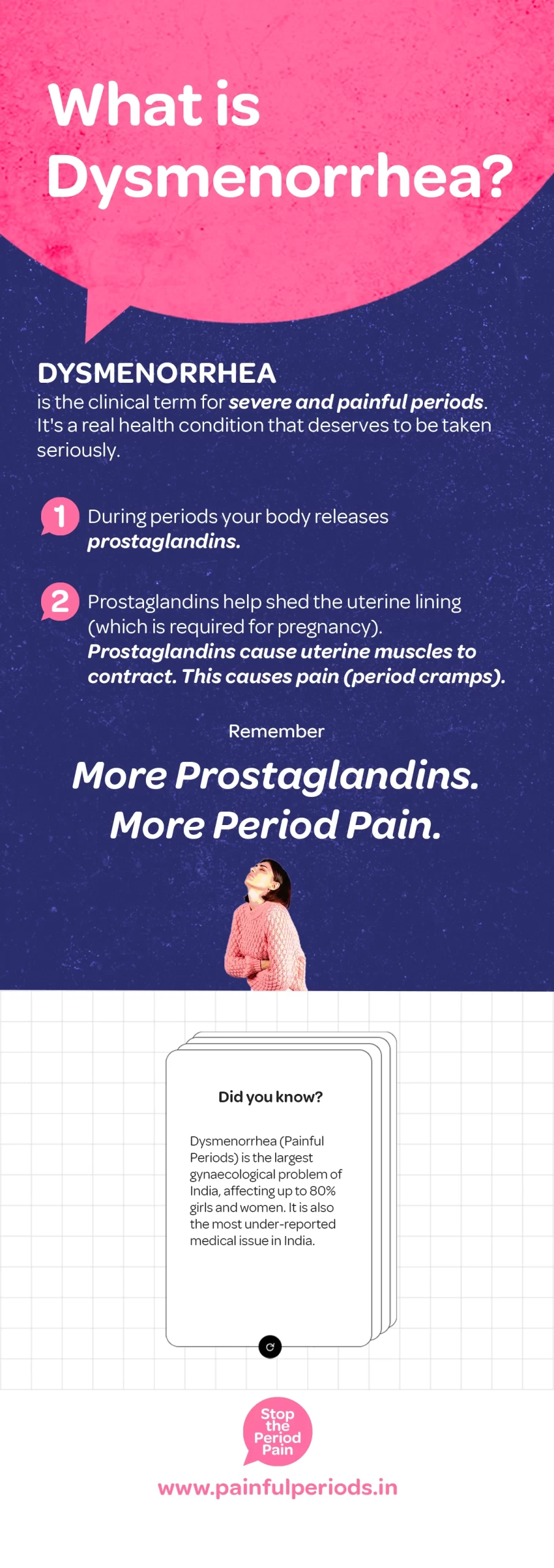
What is Dysmenorrhea? Simply put, dysmenorrhea is the medical term for severe and painful periods. Its very existence proves that your menstrual cramps aren’t just a minor inconvenience—it is a real health condition. Understanding this condition is the first step in discovering what causes painful period pain.
The Science: What causes painful period pain?
To understand why you feel pain, we first need to understand the simple 4-step rhythm of your monthly cycle:
- Step 1 – The Preparation: Each month, your ovaries release an egg with the goal of pregnancy.
- Step 2 – Building the Home: The egg travels to the uterus. To prepare, the uterus builds a soft, thick lining (called the endometrium). Think of this lining as a “nutritional bed” designed to protect and feed the egg if it becomes a baby.
- Step 3 – The Command Center: Like everything biological, the egg has a limited lifespan. When pregnancy doesn’t happen, the egg and the lining need to be expelled from your body. However, the uterus is a strong muscle designed to hold the baby. To command the uterus to let go of the egg and the nutritional lining, your body releases chemicals called Prostaglandins.
- Step 4 – The Push (The Period Cramp): For anything to be pushed out of a muscle, that muscle has to contract. Since the uterus doesn’t contract on its own, prostaglandins tell it to squeeze. This squeezing is exactly what you feel as a menstrual cramp or period cramp.
Why Does It Become Excessive Period Cramps?
The biology behind dysmenorrhea is clear: while some prostaglandins are necessary, an excess of prostaglandins makes your uterus contract very strongly.
When the uterus squeezes too hard, it momentarily cuts off oxygen to the muscle tissue. This is what causes painful period pains and is the most common of the reasons for bad period pain in young women. This intensity is why you feel the menstrual cramps radiating to your specific period pain location—typically the lower abdomen and lower back.
If your period cramps are so intense that they stop you from going to college or work, it is a sign that your prostaglandin levels are significantly high. Understanding your biology is the key to identifying the reasons for bad period pain and finding a solution that actually works for menstrual cramps.
Understanding Period Pain Location: Where Exactly Do You Feel Period Cramps?
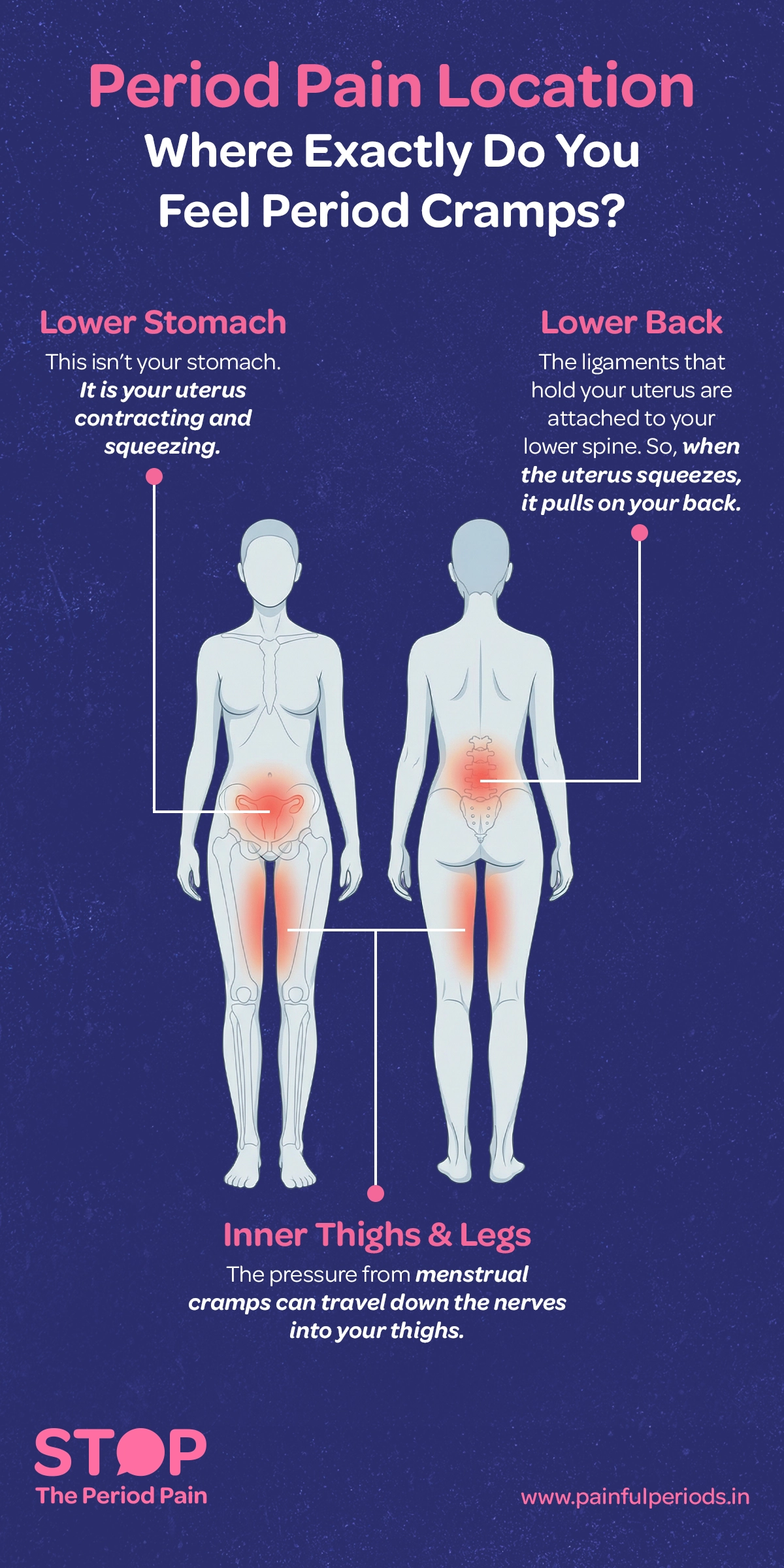
While we often just say “my stomach is hurting,” menstrual cramps actually happen much lower than your stomach. Because the nerves are all connected, the “push” of the uterus radiates to three main areas:
- The Lower Stomach (Below the Navel/ Belly Button): Most women feel period cramps in the area between their belly button and their pubic bone. This isn’t your stomach contracting; it is your uterus contracting. It feels like a heavy, tight squeezing or sharp stab.
- The Lower Back: This is the most common period pain location outside of the stomach. Because the strings (ligaments) that hold your uterus are attached to your lower spine, when the uterus squeezes, it pulls on your back. It feels like a deep, throbbing ache that makes you want to lie down.
- The Inner Thighs & Legs: Have you ever felt like your legs are “heavy” or “weak” during your period? The pressure from menstrual cramps can travel down the nerves into your thighs.
What Are The Symptoms of Dysmenorrhea?
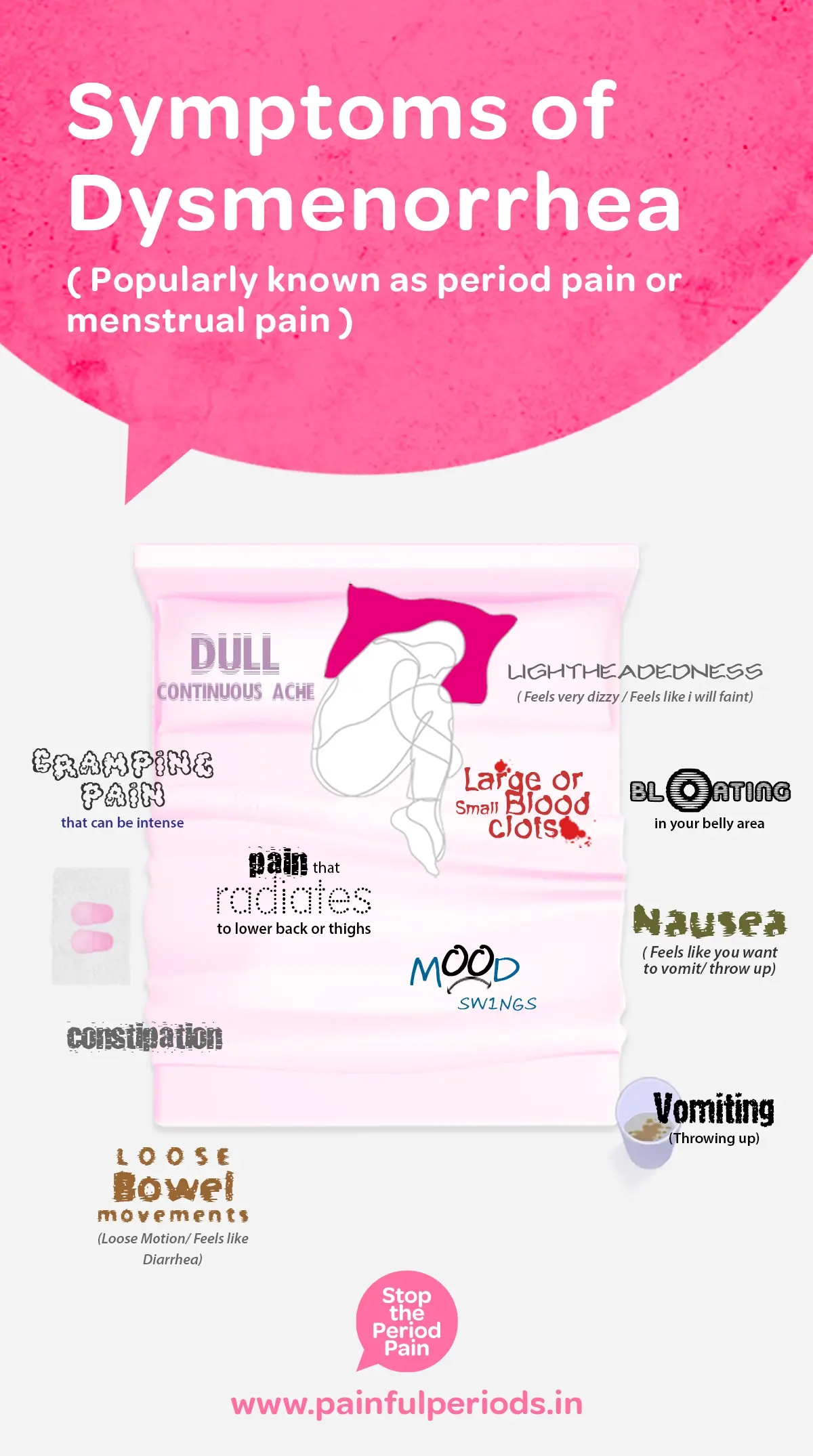
When Priya, our 18-year-old student, feels her period cramps intensify, it’s a sharp, persistent ache in her lower abdomen. But the truth about menstrual cramps doesn’t feel the same for everyone. Dysmenorrhea can manifest in many different ways. Understanding these signals is the key to identifying if you are suffering from excessive period pain. Below are the common symptoms:
- Cramping Pain: A dull, throbbing, or sharp sensation in the lower stomach (below your belly button). This is the hallmark of period cramps.
- Lower Back and Thigh Pain: Aches and discomfort that travels to your lower back and thighs (the primary period pain locations).
- Headaches: Often calledmenstrual migraines
,these are triggered by the same hormonal shifts that cause your period cramps and intensify with excessproduction of prostaglandins
. - Nausea and Vomiting: A feeling of sickness or vomiting caused by the same prostaglandins that trigger menstrual cramps.
- Diarrhea or Constipation: Digestive issues that can vary during your period.
- Fatigue: Extreme tiredness or weakness.
- Dizziness: Lightheadedness or feeling faint.
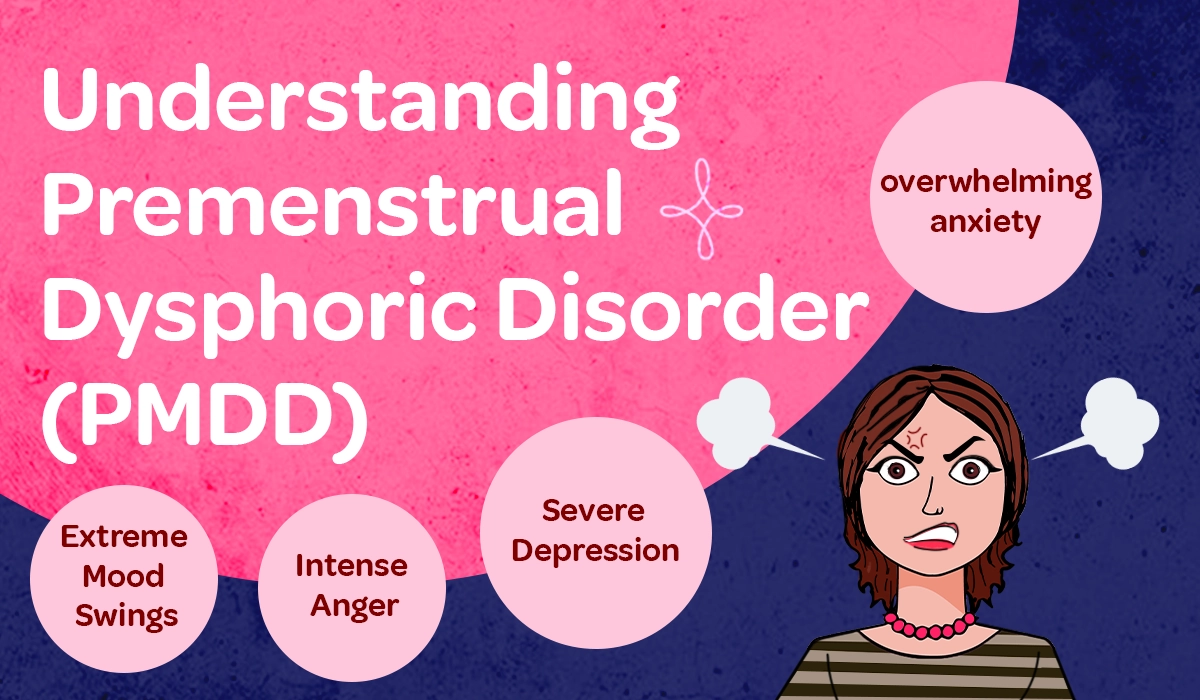
- Mood Swings: Increased irritability, anxiety, or feelings of depression.
The Two Types of Dysmenorrhea
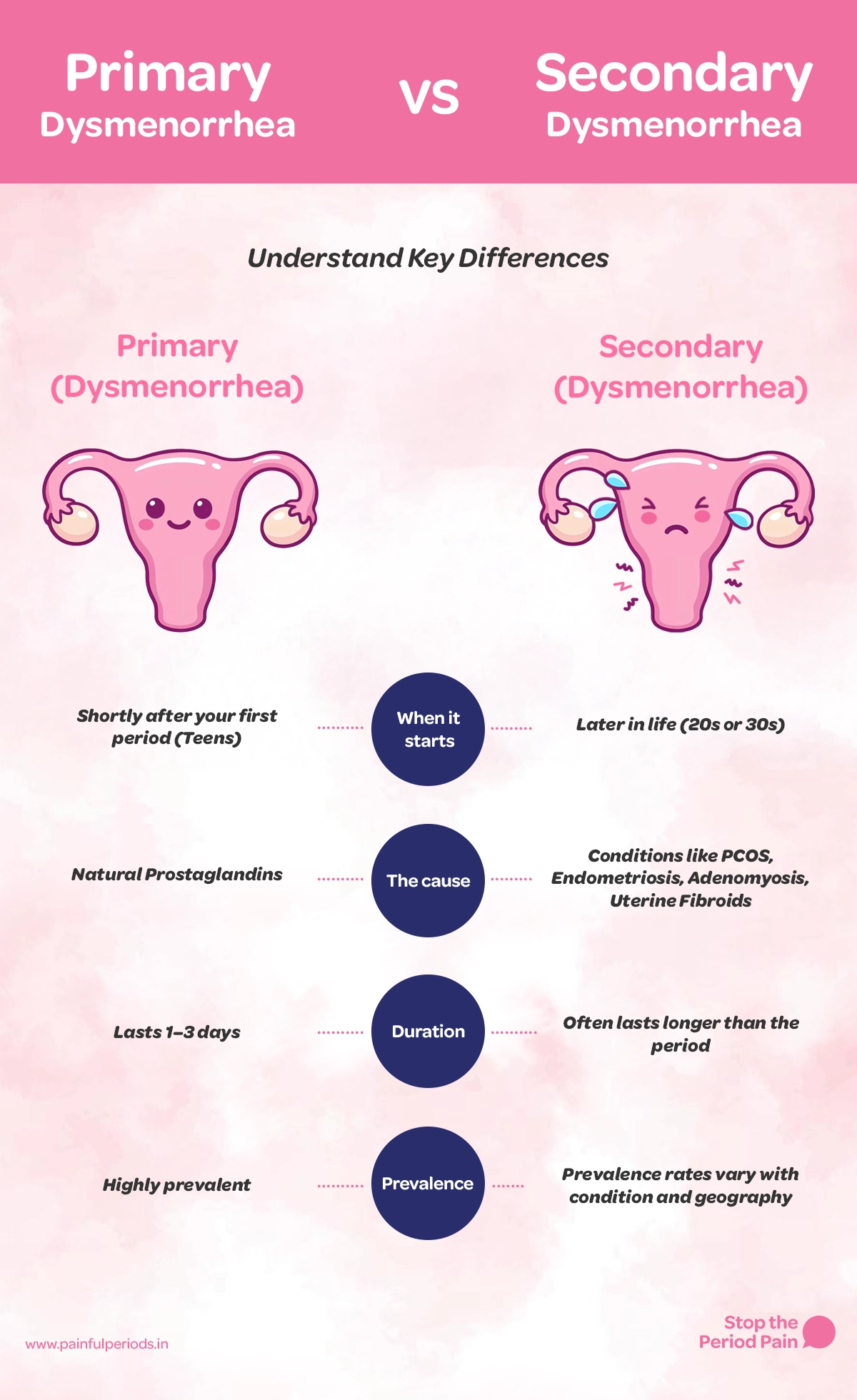
By now, you understand why period cramps happen and why they can hurt so much. You also know that excessive period cramps are a medical condition called dysmenorrhea. However, to find the right relief, you must understand that there are two distinct types of dysmenorrhea – Primary Dysmenorrhea and Secondary Dysmenorrhea.
What Is Primary Dysmenorrhea?
“Primary” refers to the first or basic cause. Primary dysmenorrhea is menstrual cramps caused by a natural biological function—the release of prostaglandins. Because your body produces these every month, and sometimes in excess, the resulting period cramps are considered “primary”. This is the most common of the reasons for bad period pain reported by young women in India.
What Is Secondary Dysmenorrhea?
“Secondary” means the pain is resulting from something else. Secondary dysmenorrhea refers to period cramps caused by a specific gynaecological condition or a physical change in your reproductive system (the ovaries or uterus).
While no one should have to “just deal” with period cramps, the intensity found in secondary dysmenorrhea is often a warning sign. These reasons for bad period pain are actually medical conditions that should be detected and treated early to ensure a better quality of life and protect your future reproductive health.
Hidden Reasons for Bad Period Pain
In these cases, your menstrual cramps are not just a natural cycle—they are a “symptom” of an underlying issue. Common causes include:
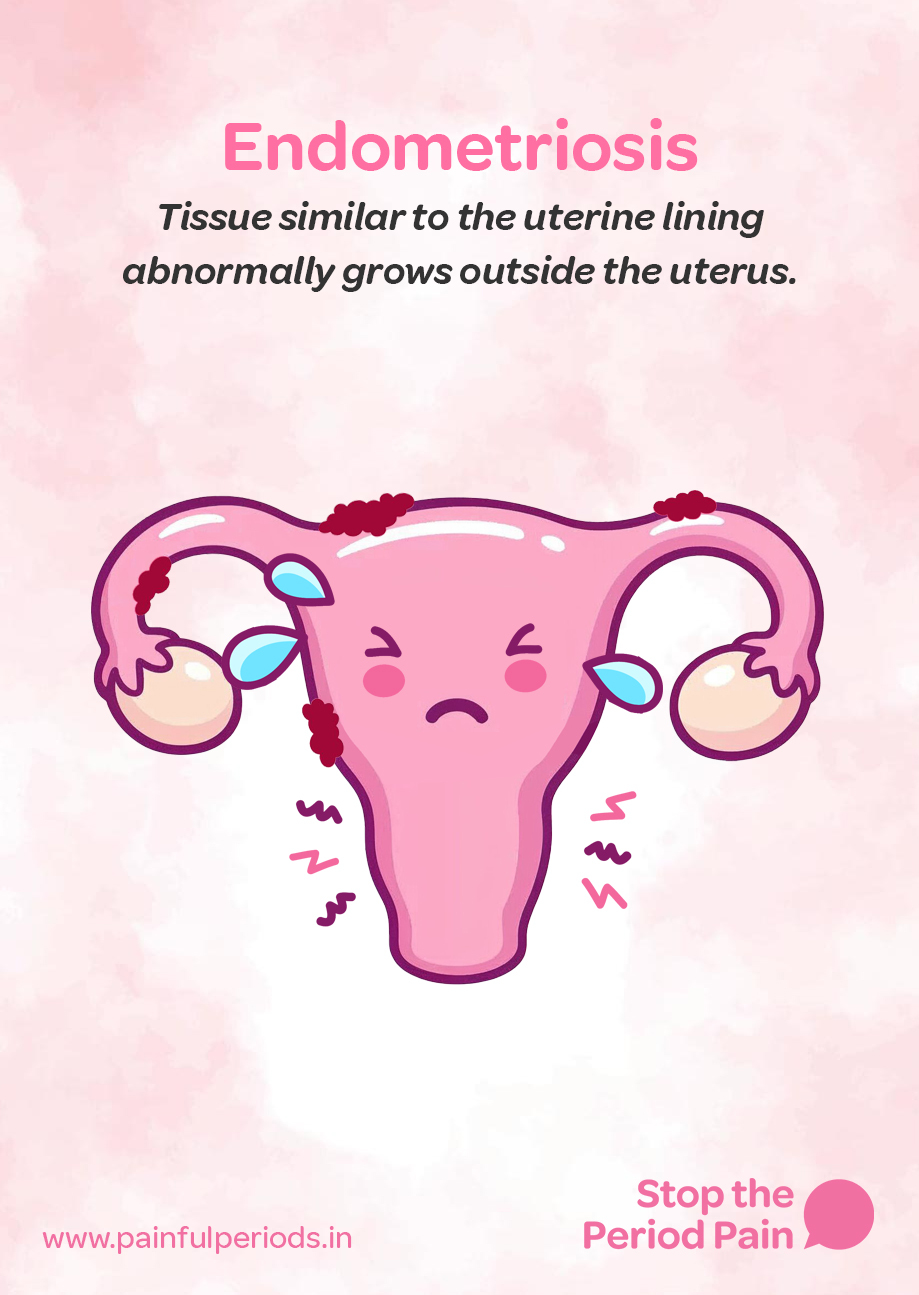
- Endometriosis
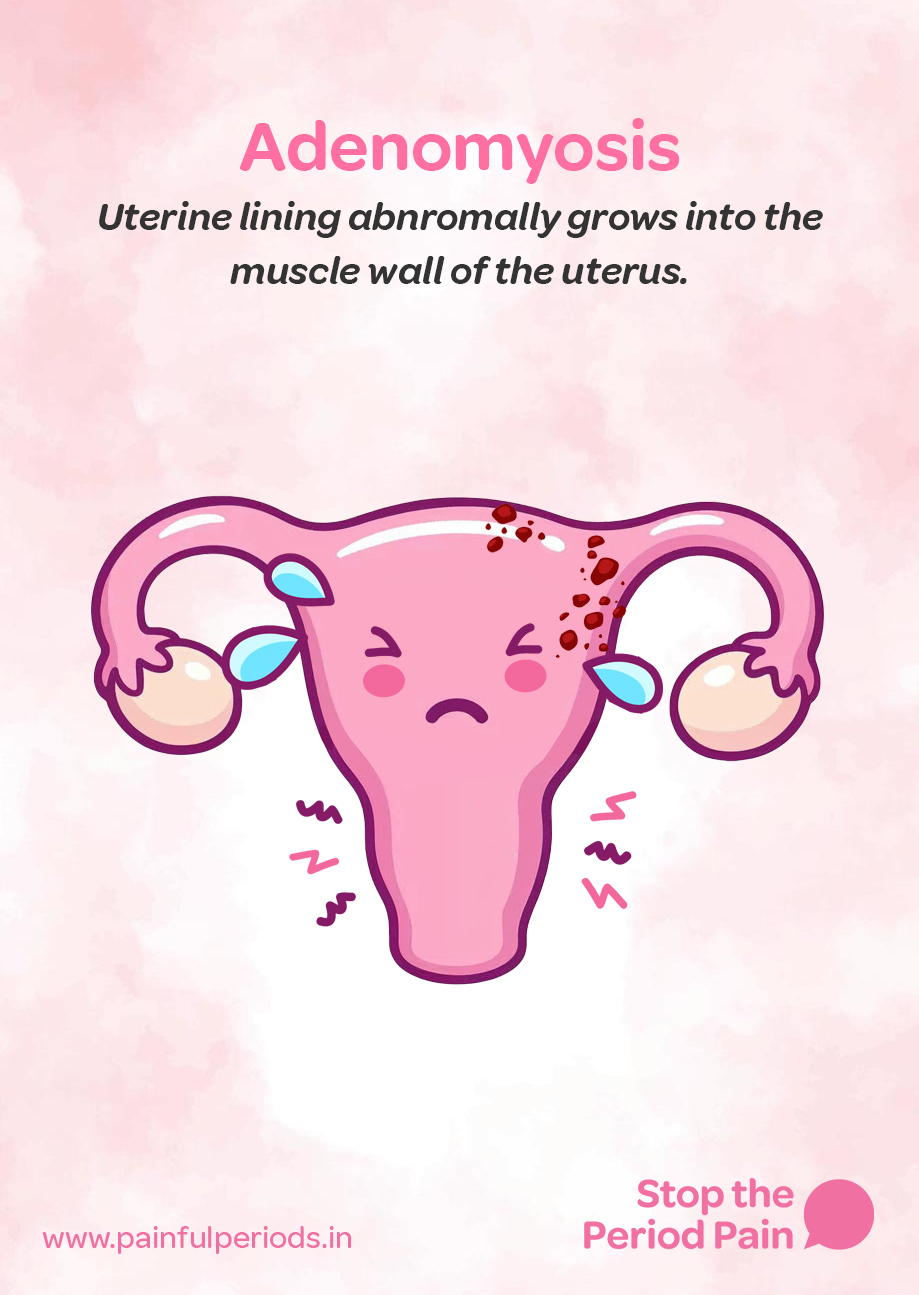
Endometriosis is a condition where tissue similar to the uterine lining grows outside the uterus. Ishani’s period cramps are due to endometriosis. - Adenomyosis
In adenomyosis, the uterine lining, which must only grow on the inside of the uterus, grows into the muscle wall of the uterus. Riddhi’s menstrual cramps are due to adenomyosis. - PCOS (Polycystic Ovary Syndrome)
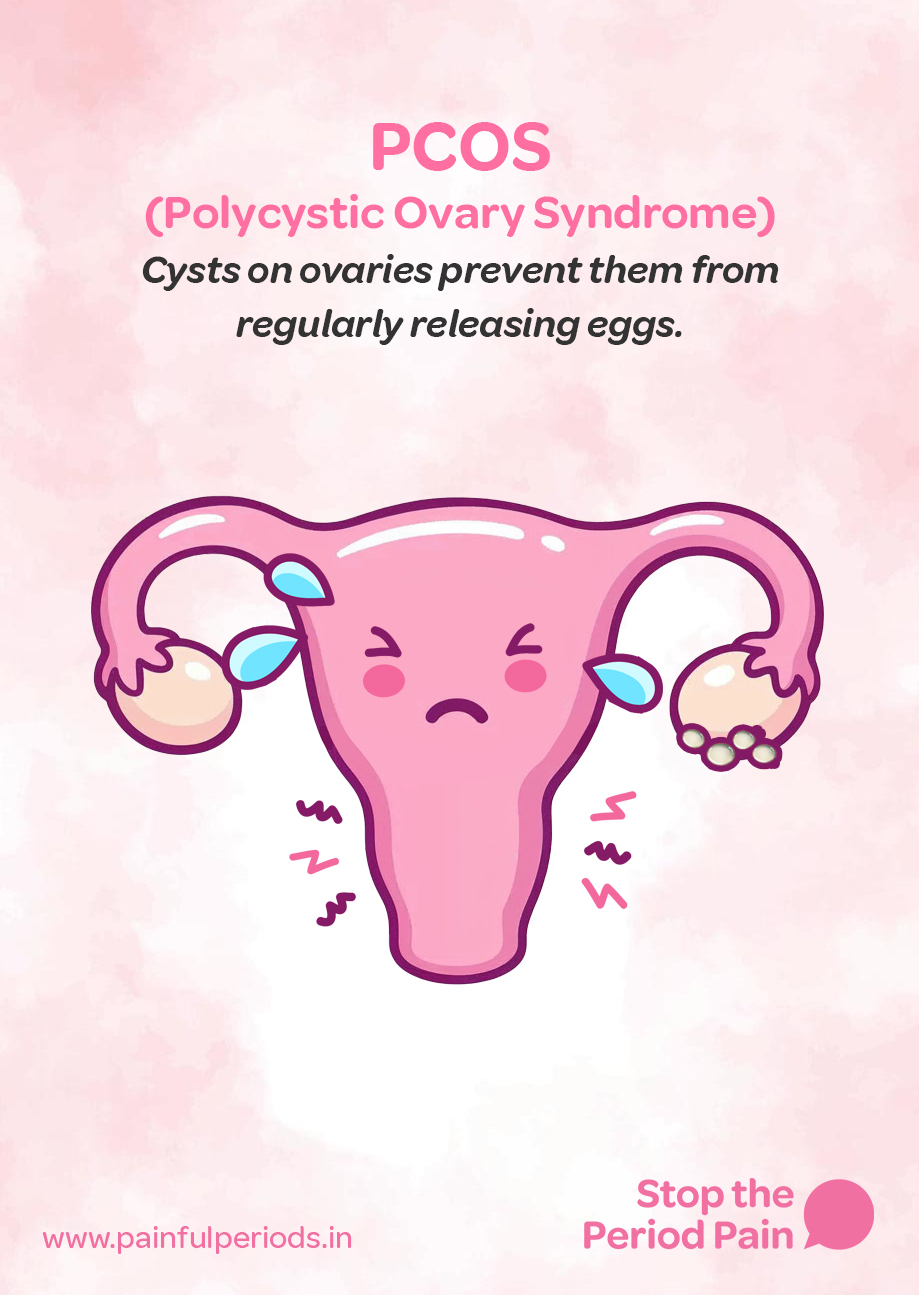
Polycystic Ovary Syndrome, also known as PCOD (Polycystic Ovary Disorder), is a hormonal disorder in which cysts on the ovaries prevent them from releasing an egg regularly. Tarini’s period cramps are due to PCOS. - Uterine Fibroids
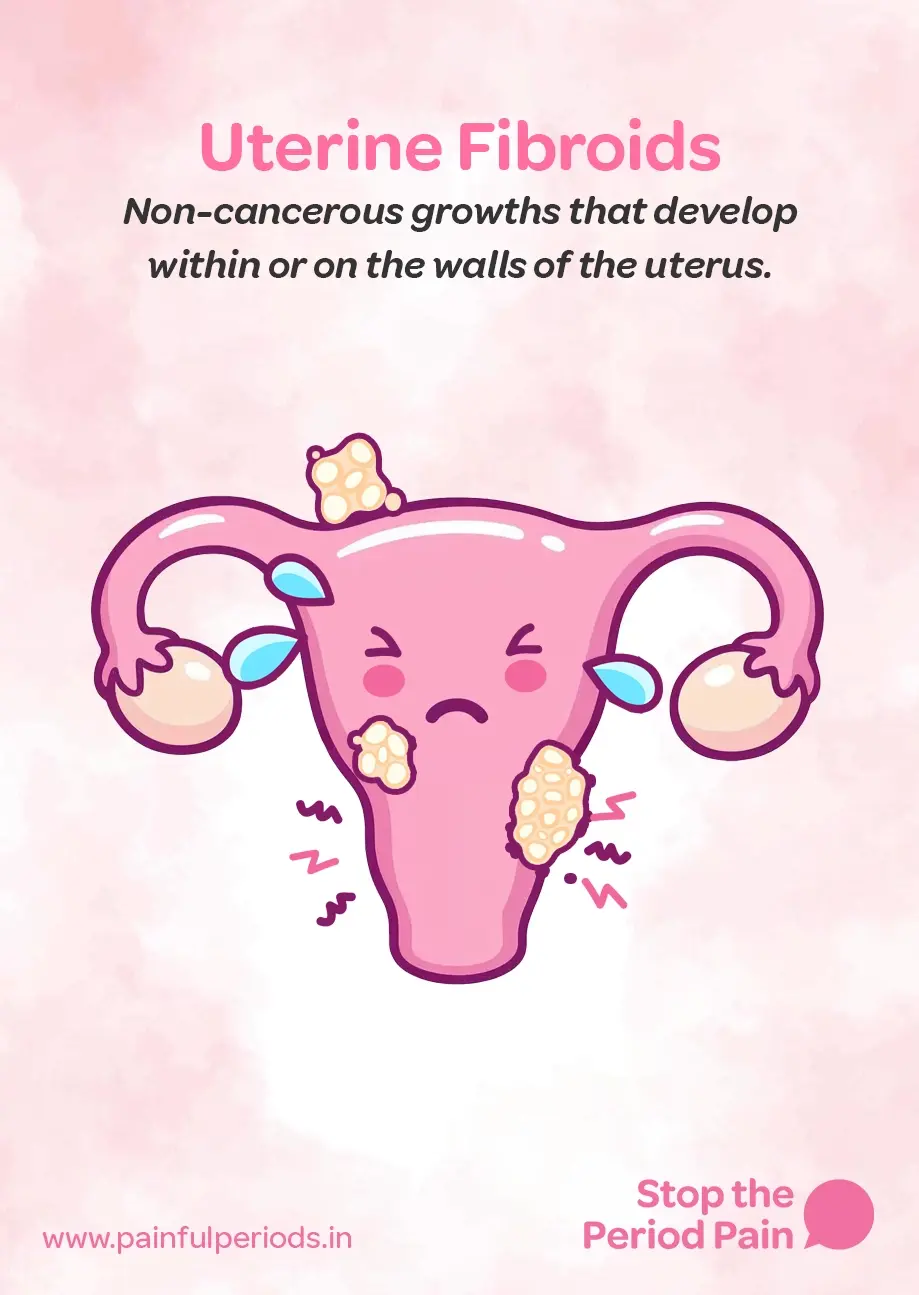
Uterine fibroids are non-cancerous growths that develop in or on the walls of the uterus. Baani’s period cramps are due to uterine fibroids.
Still confused? You can understand the difference between the two types of period cramps by looking at shivering. If you go out in a very cold atmosphere wearing summer clothes, you will start shivering. This can be called primary shivering which is due to you directly feeling cold. However, if you are having fever and also shivering, it could be a result of malarial fever.
Difference Between Primary Dysmenorrhea and Secondary Dysmenorrhea
You might be a little confused on the difference between primary and secondary dysmenorrhea. So let’s first understand the difference between the two with analogy. Think of period pain like shivering:
- Primary Shivering: During winters, if you stand outside in the cold wearing summer clothes, you shiver. This is a direct, natural reaction to the cold. This is like Primary Dysmenorrhea.
- Secondary Shivering: If you are shivering because you have a Malarial fever, the shivering is a result of the illness. This is like Secondary Dysmenorrhea.
The Hidden Cost of 'Sabko Hota Hai' : Why You Must Not Ignore Period Cramps
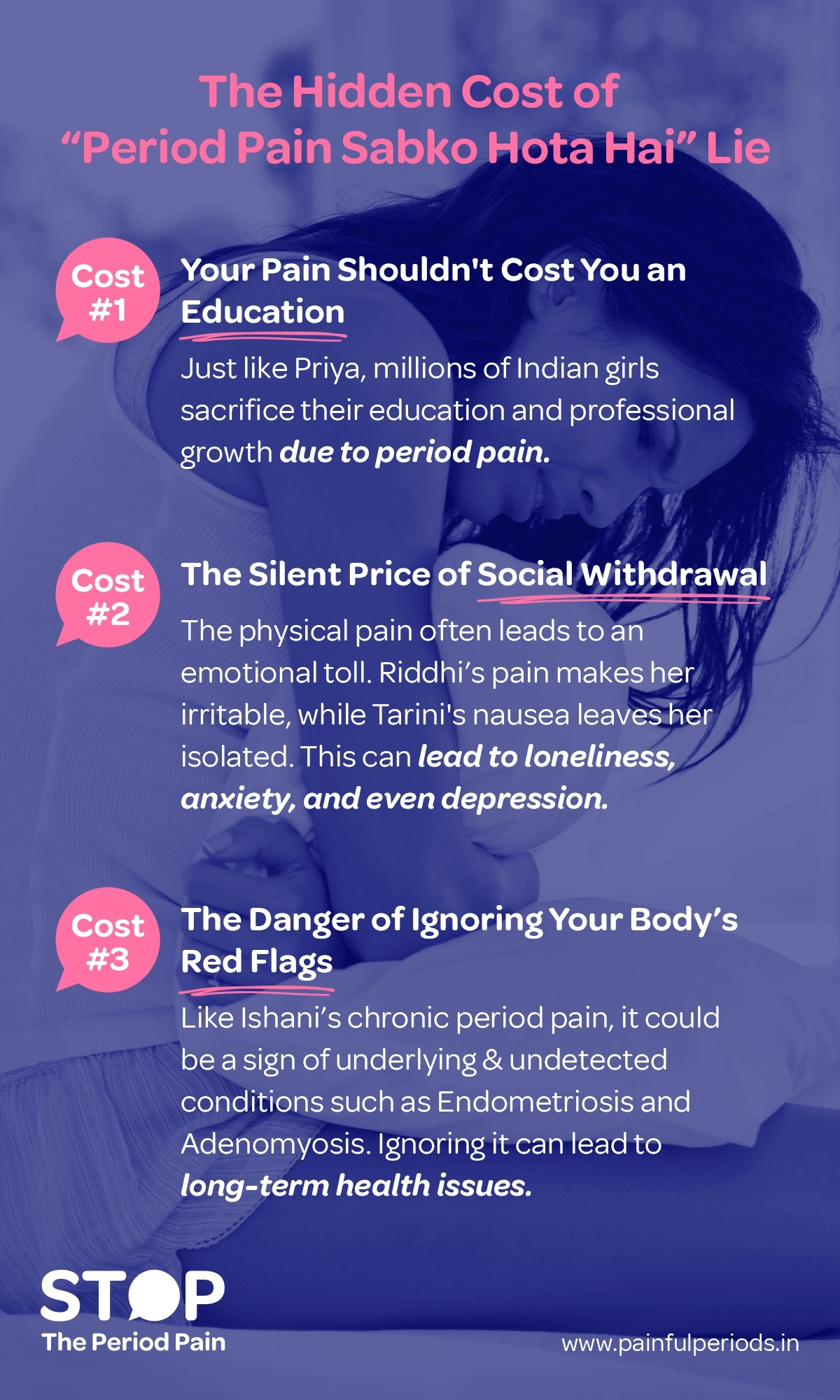
For generations, the cultural norm in India has been to silently endure period cramps. The refrain “Period pain sabko hota hai” has become so deeply ingrained that we often ignore what our bodies are telling us. But as the stories of Priya, Ishani, Riddhi, and Tarini show, ignoring excessive period pain comes at a significant cost.
Impact of Period Cramps on Education and Career
Just like Priya, who misses classes every month due to debilitating period cramps, millions of Indian girls sacrifice their professional growth. This isn’t just about a missed day; it’s about falling behind. The silent suffering you are taught to endure has a direct impact on your productivity. Studies indicate that up to 41.4% of Indian girls miss school due to menstrual cramps.
Impact of Period Cramps on Mental and Social Health
The physical “push” of your cycle often carries an emotional toll. Riddhi’s intense menstrual cramps make her irritable and withdrawn, while Tarini’s constant nausea and dizziness leave her isolated.
The Risk of Long-Term Health Complications Due to Period Cramps
Perhaps the most dangerous impact of ignoring your period cramps is the risk to your future. While Priya’s experience is likely primary dysmenorrhea, Ishani’s story of escalating pain is a major red flag.
Ignoring severe period cramps can mean you are overlooking a serious underlying condition, such as Endometriosis or Adenomyosis. When these reasons for bad period pain go undiagnosed, they can lead to chronic issues and even fertility problems that could have been managed with early intervention.
Ignoring your period cramps is not a sign of strength; it is a silent risk to your well-being.
Don’t let your cycle control your life anymore. The first step to finding relief is to explore your options. Ready to find a path to a better life?
Your Journey to Knowledge, One Story at a Time
Transform your understanding of Period Pain Relief through engaging and informative stories based on real medical insights.
The Answers You've Been Looking For
Get clear, concise answers to your most pressing questions about period pain relief.
- Are Painful Periods a Sign of Good Fertility?
- Does a heavier period mean more fertile?
- When to see a doctor for painful periods?
- What will a gynaecologist do for painful periods?
- Why is my period so clotty and painful?
- What do large blood clots during period mean?
- What are the symptoms of period pain?
- Why does my period pain go down to my thighs?
- Can dysmenorrhea cause depression?
Your Journey to #StopThePeriodPain Starts Here
Every month, millions of Indian girls & women suffer in silence, told that their severe period pain (dysmenorrhea) is “normal.” Our mission is to break that silence. #StopThePeriodPain campaign is here to empower you with 3 simple truths:
References:
- International Journal of Reproduction, Contraception, Obstetrics and Gynecology – Prevalence of dysmenorrhoea and its effect on quality of life among nursing students
- Prevalence And Management Of Dysmenorrhea Among The Adolescents Of Selected Schools Of Rehan, Distt Kangra
- A Study of School Absenteeism During Menstruation Amongst Adolescent Schoolgirls in An Urban Area of North India
- Times of India – Why ‘Period pain is normal’ might be the biggest myth in women’s health
- Health Radius – Top 5 menstrual problems women shouldn’t ignore
- Financial Express – Period pain may not always be routine