Managing severe period cramps (dysmenorrhea) or period pain) at work requires a combination of quick medical relief and discreet self-care strategies. Since Indian workspaces can often involve long sitting hours or commutes, being prepared is key.
In This Story
Prioritise Fast-Acting Medical Relief
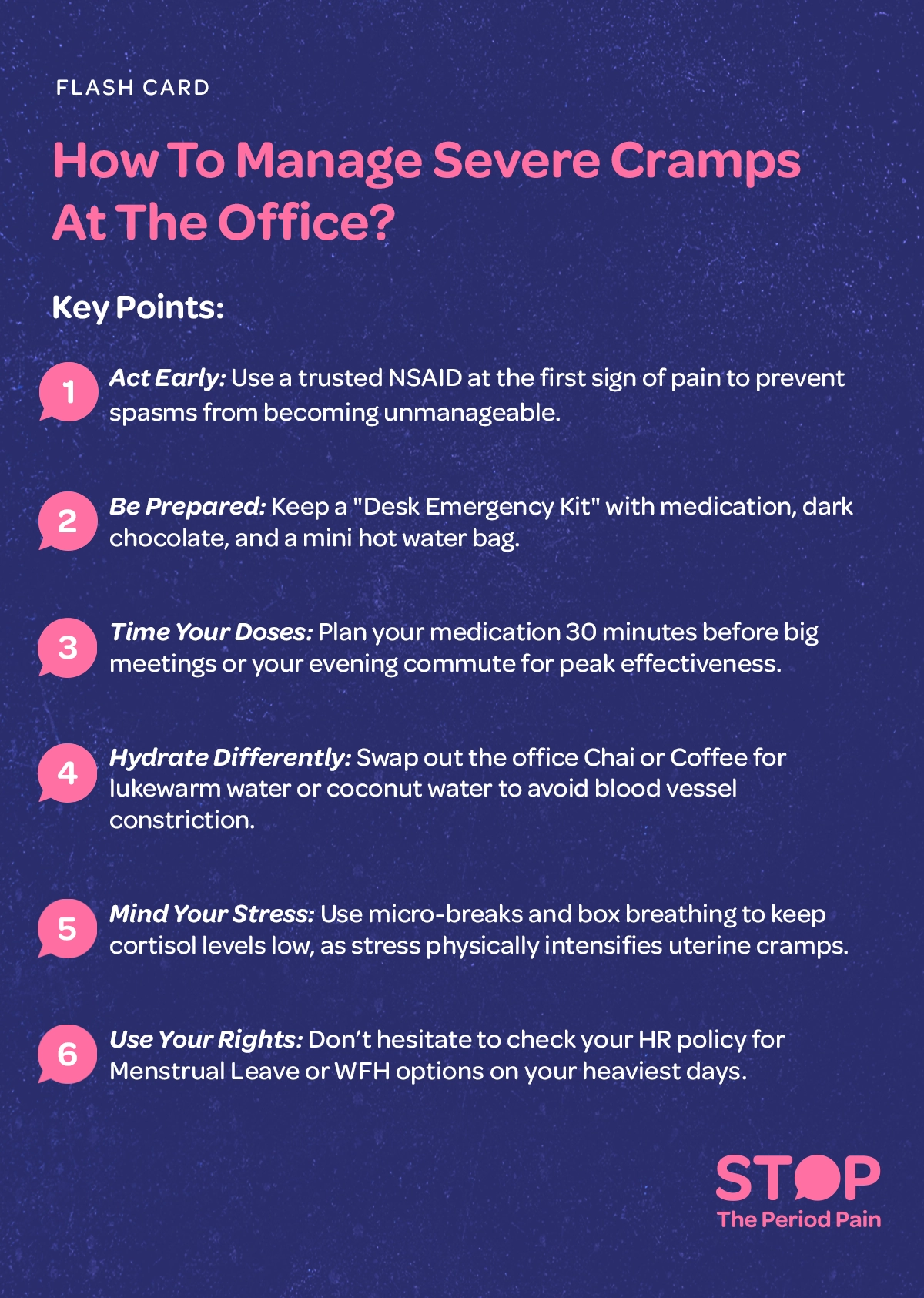
Don’t wait for the pain to become unbearable. At the first sign of a spasm, use a trusted non-sterioidal anti-inflammatory drug (NSAID). It targets the prostaglandins and muscle contractions directly, allowing you to stay focused on your tasks without the exhaustion or lack of concentration that often comes with severe pain.
Pro-Tip: If you have an important meeting or presentation, take your dose of period-pain relief medication (NSAID) 30 minutes prior. This ensures the medication peaks just when you need to be at your most productive.
Keep an "Emergency Kit" in Your Desk
Keep a small pouch in your office drawer containing:
- Medicine: A strip of period pain relief medications (NSAIDs).
- Dark Chocolate (70% Cocoa): Keep a few squares of dark chocolate. It is rich in magnesium, which helps relax muscles naturally, and it provides a small, mood-boosting endorphin lift during a stressful workday.
- A Mini Hot Water Bag (approx. 16cm x 11cm): These compact bags (similar in size to a large smartphone) are perfect for the office. Because they are small, they fit comfortably inside a laptop sleeve or handbag and require very little hot water from the office pantry.
Stay Hydrated, but Smart
Avoid excess caffeine (like multiple cups of strong Chai or Coffee), as caffeine constricts blood vessels and can actually worsen cramps. Opt for lukewarm water or coconut water to stay hydrated.
The Mind-Body Connection: Managing Stress & Period Pain at Work
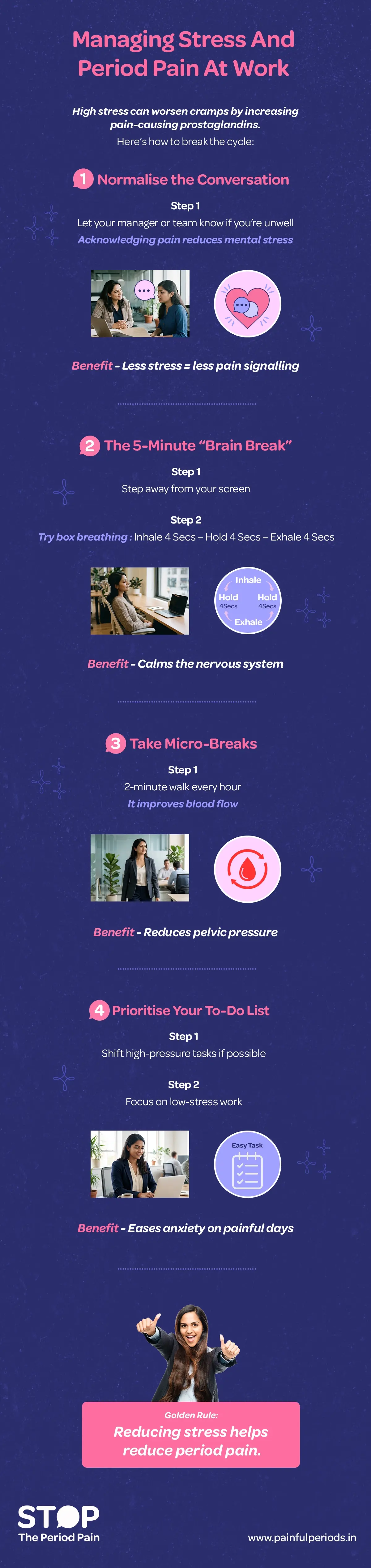
Did you know that high stress levels can actually increase the production of prostaglandins, making your cramps more intense? Here is how to break the cycle:
- Normalise the Conversation: Don’t feel the need to hide your discomfort behind a “brave face.” If you are in pain, it is okay to let your immediate team or manager know you are feeling slightly unwell. Acknowledging the pain reduces the mental stress of “hiding” it.
- The 5-Minute “Brain Break”: When pain spikes, your stress rises. Step away from your screen for five minutes. Close your eyes and practice simple box breathing (inhale for 4 seconds, hold for 4 seconds, exhale for 4 seconds). This lowers your heart rate and calms the nervous system.
- Take Micro-Breaks: Every hour, take a 2-minute walk to the water cooler. Movement helps improve blood flow and reduces uterine pressure
- Prioritise Your To-Do List: On your heaviest days, move high-pressure tasks or intense meetings to the next day if possible. Focusing on “low-stakes” admin work can reduce the anxiety of underperforming while you are in physical pain.
Know Your Workplace Policy
Many Indian companies are now introducing “Menstrual Leave” or flexible “Work from Home” policies for the first day of the period. Check your HR handbook—if your pain is severe, it is better to work comfortably from home for a few hours than to endure a long commute in period pain.
Gynaecologist’s Advise:
While lifestyle adjustments like yoga and hydration are helpful for overall wellness, they cannot stop the overproduction of prostaglandins—the biological triggers of dysmenorrhea. For severe spasmodic pain, a targeted dual-action treatment (Anti-inflammatory + Anti-spasmodic) is the clinical gold standard. If your pain consistently forces you to miss work or doesn’t respond to standard NSAIDs, please consult your gynaecologist to rule out underlying conditions like endometriosis. You don’t have to suffer in silence; effective, safe, and non-hormonal medical solutions are available to help you lead a pain-free professional life.
Hit Up Our Period Pain Calculator
For real, how bad is your pain? Our interactive tool uses a 1-10 pain scale and a few quick questions to help you get the full picture. In just a few clicks, you’ll know if your pain is a chill or a major red flag.

The Moral of the Story
Managing severe period pain in a high-pressure office environment shouldn’t be a solo struggle. By combining the right medical relief with smart desk-side habits, you can regain control of your workday. Remember, period pain is a legitimate medical condition—treating it with the right medication and self-care isn’t just about comfort; it’s about maintaining your professional productivity and long-term well-being. Don’t just “tough it out”; take charge of your cycle so it doesn’t stand in the way of your career goals.
Your Journey to #StopThePeriodPain Starts Here
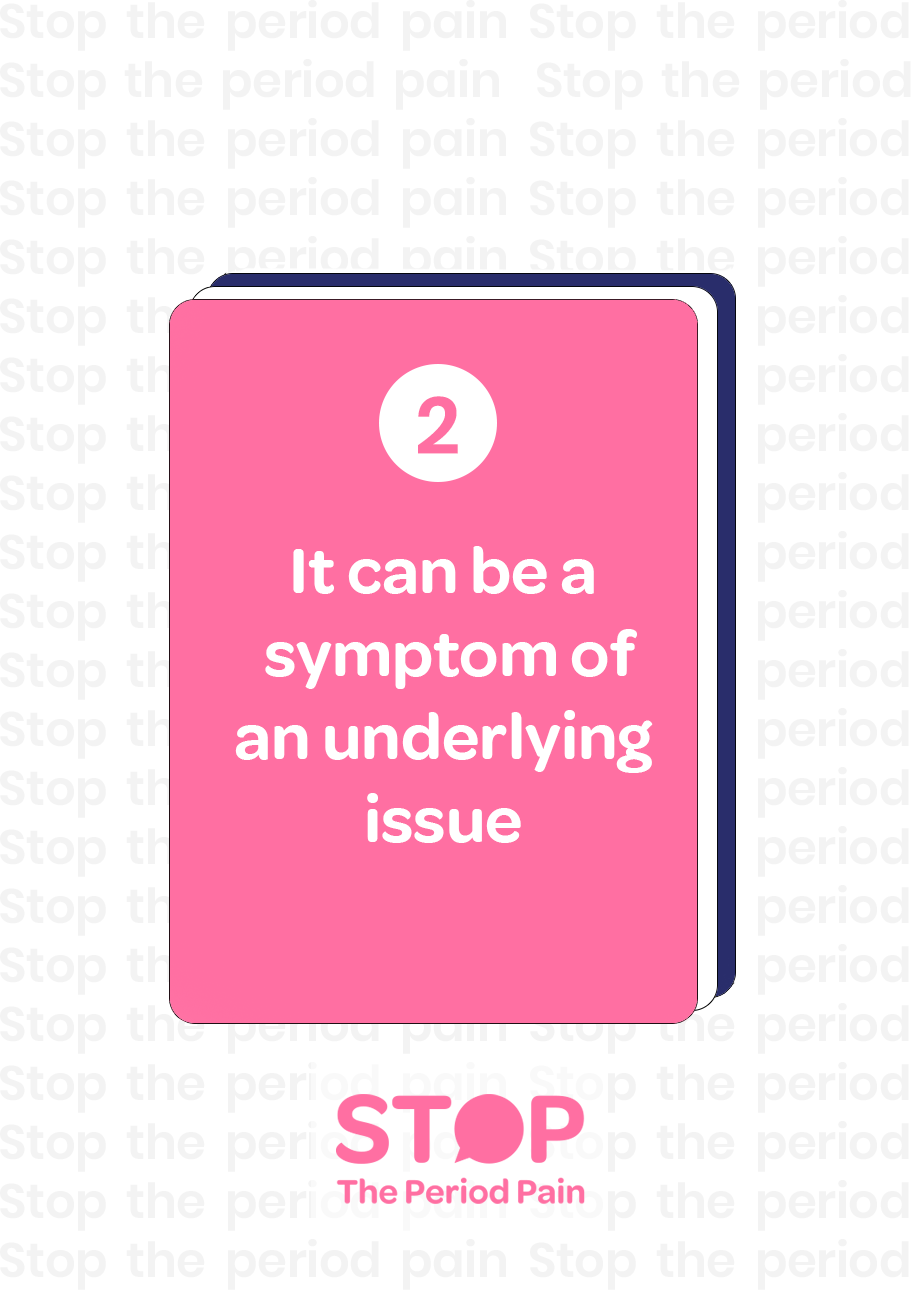
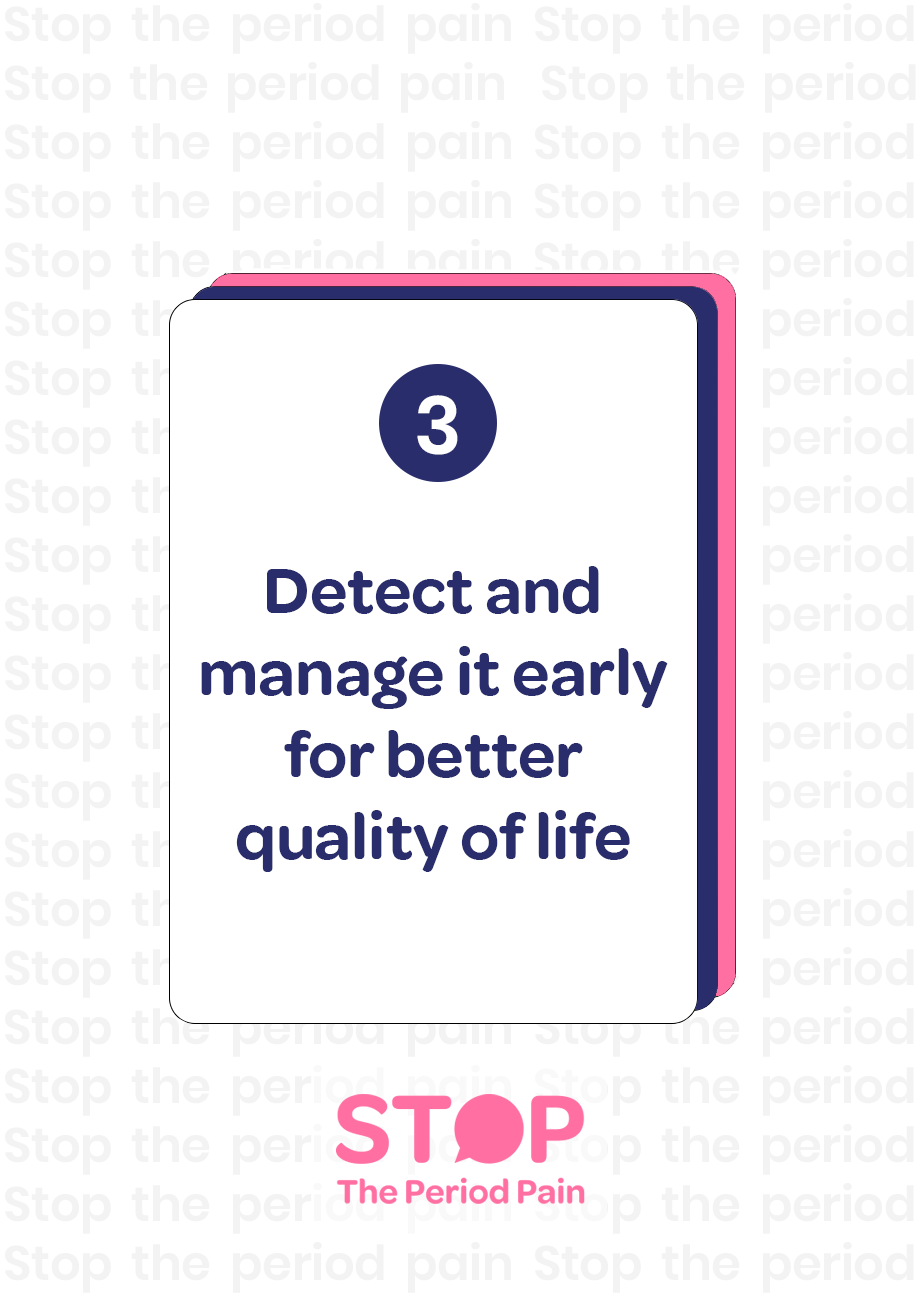
Every month, millions of Indian girls & women suffer in silence, told that their severe period pain (dysmenorrhea) is “normal.” Our mission is to break that silence. #StopThePeriodPain campaign is here to empower you with 3 simple truths:
More Stories To Read
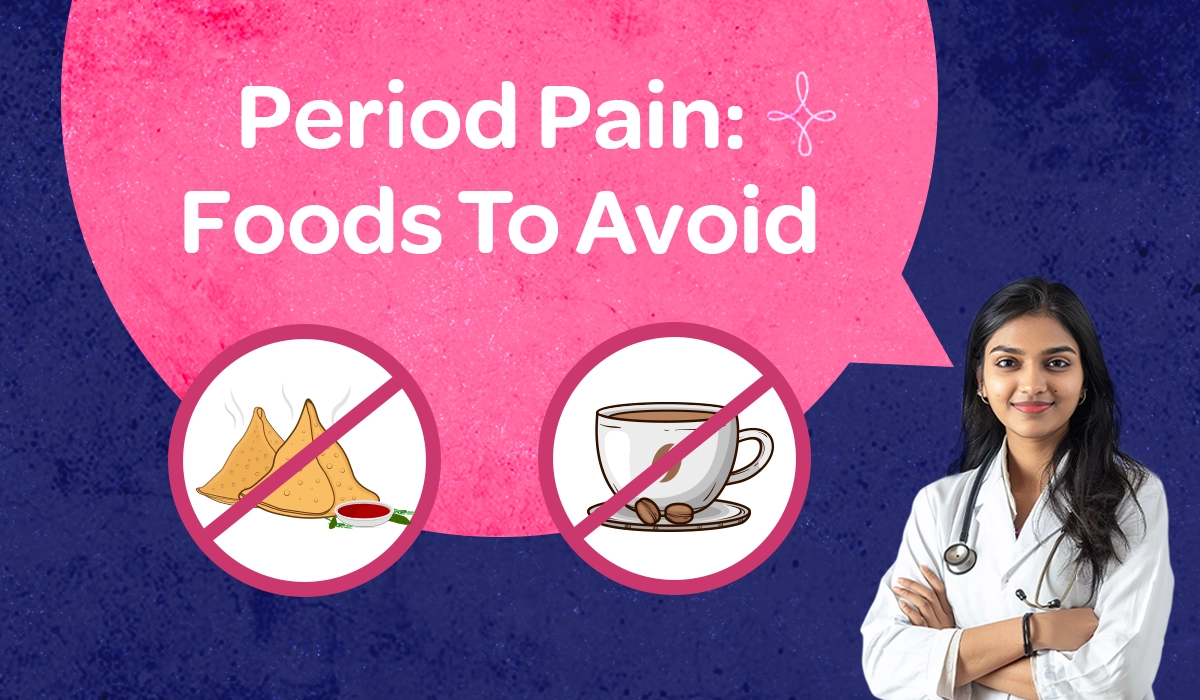
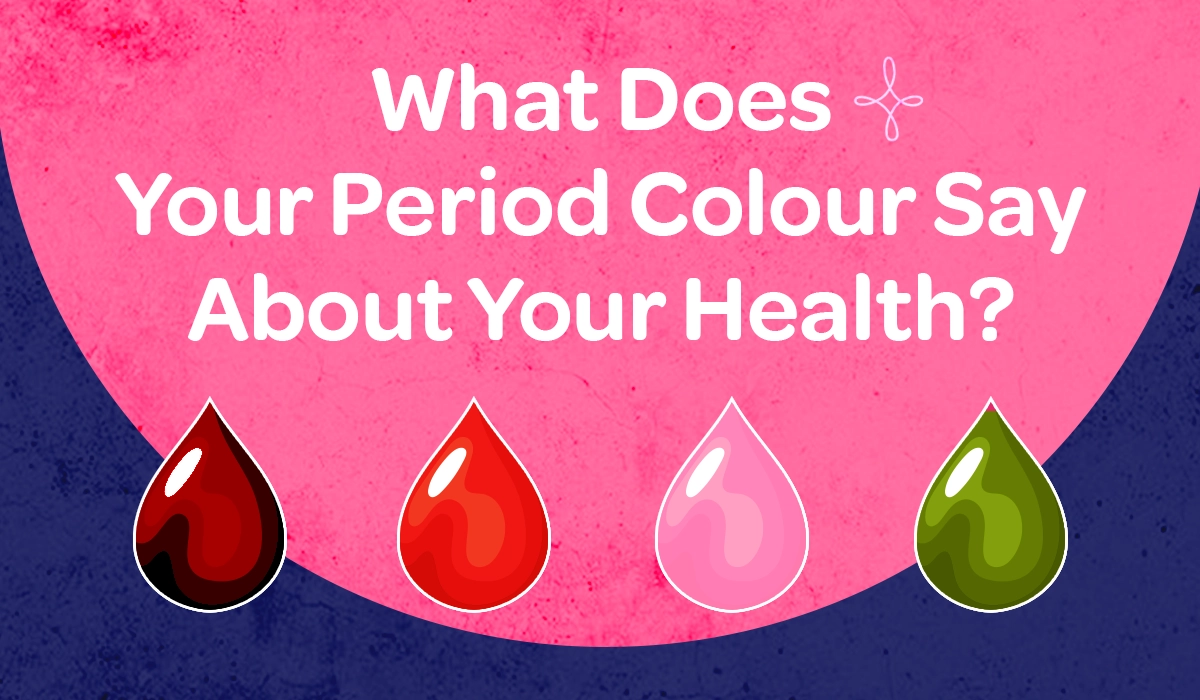
Transform your understanding of period pain through engaging and informative stories based on real medical insights.
The Answers You've Been Looking For
Get clear, concise answers to your most pressing questions about period pain.
- Can Menstrual Pain Cause Depression?
- What is the cause of period pain?
- What are the symptoms of period pain?
- Why is my period so clotty and painful?
- What do large blood clots during period mean?
- When to see a doctor for painful periods?
- What will a gynaecologist do for painful periods?
- Can dysmenorrhea cause depression?
- What is the best treatment for period pain?
- How do you relieve period pain in teens?
Disclaimer:
This content is for informational purposes only and is not a substitute for professional medical advice. The information provided here is based on general trends and may not apply to every individual, as every woman’s body and experience with period pain is unique.
Do not self-diagnose or self-treat. If you are experiencing painful periods, especially if the pain is moderate to severe or accompanied by other concerning symptoms, you must consult with a gynaecologist. Ignoring severe period pain can lead to a significant delay in diagnosing underlying conditions that require proper medical attention. Always prioritise a confident conversation with your gynaecologist over self-treatment.