
Imagine you catch a bad cold. Your nose is running, and you have a nasty cough. Do you instinctively reach for a tub of ice-cream and a cold soda? No, right? You know it will make your cough and congestion worse. Your body’s instinct guides you toward hot ginger tea or a bowl of hot, clear, restorative rasam.
That intuitive awareness—knowing what harms and what helps when you’re unwell—comes naturally for a simple cold.
So why do we abandon this critical wisdom when it comes to our menstrual cycle (periods), a time when our body is performing complex biological work and truly needs more attention and nutrients than ever?
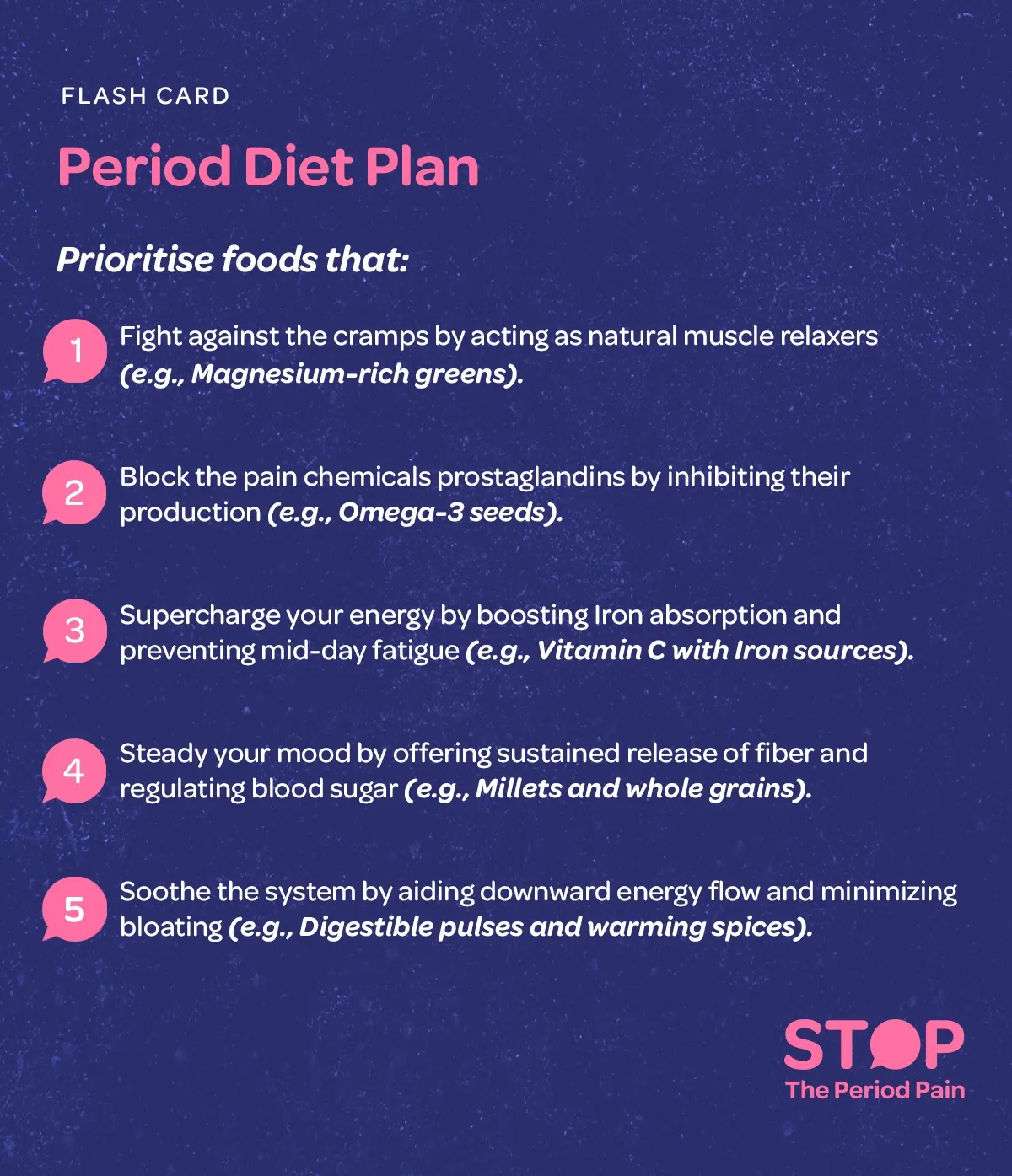
We often treat our period like a time to endure, not a time to nourish. Yet, during this phase, your body is actively battling internal inflammation (the source of most cramps) and compensating for crucial nutrient loss (like Iron). A thoughtful period diet isn’t just about managing this change; it’s the simplest way to actively reduce the pain and chronic fatigue that holds you back.
During your period, the focus is on two broad goals: Reducing Inflammation (Due to Prostaglandins) and Replacing Lost Nutrients (Iron and Magnesium).
Now, let’s transform that intuitive wisdom into a strategic plan. Below is a comprehensive list of specific ingredients, broken down by category, that you must prioritize and include in your daily Indian diet to soothe inflammation and replenish essential nutrients during your cycle.
In This Story
1. Choose Your Energy Source Wisely
During periods, you need energy from sources rich in fibre. This serves two purposes: it keeps you energized longer (preventing fatigue crashes), and the fibre helps ease period constipation (if you have it).
| Carbohydrates and Grains | Recommended Indian Choices | Benefits During Periods |
|---|---|---|
| Millets & Whole Grains |
|
|
2. Replenish Your Blood Building Blocks
You lose Iron during your cycle, which causes dizziness and fatigue. Pulses are a powerful vegetarian source of Iron and Protein, but choose lighter varieties (like Masoor and Moong) that won’t contribute to bloating.
| Pulses and Legumes | Recommended Indian Choices | Benefits During Periods |
|---|---|---|
| Lighter Pulses |
|
|
3. Boost Iron Absorption & Soothe Cramps
Focus on fruits high in Vitamin C (like citrus) as it’s essential for absorbing the Iron you get from plants. Water-rich fruits (like watermelon) keep you hydrated, while certain enzymes (in papaya) can act as a natural cramp soother.
| Fruits | Recommended Indian Choices | Benefits During Periods |
|---|---|---|
| High-Water/Digestive Fruits |
|
|
| Iron/Vitamin C Boosters |
|
|
4. The Natural Muscle Relaxer Plate
The most effective natural muscle relaxer against cramps is Magnesium. Green leafy vegetables (like Palak) are packed with it. Prioritizing these greens helps relax the uterine muscle and counter the pain-causing inflammation.
| Vegetables | Recommended Indian Choices | Benefits During Periods |
|---|---|---|
| Leafy Greens |
|
|
| Root/Water-Rich |
|
|
5. Fight Inflammation at the Source
Severe cramps are caused by inflammatory compounds called prostaglandins. Seeds rich in Omega-3 fatty acids (like flax and chia) actively reduce these compounds, making this a proactive and powerful defense against period pain.
| Fats & Seeds | Recommended Indian Choices | Benefits During Periods |
|---|---|---|
| Seeds (Omega-3) |
|
|
| Cooking Fats |
|
|

Gynaecologist’s Advise:
While diet is a powerful tool for comfort and symptom management, it is never a cure for severe pain. If your cramps consistently disrupt your daily life, cause you to miss work or school, or are accompanied by heavy bleeding, you must consult your gynaecologist. Do not dismiss it as ‘just a period’.
Remember, period pain is a real medical issue. Do not take it lightly.
Hit Up Our Period Pain Calculator
For real, how bad is your pain? Our interactive tool uses a 1-10 pain scale and a few quick questions to help you get the full picture. In just a few clicks, you’ll know if your pain is a chill or a major red flag.

The Moral of the Story
You now have a clear, strategic plan to use the power of the Indian kitchen. Every time you choose a food rich in Magnesium (like greens) or Iron (like dal), you are directly fighting the inflammation that causes pain and the fatigue that steals your day.
The shift is simple: Stop treating your period as something to endure, and start treating it as something to nourish. Start fueling your body for strength, not just surviving on silence and bland khichdi. Go ahead—use this guide and feel the difference next month.
Reviewed By
About The Author

Dr. Shweta Pilankar ( Obstetrician and Gynaecologist )
Dr. Shweta has done her MBBS from Nair hospital and MS from KEM hospital. She has more than 15 years of experience. She is passionate about obstetrics and laparoscopic surgery
Your Journey to #StopThePeriodPain Starts Here
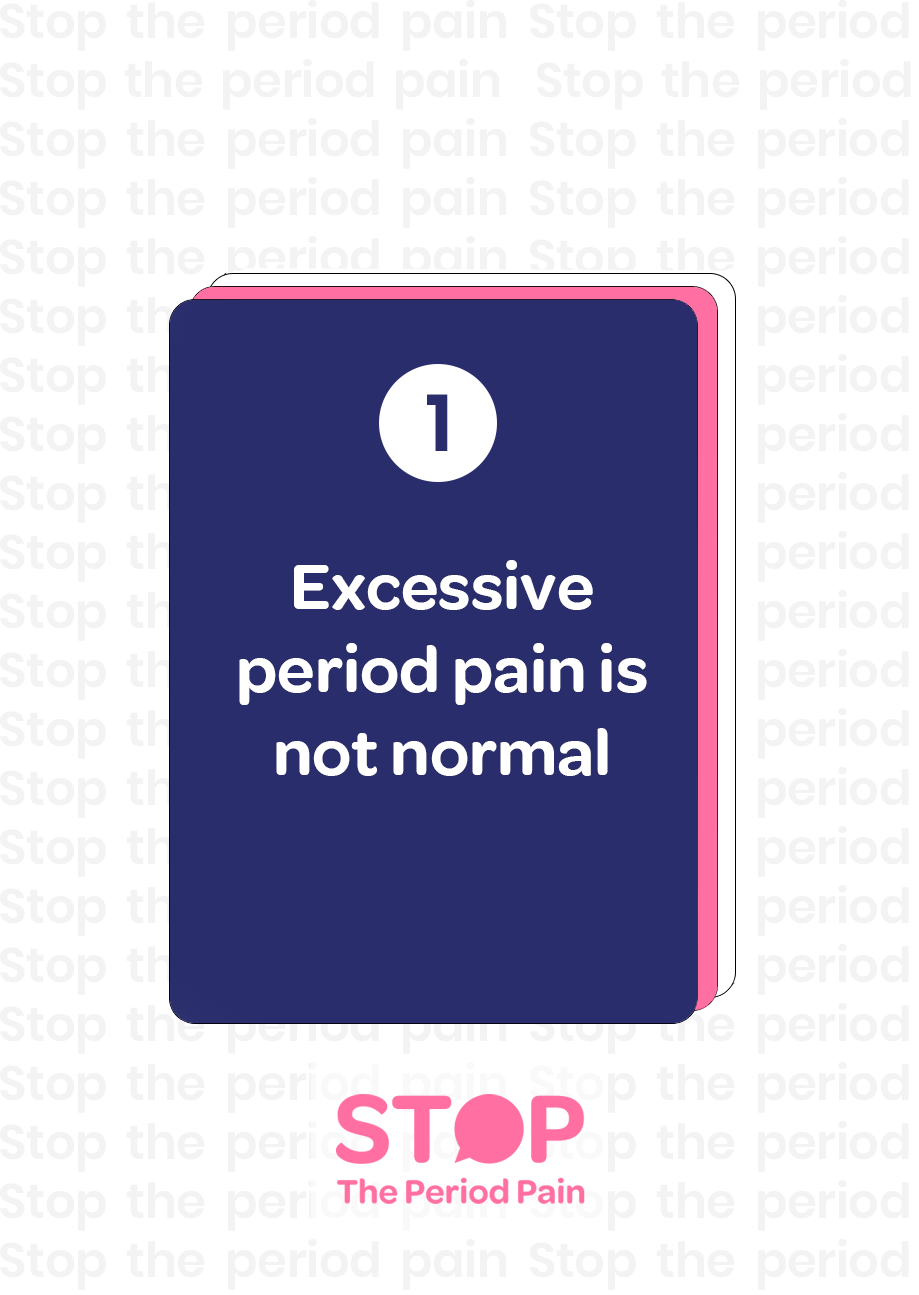
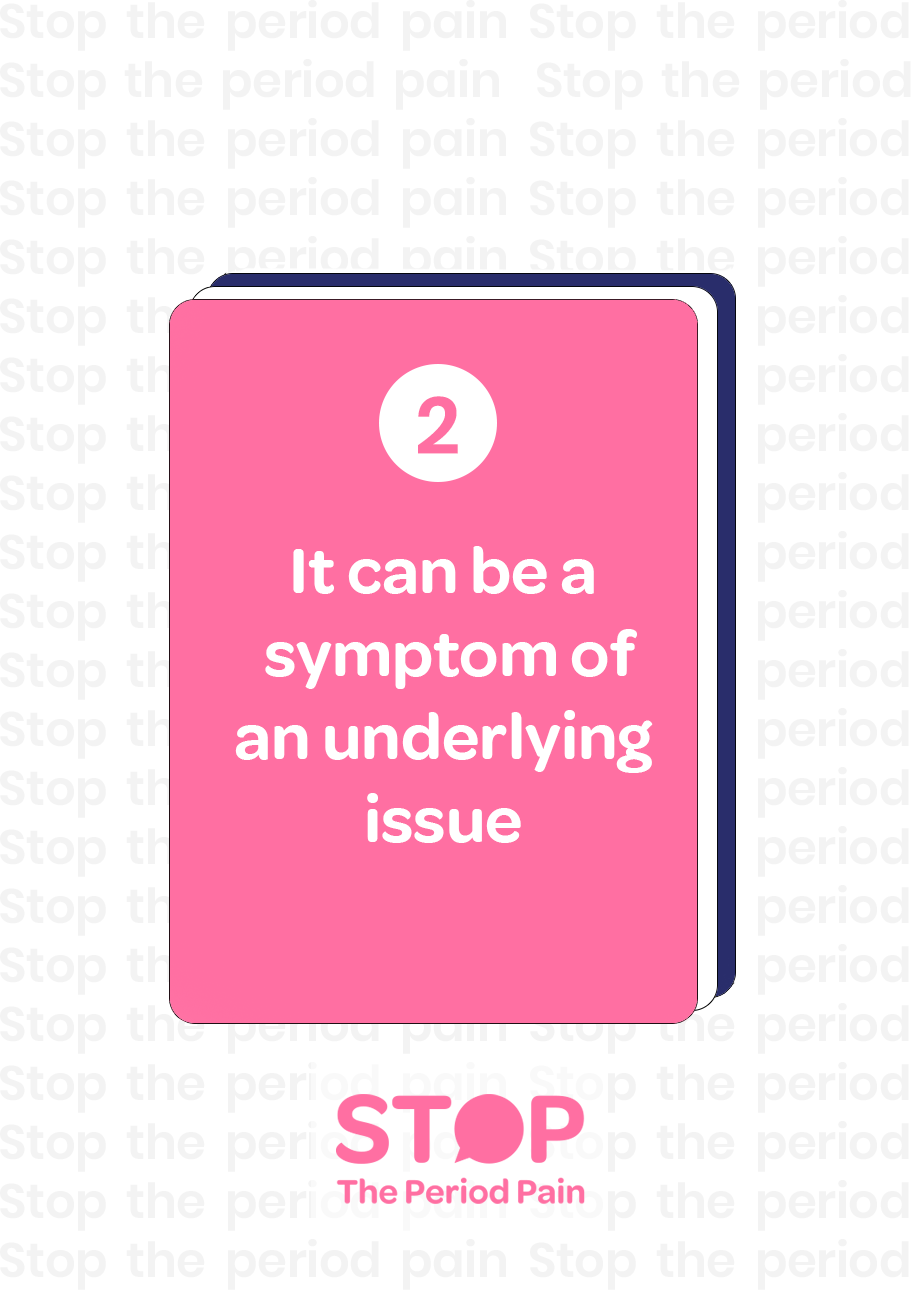
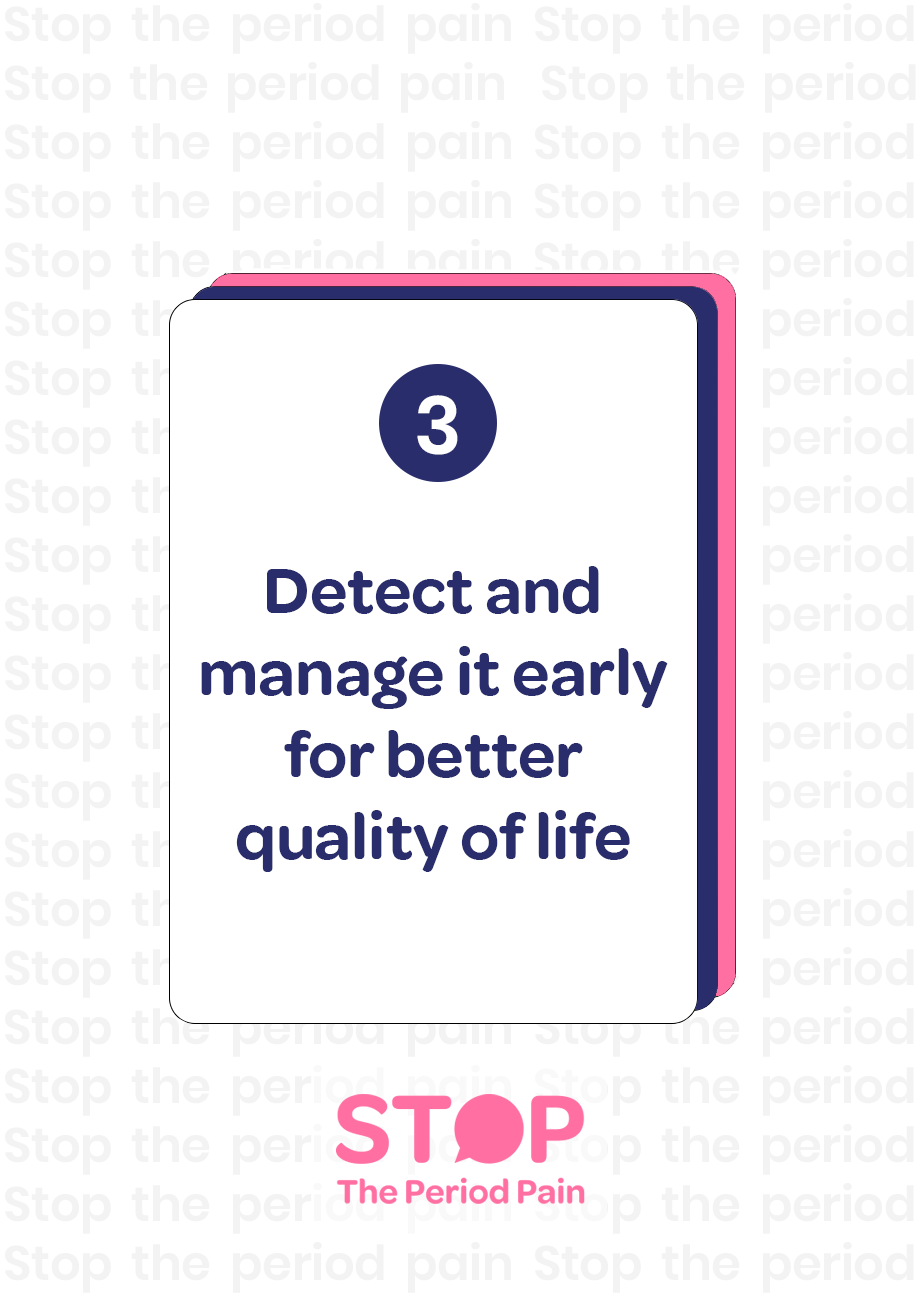
Every month, millions of Indian girls & women suffer in silence, told that their severe period pain (dysmenorrhea) is “normal.” Our mission is to break that silence. #StopThePeriodPain campaign is here to empower you with 3 simple truths:
More Stories To Read
Transform your understanding of period pain through engaging and informative stories based on real medical insights.
The Answers You've Been Looking For
Get clear, concise answers to your most pressing questions about period pain.
- Can Menstrual Pain Cause Depression?
- What is the cause of period pain?
- What are the symptoms of period pain?
- Why is my period so clotty and painful?
- What do large blood clots during period mean?
- When to see a doctor for painful periods?
- What will a gynaecologist do for painful periods?
- Can dysmenorrhea cause depression?
- What is the best treatment for period pain?
- How do you relieve period pain in teens?
Disclaimer:
This content is for informational purposes only and is not a substitute for professional medical advice. The information provided here is based on general trends and may not apply to every individual, as every woman’s body and experience with period pain is unique.
Do not self-diagnose or self-treat. If you are experiencing painful periods, especially if the pain is moderate to severe or accompanied by other concerning symptoms, you must consult with a gynaecologist. Ignoring severe period pain can lead to a significant delay in diagnosing underlying conditions that require proper medical attention. Always prioritise a confident conversation with your gynaecologist over self-treatment.