When we think of health issues in India, we usually think of Diabetes, Heart Disease, or Obesity. We see ads for them, we see campaigns on them, and we take them very seriously. But there is one crisis sitting right next to them that we almost never talk about: Dysmenorrhea (Severe Period Pain).
In This Story
- Introduction
- Dysmenorrhea Is Much Bigger Than Diabetes And Obesity
- Period Pain Is Not Just Cramps
- The Real Cost of Bearing Period Pain
- Got Period Pain? Here’s How You Can Help Solve India’s Biggest Health Issue
- Gynaecologist’s Advise
- The Moral of the Story
- More Stories To Read
- The Answers You’ve Been Looking For
- References
Dysmenorrhea Is Much Bigger Than Diabetes And Obesity
If we look at how many people are affected, period pain is more widespread than some of the most discussed health issues in India. While national health campaigns focus heavily on lifestyle diseases, the numbers show that dysmenorrhea is a massive, yet overlooked, part of the health problems in India. Let’s look at the prevalence of dysmenorrhea in India vs other diseases.
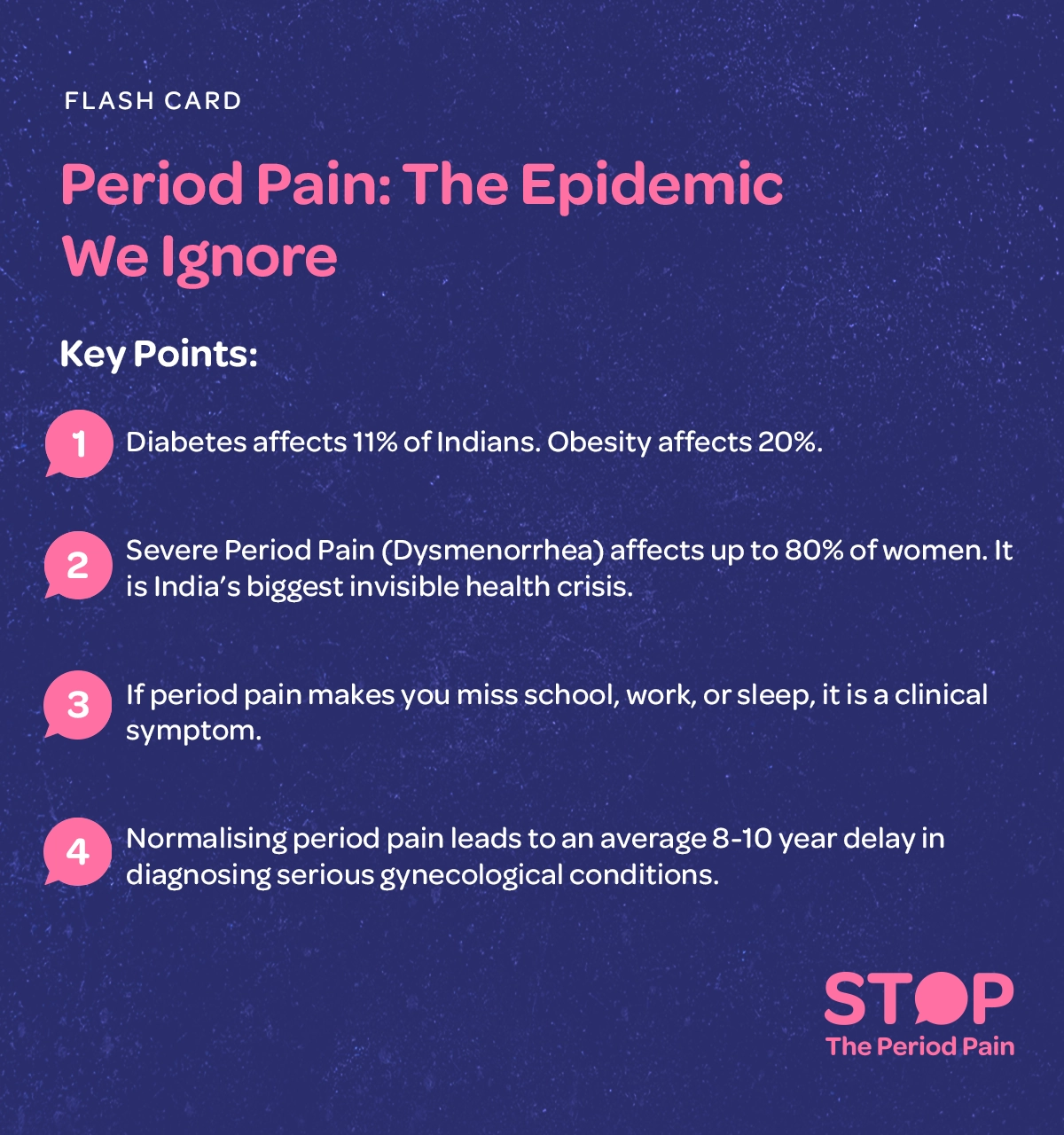
- Diabetes: Affects about 11% of the Indian population.
- Obesity: Affects about 20% of the Indian population.
- Severe Period Pain: Affects 60% to 80% of women in India.
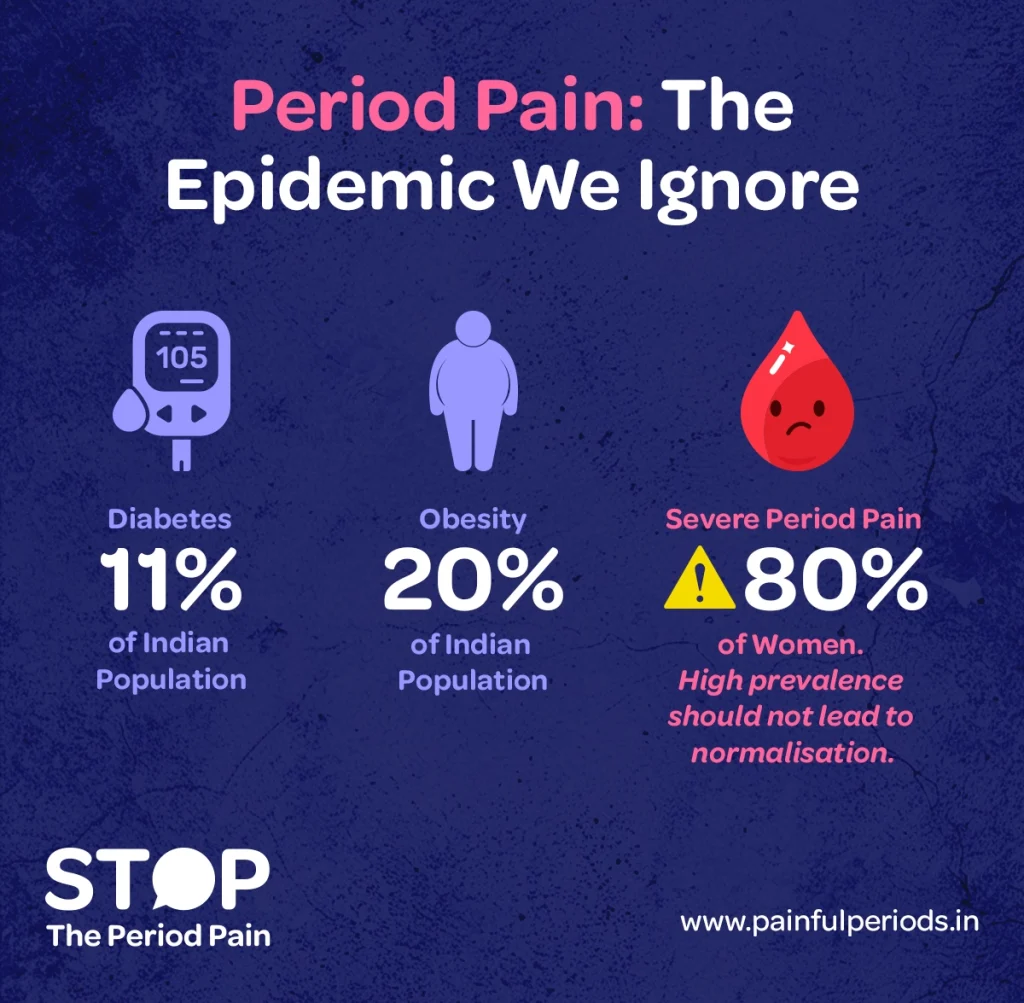
Even though it affects more people than many other infamous diseases, we don’t treat period pain like an emergency. Because we don’t take period pain seriously, it remains an invisible epidemic and one of the biggest india health issues. Long-held beliefs, stigma, and normalisation keep women suffering in silence. This has resulted in the prevalence of dysmenorrhea being reported as high as 80% in various studies across the country. When we ignore these figures, we ignore the foundation of women health in India.
Period Pain Is Not Just Cramps
Just like chest pain can be a sign of heart disease, severe period pain is a sign that something is wrong with your reproductive system. When we talk about women’s health in India, we must understand that the reproductive system isn’t just one thing—it includes your uterus, ovaries, and fallopian tubes.
While these are biological terms, here is the basic working you need to know:
- Ovaries: These release the egg—this is the female contribution to reproduction.
- Fallopian Tubes: These transport the egg from the ovaries to the uterus.
- Uterus: This is where the sperm meets the egg and fertilisation happens. Fertilisation marks the start of a pregnancy.
Period pain is a signal that any part of this system could be facing a problem. In the context of women’s health problems in India, severe period pain (dysmenorrhea) is often a sign of one of these gynaecological conditions. This type of period pain is called secondary dysmenorrhea.
| The Condition | What It Means | How Common Is It In India? |
|---|---|---|
| Endometriosis | Tissue similar to the uterine lining abnormally grows outside the uterus. | For 4.2 crore women in India, what seemed like “normal” period pain turned out to be a key symptom of endometriosis. |
| PCOS | PCOS (Polycystic Ovary Syndrome) are cysts on ovaries that prevent them from regularly releasing eggs. | 1 in 5 Indian girls and women are estimated to be suffering from Polycystic Ovary Syndrome (PCOS). |
| Adenomyosis | Adenomyosis is the lining of the uterus grows into the muscular wall of the uterus. | An estimated 2.35 crore Indian women suffer from Adenomyosis, a condition that hides in plain sight, dismissed as “just bad periods.” |
| Uterine Fibroids | Uterine fibroids are non-cancerous growths in the muscular uterus that can cause symptoms depending on their size and location. | Uterine fibroids affect about 37.65% of women in rural populations and 24% of women in urban populations. |
Sometimes chest pain isn’t a sign of heart disease; it could just be triggered by a chemical imbalance, which sometimes happens when you have severe indigestion.
Similarly, in many cases of women’s health in India, period pain is a sign of a chemical imbalance rather than a permanent condition. Here is what happens inside the body:
- The Trigger: Your body produces chemicals called prostaglandins to help the uterus contract and shed its lining. To make it simple, you can think of prostaglandins as the villain chemicals. They are the ones responsible for those painful contractions that we know as period cramps or period pain.
- Excess Production: When the body goes into overdrive and produces excessive amounts of these chemicals, it results in severe period pain.
- The Result: The uterus squeezes much harder than it is supposed to. This turns what should be mild discomfort into the debilitating pain that many women experience, but consider as normal.
This type of pain is called primary dysmenorrhea.
Whether your pain is caused by primary dysmenorrhea or secondary dysmenorrhea, it contributes to the high prevalence of dysmenorrhea in India. In both cases, the period pain is real, it is physical, and it should not be ignored.
The Real Cost of Bearing Period Pain
We treat chronic diseases like diabetes and heart issues seriously because they stop people from working and living well. Period pain does the exact same thing, yet it is often left out of the list of major health problems in India.
The cost of just bearing period pain is incredibly high:
- Education: Nearly 20% of young women miss school or college every single month. This creates a massive gap in learning and consistency for girls across the country.
- Workforce Impact: Millions of women struggle to focus or are forced to take unpaid leave because the period pain is too much to bear. This isn’t just a personal issue; it is one of the significant india health issues affecting national productivity.
- The Diagnosis Delay: Because society has labeled period pain as normal, women don’t seek help early. This results in a staggering 8 to 10-year delay for a woman to get a correct diagnosis for serious conditions like Endometriosis or Adenomyosis.
When we ignore these facts, we aren’t just ignoring period cramps—we are ignoring a fundamental part of women’s health in India that limits their potential in every area of life.
Hit Up Our Period Pain Calculator
For real, how bad is your pain? Our interactive tool uses a 1-10 pain scale and a few quick questions to help you get the full picture. In just a few clicks, you’ll know if your pain is a chill or a major red flag.

Got Period Pain? Here’s How You Can Help Solve India’s Biggest Health Issue
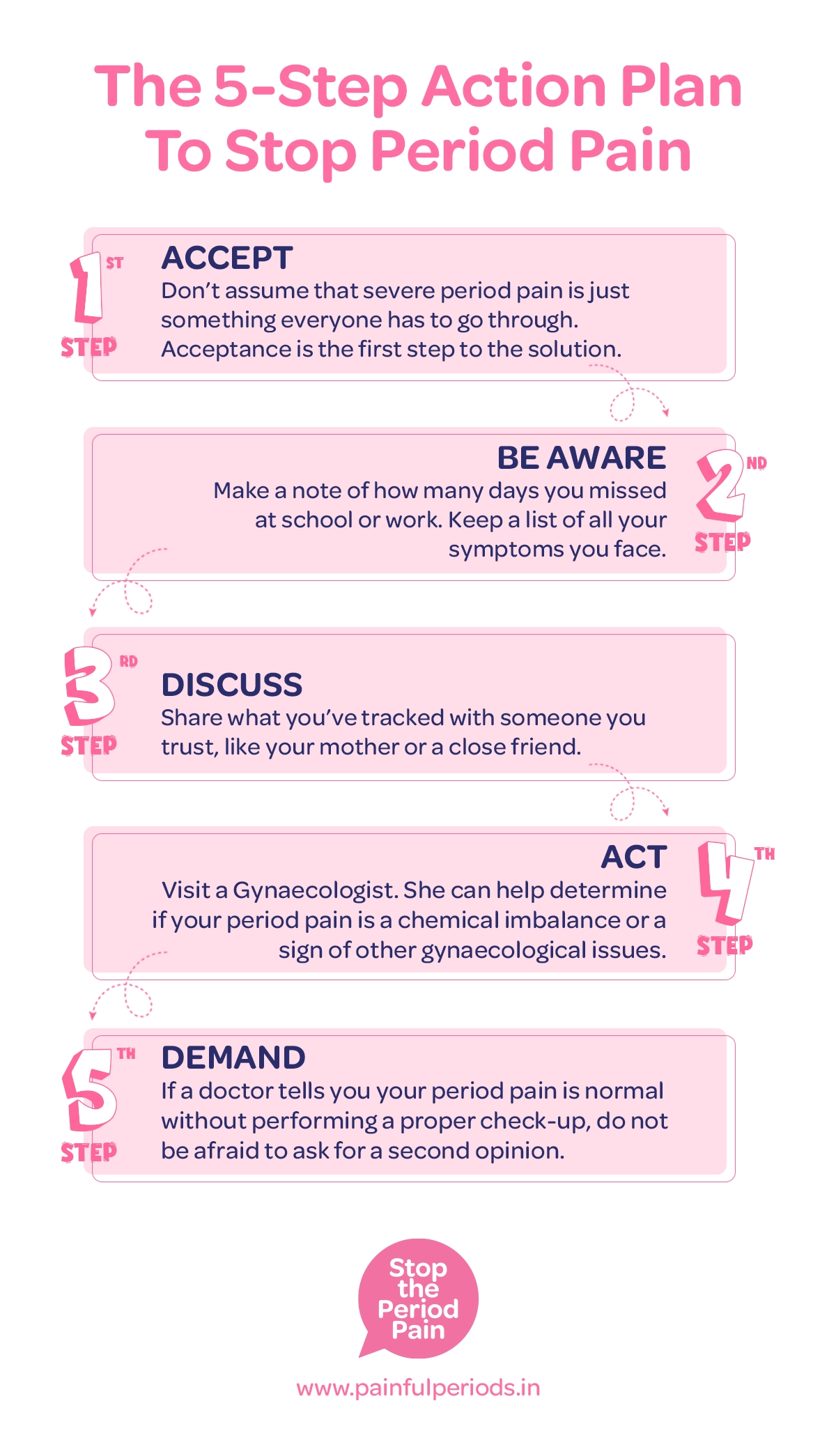
To truly improve women’s health in India, we have to move from suffering in silence to taking active steps toward a solution. Follow these five steps:
- Accept: Don’t assume that severe period pain is just something everyone has to go through. Everyone’s ability to bear pain is different. You might naturally be very strong, so if the pain is stopping you in your tracks, it is likely very excessive. Acceptance is the first step to the solution.
- Aware: Become aware of how this affects your life. Make a note of how many days you missed at school or work and how many plans you cancelled. Keep a list of all your symptoms—like heavy bleeding, nausea, or leg pain—not just the period cramps.
- Discuss: Share what you’ve tracked with someone you trust, like your mother or a close friend. Show them the data on health issues in India to prove that severe pain is not normal and that you deserve support.
- Take Action: Visit a gynecologist. A medical professional can help determine if your period pain is a chemical imbalance or a sign of other gynaecological issues like Endometriosis, Adenomyosis, PCOS or Uterine Fibroids.
- Demand Answers: This is your health. If a doctor tells you your period pain is normal without performing a proper check-up, do not be afraid to ask for a second opinion.
Gynaecologist’s Advise:
In my clinic, I often see women who have waited years to seek help because they were told their pain was just a part of a woman’s life. As a gynaecologist, my advice to you is simple: Pain that disrupts your life is not normal. If you are missing school, unable to work, your body is sending you a signal. Don’t take period pain lightly. It is a real medical issue.
The Moral of the Story
Just because a problem is common doesn’t mean it’s normal. We take heart health and diabetes seriously—it’s time we did the same for period pain (dysmenorrhea). By taking these steps, you are not just helping yourself; you are helping change the landscape of health problems in India for the next generation.
Your Journey to #StopThePeriodPain Starts Here
Every month, millions of Indian girls & women suffer in silence, told that their severe period pain (dysmenorrhea) is “normal.” Our mission is to break that silence. #StopThePeriodPain campaign is here to empower you with 3 simple truths:
More Stories To Read
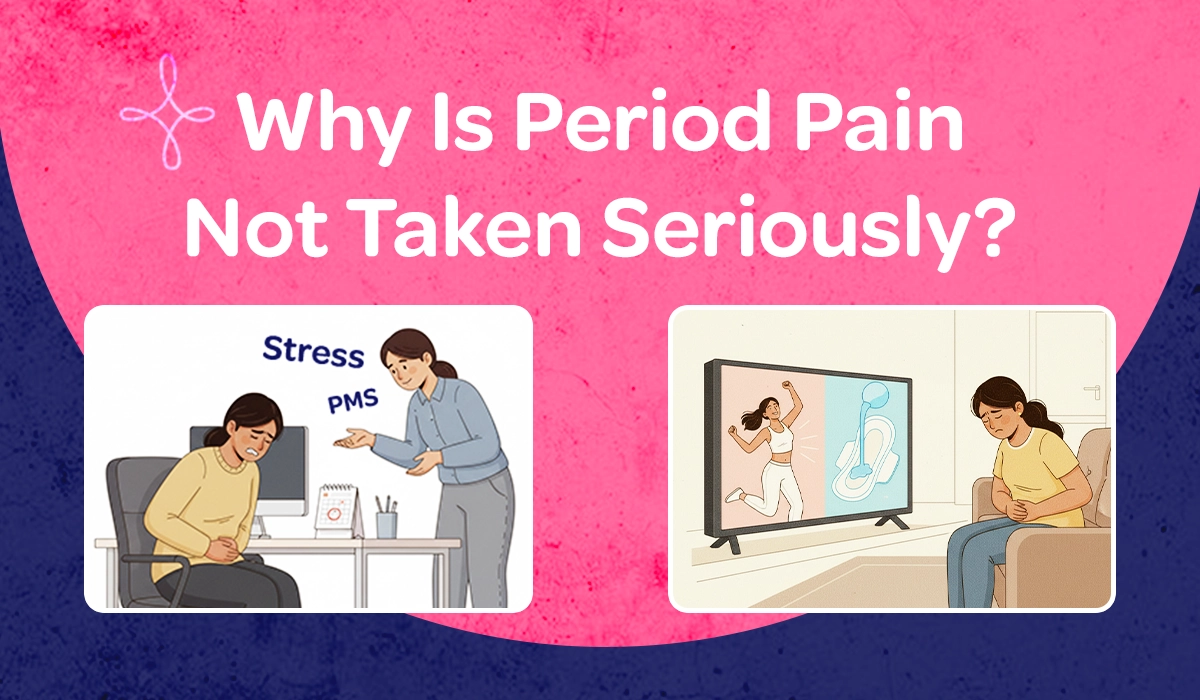
Transform your understanding of period pain through engaging and informative stories based on real medical insights.
The Answers You've Been Looking For
Get clear, concise answers to your most pressing questions about period pain.
- How To Stop Period Pain Forever?
- What Are Age Signs Of Unhealthy Periods?
- At What Age Do Period Cramps Get Worse?
- When to See a Doctor for Painful Periods?
- How Is Secondary Dysmenorrhea Treated?
- What are The Types of Prostaglandins and Their Functions?
- Why Can’t I Sleep On My Periods?
- What is the Best Treatment for Period Pain?
- What are NSAIDs Medicines?
- What To Do When You Have Period Pains?
References:
- International Journal of Reproduction, Contraception, Obstetrics and Gynecology – Prevalence of Fibroids
- Prevalence of Risk Factors for Uterine Fibroids at Tertiary Care Teaching Hospital: A Cross-sectional Study
- Indian Journal of Dermatology, Venerology, Leprology – Polycystic ovarian syndrome
- PubMed Central – Prevalence of Polycystic Ovarian Syndrome in India: A Systematic Review and Meta-Analysis
- Think Global Health – India Is Unprepared for a PCOS Crisis
- International Journal of Reproduction, Contraception, Obstetrics and Gynecology
- Indian Journal of Obstetrics and Gynecology Research
- Endometriosis Society of India – Endometriosis: A Clinical Experience of 500 Patients from India
- The prevalence and risk factors of dysmenorrhea
- Worldwide prevalence of dysmenorrhea: a systematic review and meta-analysis across 70 countries
Disclaimer:
This content is for informational purposes only and is not a substitute for professional medical advice. The information provided here is based on general trends and may not apply to every individual, as every woman’s body and experience with period pain is unique.
Do not self-diagnose or self-treat. If you are experiencing painful periods, especially if the pain is moderate to severe or accompanied by other concerning symptoms, you must consult with a gynaecologist. Ignoring severe period pain can lead to a significant delay in diagnosing underlying conditions that require proper medical attention. Always prioritise a confident conversation with your gynaecologist over self-treatment.