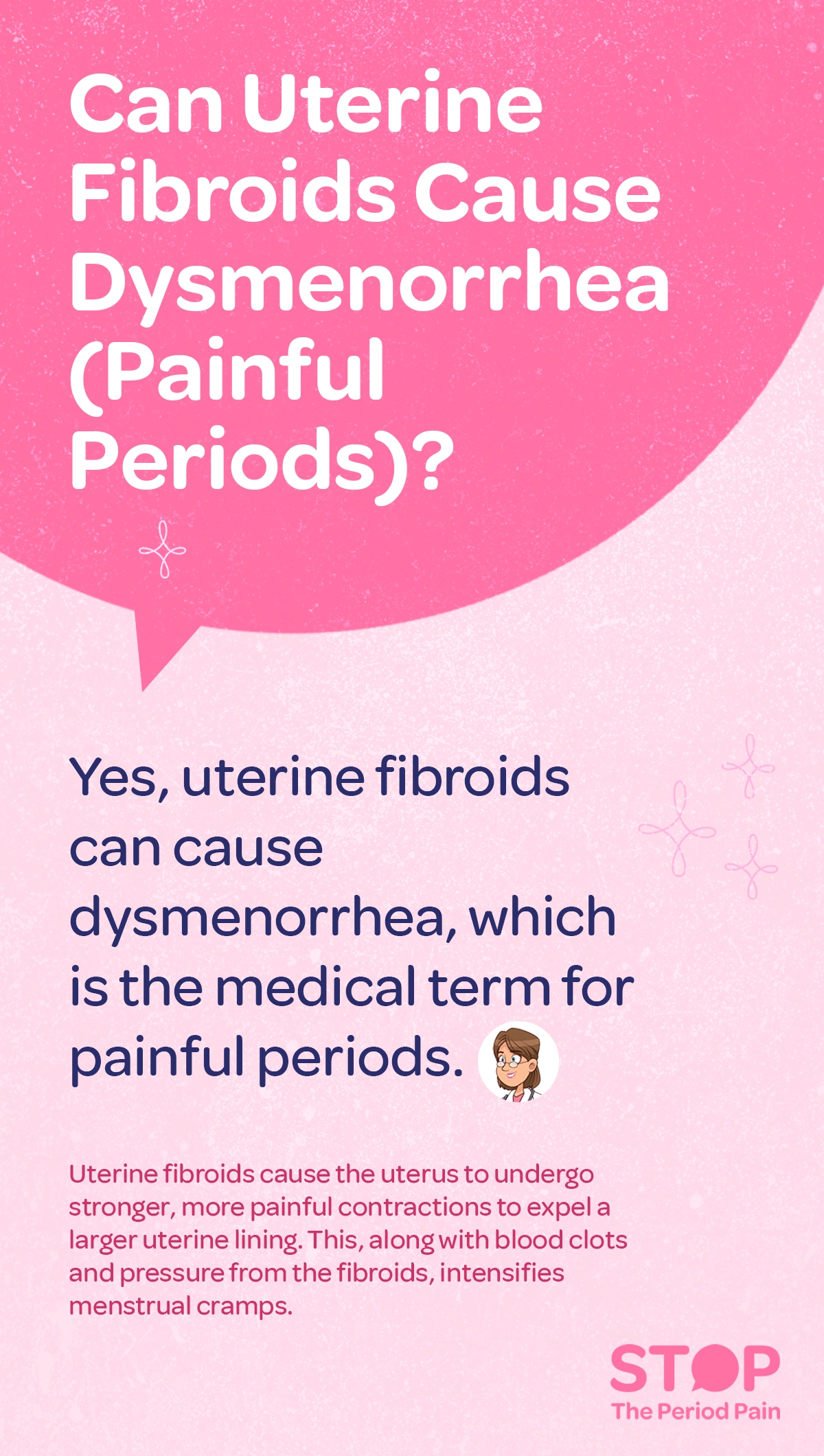
Yes, uterine fibroids can cause dysmenorrhea, which is the medical term for painful periods.

This is a type of secondary dysmenorrhea, meaning the pain is a symptom of an underlying medical condition (in this case uterine fibroids), and not just the normal cramping of a menstrual cycle. Fibroids can lead to dysmenorrhea by increasing the size of the uterine lining, which requires more powerful uterine contractions to be expelled. This process, coupled with the potential for blood clot formation and the physical pressure exerted by the fibroids on the uterus and surrounding organs, results in more severe and painful periods.

Prevalence of Uterine Fibroids in India is estimated at 37.65% in rural populations and 24% in the urban populations.

A pink and light pink gradient informational graphic with text discussing uterine fibroids and painful periods. The top half features a large pink speech bubble containing the question, "Can uterine fibroids cause dysmenorrhea (painful periods)?" Below the bubble, text in dark blue reads, "Yes, uterine fibroids can cause dysmenorrhea, which is the medical term for painful menstrual cramps." Further down, smaller pink text explains that uterine fibroids cause stronger, more painful uterine contractions to expel a larger uterine lining, which, along with blood clots and pressure from fibroids, intensifies menstrual cramps. The graphic ends with the campaign message "STOP The Period Pain." Which is a knowledge initiative campaign by Blue Cross Laboratories the makers of meftal spas. The overall design is soft and feminine, aimed at educating about menstrual health and fibroid symptoms.

Your Journey to #StopThePeriodPain Starts Here

Every month, millions of Indian girls & women suffer in silence, told that their severe period pain (dysmenorrhea) is “normal.” Our mission is to break that silence. #StopThePeriodPain campaign is here to empower you with 3 simple truths:
Period Pain Calculator Section

Hit Up Our Period Pain Calculator

For real, how bad is your pain? Our interactive tool uses a 1-10 pain scale and a few quick questions to help you get the full picture. In just a few clicks, you’ll know if your pain is a chill or a major red flag.