How to Reduce & Ease Period Pain Instantly and Naturally: A Comprehensive Guide for Indian Women
Table Of Content
If your period pain, or dysmenorrhea, is bad enough to force you to cancel plans, miss work, or spend the day doubled over, let’s be absolutely clear: you are not alone, but this pain is not normal. Period pain is a real medical issue. Don’t take period pain lightly. In India, studies show that over 80% of girls and young women experience menstrual pain, and a significant number are forced to miss school or work because of it. It’s an incredibly common problem—but it is not a state you simply have to endure.
You do not have to accept debilitating cramps as “just a part of life.” This definitive guide provides a two-pronged solution: first, immediate comfort techniques to help you get rid of period pain instantly, and second, long-term holistic strategies rooted in both modern medicine and trusted Indian (Ayurvedic) practices to keep the pain from taking over your life. Read on to learn exactly how to get relief from period pain, once and for all.
Immediate Relief (The Quick-Fix Solution)
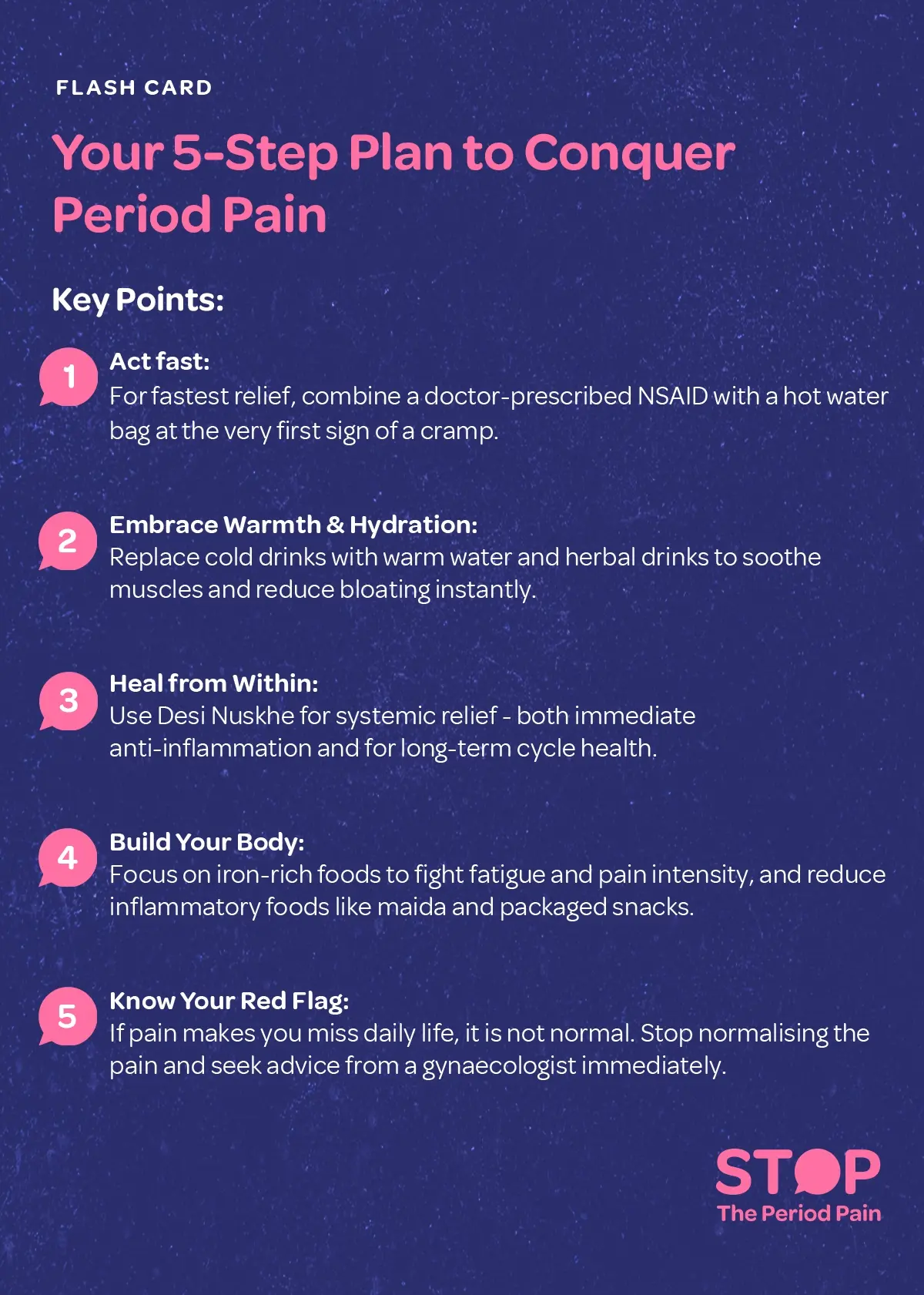
When the pain strikes, your day doesn’t have to stop. You do not need to simply tolerate bad cramps. The best way to get relief is to act fast, using a smart combination of quick medical relief and soothing home traditions.
1. Targeted Medical Action (The Fastest Way to Stop Period Pain)
When your cramps are severe, taking the right medicine at the right time is your quickest path to relief.
- What Causes the Pain? That intense, tightening pain is actually caused by tiny chemicals called prostaglandins. They force your uterus to contract very strongly to shed its lining. More prostaglandins means more intense period pain.
- Your Quick Fix: Take a doctor-prescribed painkiller, specifically an NSAID (Non-Steroidal Anti-Inflammatory Drug). This medicine goes straight to the source to block those pain-causing chemicals called prostaglandins.
- The Crucial Rule: Do consult a gynaecologist for the right dose for you and follow the instructions. If the gynaecologist has mentioned to not wait for the pain to become unbearable and take the medicine as soon as you feel the first warning sign, do it without fail.
2. Heat Therapy (The Comfort of Warmth)
Our grandmothers knew that warmth is nature’s oldest and best painkiller.
- Simple Action: Apply a hot water bag or a heating patch directly to your lower belly and/or your lower back.
- How It Helps: Heat is a powerful muscle relaxant. It calms the tight uterine muscles and instantly improves blood flow, helping to soothe the painful spasms. Keep the heat on the area for about 15 to 20 minutes.
For the absolute fastest relief, combine the muscle-relaxing power of heat therapy with a doctor-prescribed NSAID at the very first sign of pain; with this combination, you can expect significant relief within 20-30 minutes.

How To Reduce Period Pain Naturally With Home Remedies and Desi Nuskhe
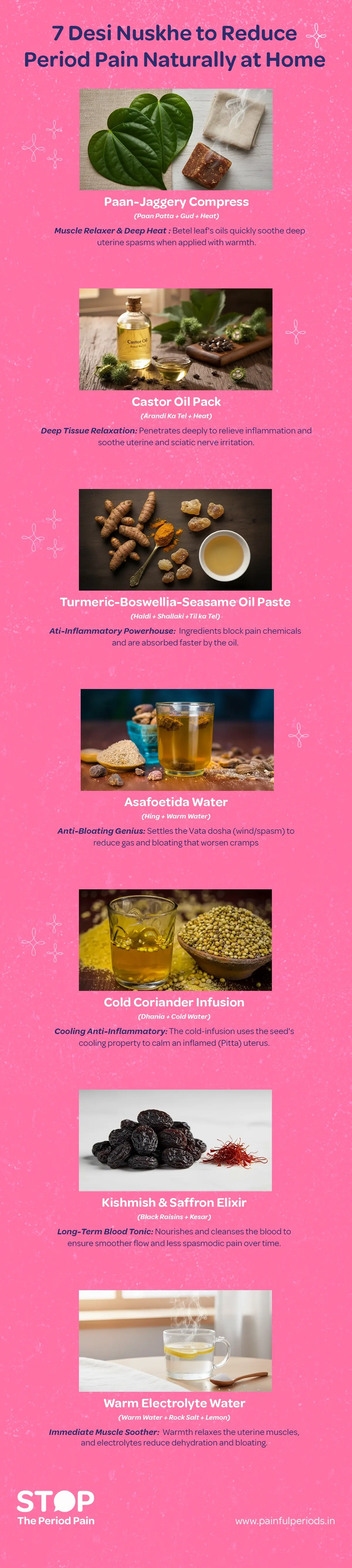
The secret to mastering menstrual pain lies in ancient, two-fold wisdom. Grandmothers and traditional healers always used potent topical compresses and herbal packs alongside essential internal Desi Nuskhe and power drinks. This systemic approach is the most effective way to learn how to reduce and relieve period pain naturally at home. Here’s a comprehensive list of desi nuskhe to relieve period pain naturally at home:
3. The Betel Leaf (Paan Patta) and Jaggery (Gud) Compress
This is an uncommon, potent topical remedy primarily known in parts of North and East India for its quick analgesic properties.
- The Magic: Betel leaf is not just for chewing; its compounds are a strong muscle relaxant (antispasmodic). When combined with the iron-rich warmth of jaggery, it creates a powerful local heat that surpasses a regular heat pack. The volatile oils in the leaf penetrate the skin to soothe deep uterine spasms.
- The Recipe (Nuskha):
- Take 2-3 fresh Betel Leaves (Paan Patta).
- Gently warm them on a tawa (flat pan) for a few seconds until they are pliable (do not burn them).
- Grind about 1 tablespoon of Jaggery (Gud) and spread it thinly over the warm leaves.
- Place the leaves directly on your lower abdomen and lie down for 15–20 minutes.
- The Surprise: Most people only know of paan as a mouth freshener, not as a pain-relieving compress.
4. Castor Oil Pack (Arandi Ka Tel): The Deep Tissue Relaxer
This is a powerful, traditional remedy often used to target chronic pain and inflammation, including severe period pain, and is far more intensive than a simple hot water bottle.
- The Magic: Castor oil (Arandi Ka Tel) has strong anti-inflammatory properties and is considered a Vata-pacifying (relaxing) oil. Applying it thick and warm can penetrate deeply to soothe uterine and sciatic nerve irritation.
- The Recipe (Nuskha):
- Take a clean cotton cloth or flannel and saturate it with warm Castor Oil.
- Lie down and place the oil-soaked cloth directly over your lower abdomen (the uterus area).
- Cover this with a piece of plastic wrap (to protect your heating pad/hot water bottle).
- Place a hot water bottle or heating pad on top.
- Consumption: Leave the pack on for 20–30 minutes. The heat helps the oil’s properties soak in and relax the muscles deep down.
5. Black Raisin (Kishmish) and Saffron (Kesar) Elixir
While raisins and saffron are common, this specific, ritualistic preparation is the secret. It’s a preventative, long-term tonic (Rasayana) for the blood and reproductive system.
- The Magic: Painful cramps are often caused by poor flow, which Ayurveda calls Vata (air/movement) obstruction. Black raisins are incredibly effective at cleaning and nourishing the blood (Rakta Dhatu). Saffron is a known uterine tonic and mood-lifter. This combination lubricates the channels, ensuring smooth, less-spasmodic flow.
- The Recipe (Nuskha):
- Soak 10–12 Black Raisins (Kali Kishmish) and 3–4 strands of Saffron (Kesar) in a small glass of water overnight.
- Consumption: Drink the water and eat the soaked raisins and saffron first thing in the morning, daily, for a full month, to prepare for the next cycle. Do not wait for the pain to start.
- The Surprise: This is a cycle-long preparation, not an on-the-spot fix, proving that the most effective nuskhe are about long-term well-being.
6. Coriander Seed (Dhania) Cold-Infusion
Everyone knows coriander in tea, but this cold-infusion method specifically targets the heavy, inflammatory nature of the pain (Pitta imbalance).
- The Magic: Coriander seeds have strong anti-inflammatory and anti-spasmodic properties. The key is to avoid boiling it, which can increase the Pitta (heat). An overnight cold-infusion uses the cooling nature (Sheetal Virya) of the seed, which is the exact property needed to calm an inflamed uterus.
- The Recipe (Nuskha):
- Take 2 teaspoons of whole Coriander Seeds (Dhania).
- Soak them in a glass of plain, room-temperature water overnight (at least 8 hours).
- Consumption: Strain the water in the morning and drink it on an empty stomach. Repeat once or twice throughout the day during your period.
- The Surprise: Using a cold preparation is counter-intuitive for period pain, which is usually treated with heat, but this Ayurvedic method addresses the underlying inflammatory heat that causes severe, sharp pain.
7. Hing (Asafoetida) Water: The Anti-Bloating Powerhouse
While Hing is a well-known spice in the dal and sabzis, its use as a potent medicinal drink for periods is a true “grandmother’s secret” that many modern women have forgotten. It works directly on the digestive symptoms that worsen period pain.
- The Magic: Hing is incredibly effective at settling the Vata dosha (associated with wind, bloating, and spasm in Ayurveda). Cramps are often severely exacerbated by gas and bloating, and Hing is an anti-flatulent and anti-spasmodic genius.
- The Recipe (Nuskha):
- Take half a teaspoon of Hing powder (pure, not compounded).
- Mix it into a glass of warm water (not boiling).
- Add a pinch of black salt (kala namak) for taste and enhanced digestion.
- Consumption: Drink this once or twice a day when cramps begin.
8. The Turmeric–Boswellia–Sesame (Haldi–Shallaki–Til) Nuskha
The synergy of this blend targets menstrual pain on multiple fronts and turns this into a rapid-action internal soother.
- The Magic: Turmeric (Haldi) and Boswellia (Shallaki) are two of Ayurveda’s most studied anti-inflammatory powerhouses. The Sesame Oil (Til Tel) acts as the perfect Anupana (vehicle) to quickly dissolve these compounds and maximise their absorption into the bloodstream, making the pain relief faster.
- The Recipe (Nuskha):
- In a glass, combine 1/2 tsp Turmeric Powder and 1/2 tsp Boswellia/Shallaki Powder.
- Pour 1 tsp of warm Sesame Oil over the powders and mix into a thick paste.
- Consumption: Consume this paste once or twice daily during the first two days of intense period pain.
Did You Know: This “turmeric–boswellia–sesame formulation” clinical trial (PMC10298953) concluded the combination was highly effective in treating primary dysmenorrhea.
9. Hydration: The Warm Water & Electrolyte Nuskha
This isn’t just about drinking more; it’s about drinking the right things at the right temperature to relax muscles and balance your body chemistry, which is often severely disrupted during a period.
- The Magic: Period pain is often worsened by muscle spasms and poor blood circulation, which are both aggravated by dehydration. Warm water is the secret: it helps relax the digestive and uterine muscles immediately, improving blood flow far better than cold water. Electrolytes (like salt and potassium) balance the fluid levels in your cells, which helps reduce bloating and the intensity of muscle contractions.
- The Recipe (Nuskha):
- Add ½ teaspoon of lemon juice (Nimbu Ras) to 1 cup of warm water.
- Add a pinch of rock salt (Sendha Namak).
- Consumption: Sip warm water regularly throughout the day, every day of your period. When cramps feel intense or you feel sluggish, mix and drink the Warm Electrolyte Water mixture (the nuskha above) two or three times a day.
- The Surprise: Most people focus on the herbs, but simply replacing cold beverages with warm water for 2–3 days can significantly reduce muscle tension and dramatically ease bloating.
Long-Term Wellness: How to Reduce Period Pain Naturally with Diet & Lifestyle Management
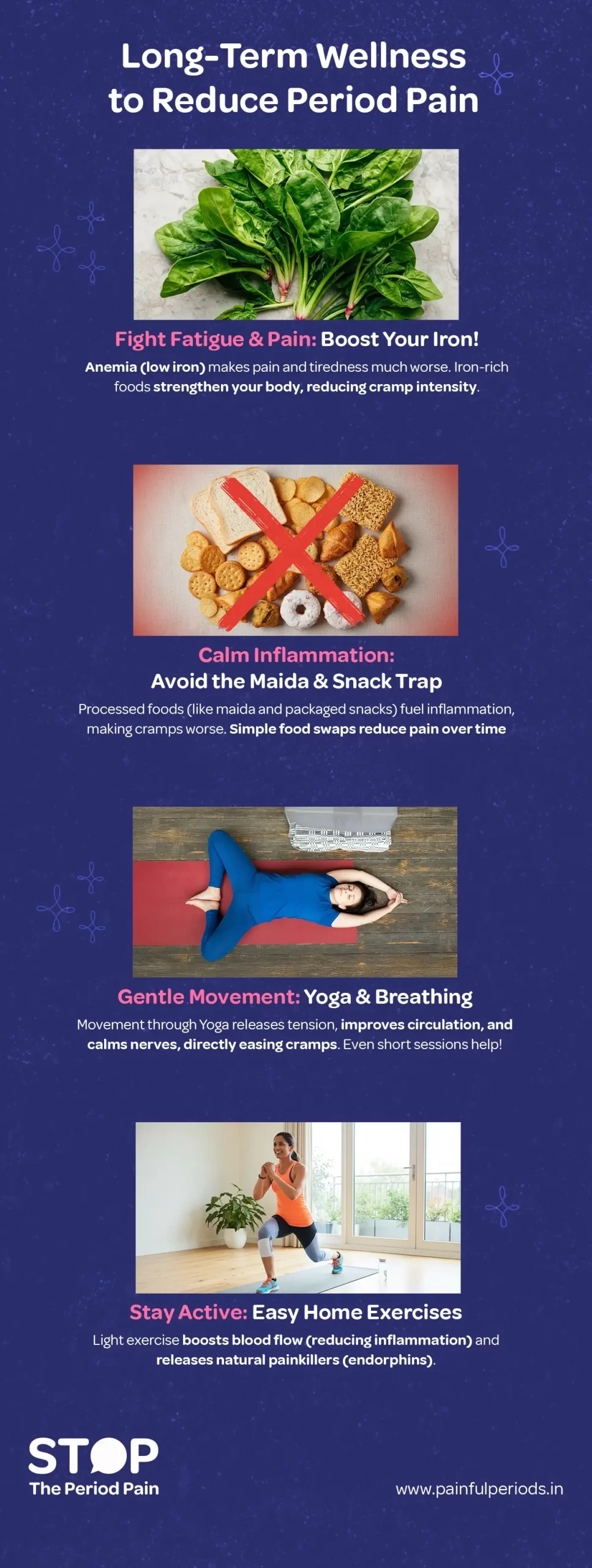
The most profound secret to learning how to relieve period pain naturally is in consistent daily practice. This section moves beyond immediate relief to focus on long-term dietary and lifestyle adjustments, rooted deeply in Indian tradition. By making mindful choices about the foods you eat (and avoid!) and incorporating simple routines, you can dramatically reduce period pain over time, leading to smoother, less debilitating cycles. This is the ultimate home remedy for lasting menstrual comfort.
9. Iron & Anemia: The Hidden Cause of Pain
Many women in India suffer from Anemia (low iron), and this can secretly make your period pain much, much worse, along with making you feel extremely tired. When you don’t have enough iron, your body can’t carry enough oxygen, and your uterus becomes more sensitive to pain. By eating certain iron-rich foods regularly, you can build up your body’s strength, feel less tired, and even reduce how much pain you feel during your period.
Simple Iron-Boosting Foods to Help:
- Jaggery (Gur): Eat a small piece after meals instead of sugar. It’s rich in iron and magnesium.
- Green Leafy Vegetables (Palak): Cook spinach and other greens often. Add a squeeze of lemon juice to help your body soak up the iron better.
- Beetroot (Chukandar): Drink fresh beetroot juice in the morning or add it to your daily meals for a good iron boost.
- Dates (Khajoor) & Figs (Anjeer): Soak 2–3 of these overnight and eat them first thing in the morning for natural iron and energy.
Boosting your iron through these foods every day, especially before your period, can actually make your cramps less painful. It’s a natural way to reduce the intensity of pain.
10. Limit Inflammatory Foods: The Maida/Snack Trap
To truly reduce period pain, you must cut down on sources of internal inflammation. Heavily processed foods like refined maida (white flour) and the ubiquitous packaged snacks common in the modern Indian diet are major culprits. They flood the body with inflammatory chemicals, which only serves to amplify the pain signals already being sent by your uterus (thanks to prostaglandins). Reducing these foods helps calm your body’s overall inflammatory response, resulting in significantly lighter cramps over time.
Simple Swaps to Reduce Inflammation:
- Avoid: White bread, cookies, maida biscuits, and fried, packaged namkeen.
- Swap with: Whole grain atta (for rotis), millets, fresh homemade snacks like makhana (foxnuts), nuts, and fresh fruit.
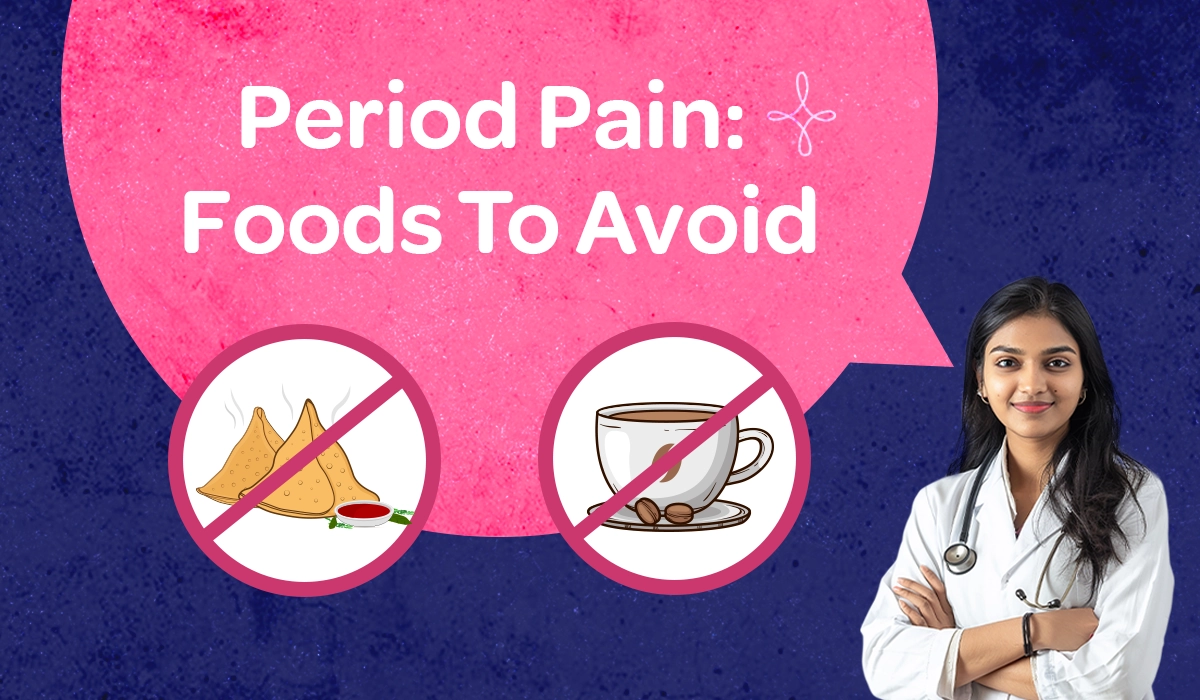
For a detailed guide on which ingredients to keep off your plate, read our full analysis on period pain foods to avoid in Indian lifestyle for a happier cycle.
11. Movement & Mind: Gentle Yoga and Breathing
Cramping is ultimately a muscle spasm, and movement is one of the best ways to release muscle tension, improve circulation, and calm the nervous system. Gentle movement like yoga is a traditional and highly effective way to learn how to reduce period pain naturally. It works by relieving tightness in the lower back and pelvic floor, directly easing the intensity of the uterine contractions. Even 15 minutes of gentle movement can interrupt the pain signal and release natural endorphins.
Simple Movement Tips:
- Marjari-asana (Cat-Cow Pose): Gently rocks the pelvis and relieves tension in the abdomen and lower back.
- Bal-asana (Child’s Pose): Deeply relaxing, easing tension in the hips and promoting a sense of calm.
- Deep Diaphragmatic Breathing: Focus on slow, deep breaths to activate the parasympathetic nervous system, which naturally reduces pain perception.
For a full step-by-step guide to safe and soothing poses, see our detailed article on yoga poses for period pain relief.
12. Light Exercise: Keep Moving, Keep Period Pain Away
While intense workouts might feel daunting, light, regular exercise is a powerful secret weapon against period pain. It works by improving blood circulation throughout your body, especially to the pelvic area, which helps reduce the inflammation that causes cramps. Exercise also releases endorphins, your body’s natural painkillers and mood boosters. Even simple movements done at home can make a significant difference in how you experience your cycle.
Easy Home Exercises:
- Brisk Walking: A simple, yet incredibly effective exercise. Even 20-30 minutes of brisk walking daily can boost circulation and lift your mood.
- Cycling (Stationary or Outdoor): If you have access to a cycle, gentle cycling helps engage your core and leg muscles, improving blood flow to the lower body.
- Stair Climbing: Using stairs at home or in your building provides a good cardiovascular workout that strengthens leg muscles and encourages better circulation.
- Pelvic Tilts: Lie on your back with knees bent and feet flat. Gently tilt your pelvis up, flattening your lower back against the floor, then release. This simple movement strengthens core muscles and relieves lower back tension.
The Critical Red Flag: Stop Normalising Severe Period Pain
For too long, the message that “Period pain sabko hota hai” (Everyone gets period pain) has been a dangerous lie whispered across generations. While mild discomfort is normal, pain that stops your life is not normal—it is severe dysmenorrhea and requires medical investigation. Our campaign’s core principle is simple: Period pain is a real medical issue. Do not take period pain lightly.
Serious Warning Signs to Watch For:
These red flags can signal underlying conditions and should prompt an immediate medical visit:
- Pain Outside of Periods: Experiencing pelvic pain or cramping even when you are not menstruating.
- Heavy Bleeding (Menorrhagia): Bleeding that soaks through pads/tampons in less than two hours, or passing large blood clots.
- Pain During Intimacy: Pain during or after sexual activity.
- Changes in Bowel/Bladder Habits: Severe pain, diarrhea, or constipation that worsens significantly during your cycle.
Underlying Conditions: Why You Need to Seek Help
Severe, life-disrupting pain is often a symptom of treatable, underlying conditions that require diagnosis, such as:
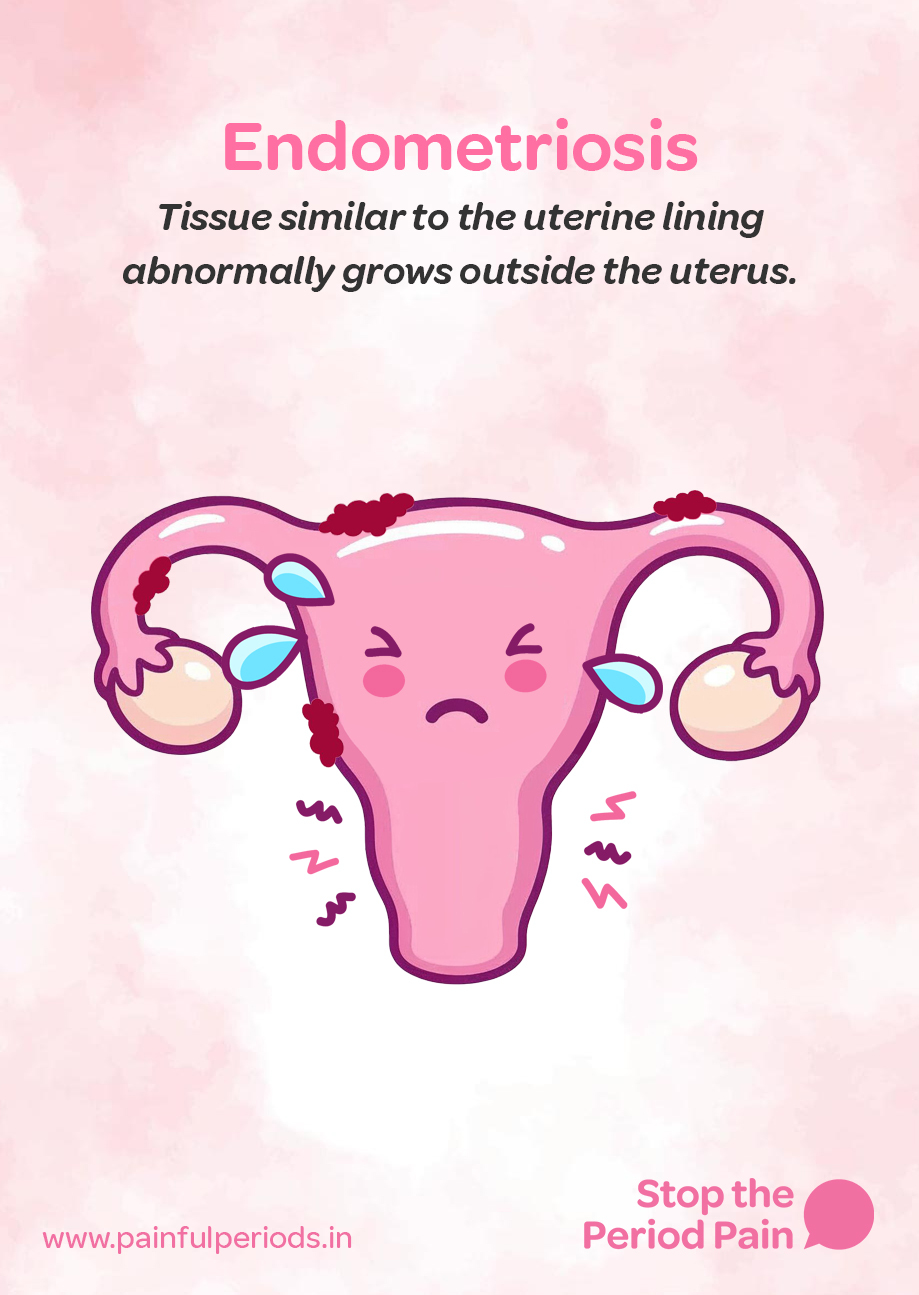
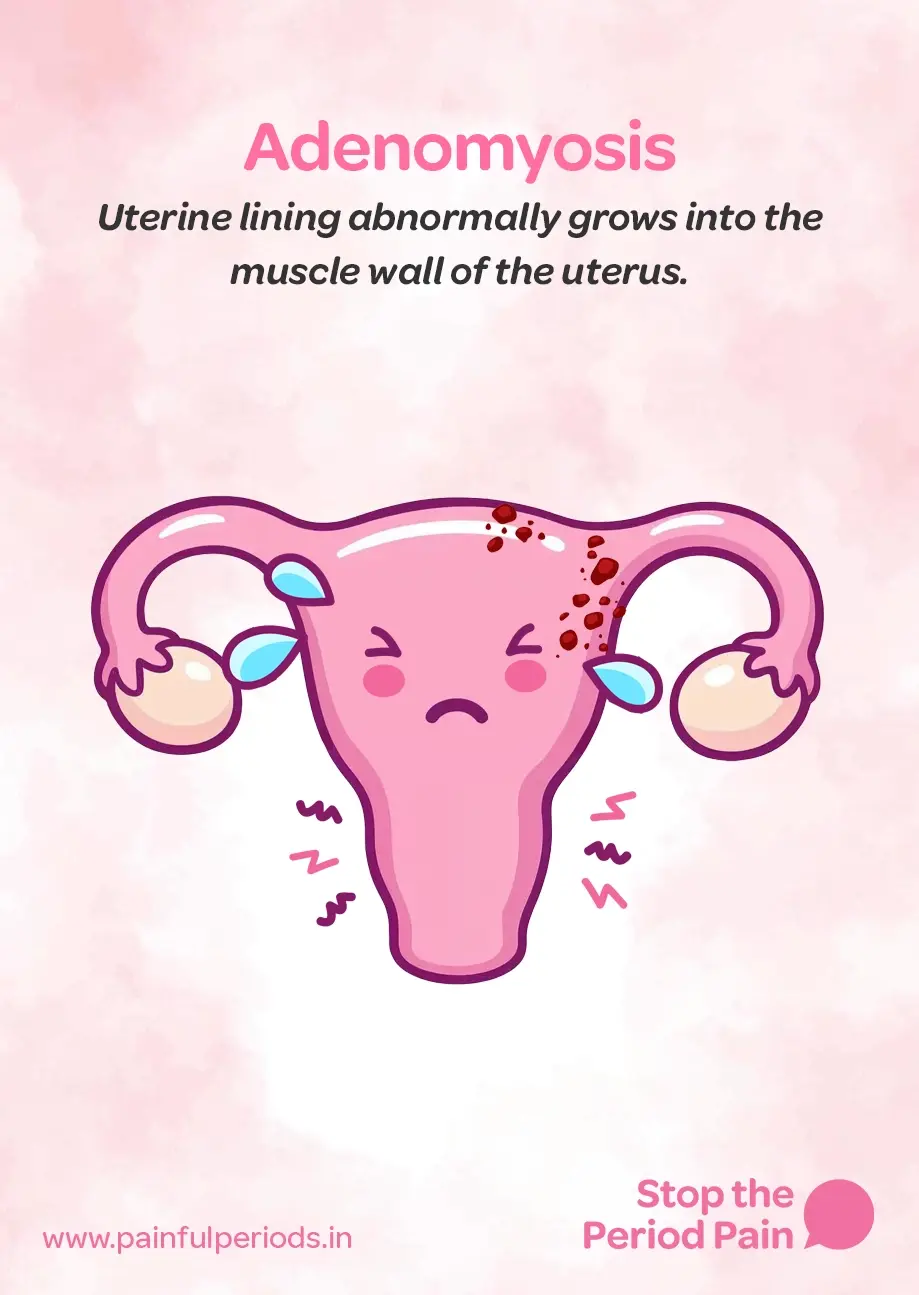
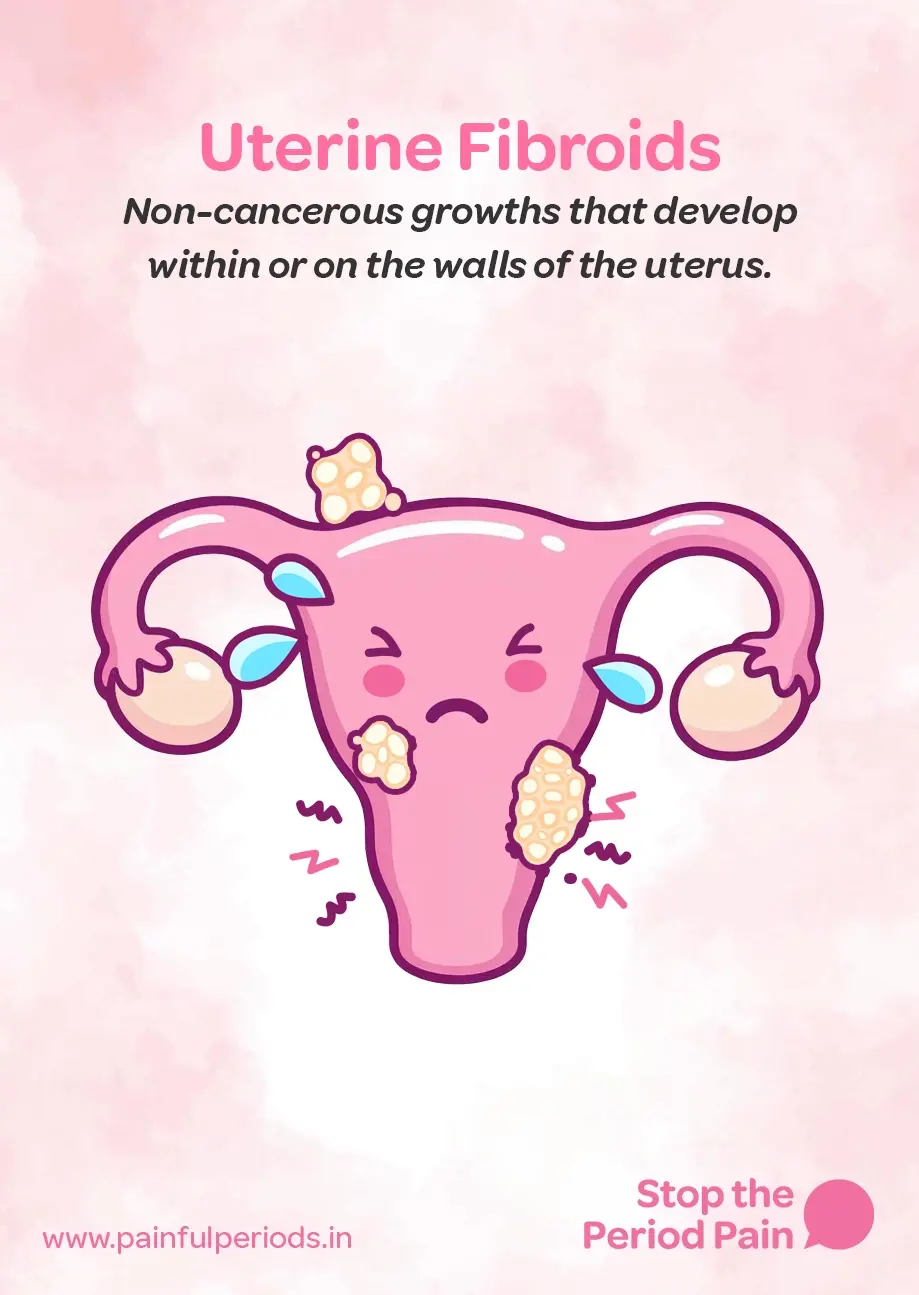
Don't Ignore the Red Flag
“As a gynaecologist, I have to be clear: the notion that ‘period pain sabko hota hai’ is the biggest barrier to women’s health in India. This lie forces women to normalize suffering. If your pain makes you stop living your life, it is a medical problem, not a character flaw. Do not normalize pain that leaves you debilitated—seek a diagnosis.”
Hit Up Our Period Pain Calculator
For real, how bad is your pain? Our interactive tool uses a 1-10 pain scale and a few quick questions to help you get the full picture. In just a few clicks, you’ll know if your pain is a chill or a major red flag.

The Moral of the Story
The Moral of the Story is clear: you don’t have to suffer silently. Combat period pain with a smart approach: use quick relief methods (like heat + medicine), explore effective home remedies and Desi Nuskhe, and embrace long-term lifestyle changes. Most importantly, if your pain is severe, remember: it’s not normal—seek medical advice. Your comfort matters.
Your Journey to #StopThePeriodPain Starts Here
Every month, millions of Indian girls & women suffer in silence, told that their severe period pain (dysmenorrhea) is “normal.” Our mission is to break that silence. #StopThePeriodPain campaign is here to empower you with 3 simple truths:
More Stories To Read
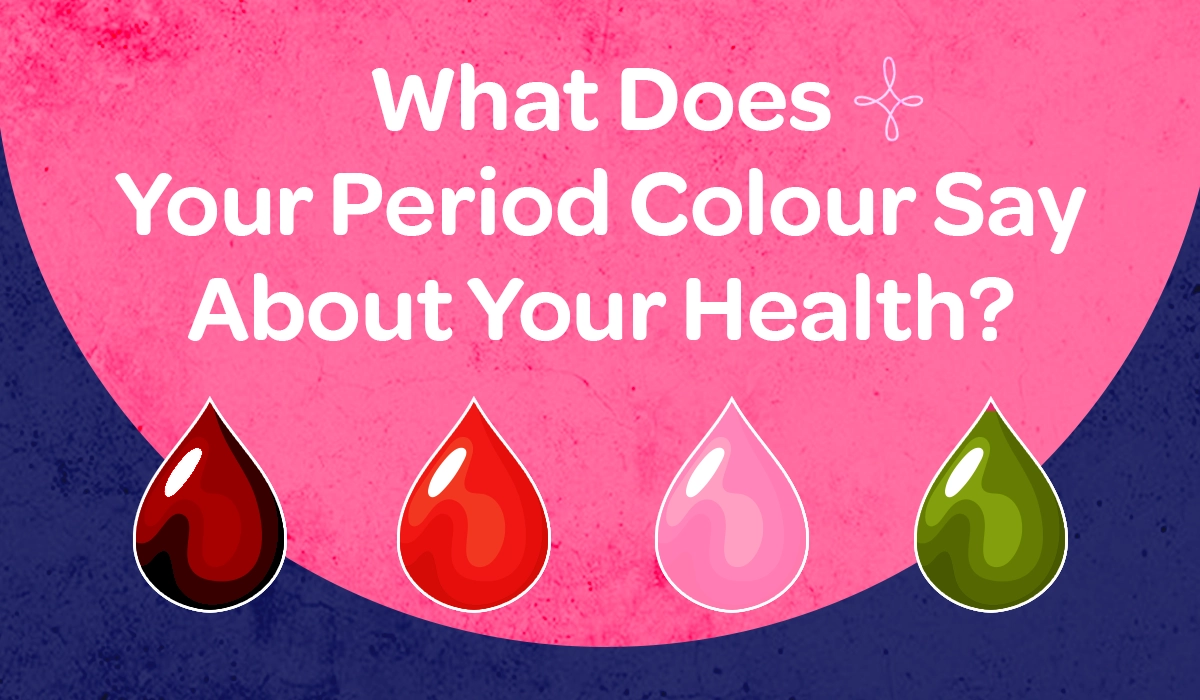
Transform your understanding of period pain through engaging and informative stories based on real medical insights.
The Answers You've Been Looking For
Get clear, concise answers to your most pressing questions about period pain relief.
- Can Menstrual Pain Cause Depression?
- What is the cause of period pain?
- What are the symptoms of period pain?
- Why is my period so clotty and painful?
- What do large blood clots during period mean?
- When to see a doctor for painful periods?
- What will a gynaecologist do for painful periods?
- Can dysmenorrhea cause depression?
- What is the best treatment for period pain?
- How do you relieve period pain in teens?
Disclaimer:
This content is for informational purposes only and is not a substitute for professional medical advice. The information provided here is based on general trends and may not apply to every individual, as every woman’s body and experience with period pain is unique.
Do not self-diagnose or self-treat. If you are experiencing painful periods, especially if the pain is moderate to severe or accompanied by other concerning symptoms, you must consult with a gynaecologist. Ignoring severe period pain can lead to a significant delay in diagnosing underlying conditions that require proper medical attention. Always prioritise a confident conversation with your gynaecologist over self-treatment.