
In Bengaluru, the weather was feeling like a perpetual gentle spring when four friends—Zara, Diya, Kavya, and Suhana—were sprawled comfortably on Suhana’s balcony. A soft breeze rustled through the potted plants, and the afternoon sun cast long, pleasant shadows as they sipped iced tea, debating which new series to binge-watch.
Suddenly, Suhana, who had been quietly scrolling on her phone, let out a small “Hmm.”
“What’s got you so deep in thought?” Zara teased, leaning over.
Suhana looked up, a slight frown on her face. “My period just ended two days ago, and the last couple of days, the colour was really dark brown, almost black. I was just looking it up online to see what it could possibly mean.”
A collective “Oh!” went through the group. Diya nodded knowingly, while Kavya admitted, “You know, I’ve seen that too, and I always just wondered if it was normal.”
This simple moment of shared concern is one that countless girls have had. While many girls in India are taught the basics, the real-life nuances—like what the colour of your period means—often go unaddressed. Yet, these variations aren’t just random; they’re your body’s way of whispering (or sometimes shouting!) about your health.
Let’s dive into what the colour of your period tells you.
In This Story
- When Your Period Colour is Deep, Dark Brown
- When Your Period Colour Is Bright Red
- When Your Period Colour Is Pinkish or Watery
- When Your Period Colour Is Orange, Grey or Green
- The Red Flag Reminder: When to Consult Your Doctor
- The Period Pain Factor: Don’t Normalise Severe Discomfort
- Moral Of The Story: Period Colour Is Your Body’s Language
- Referenced By
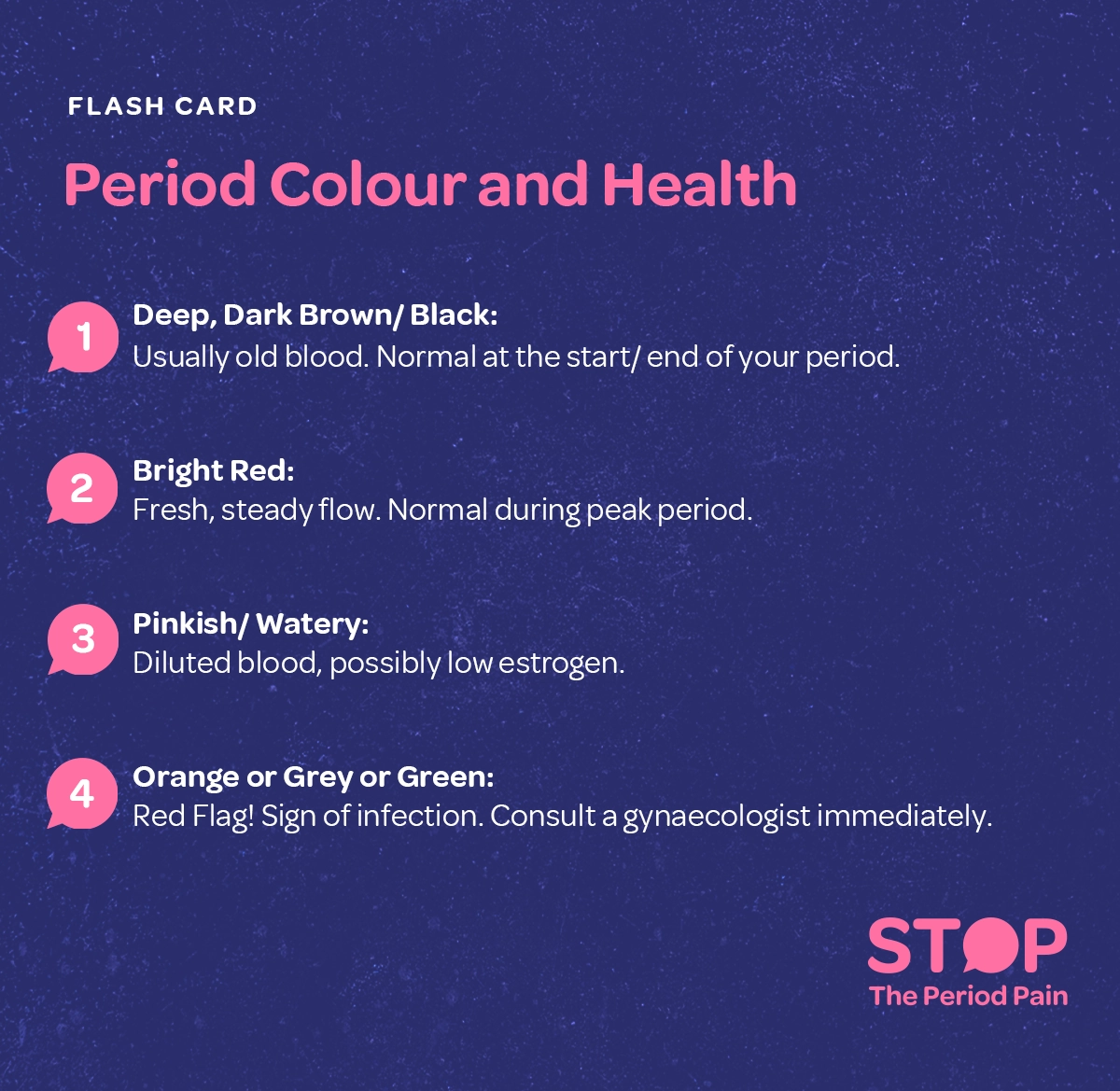
When Your Period Colour is Deep, Dark Brown
Suhana noticed her period, which had ended just two days ago, finished with a dark brown or almost black discharge. “It freaked me out a little,” she confessed. “I thought something was seriously wrong and wondered if my next period would also have that deep, dark brown color.”
What it means:
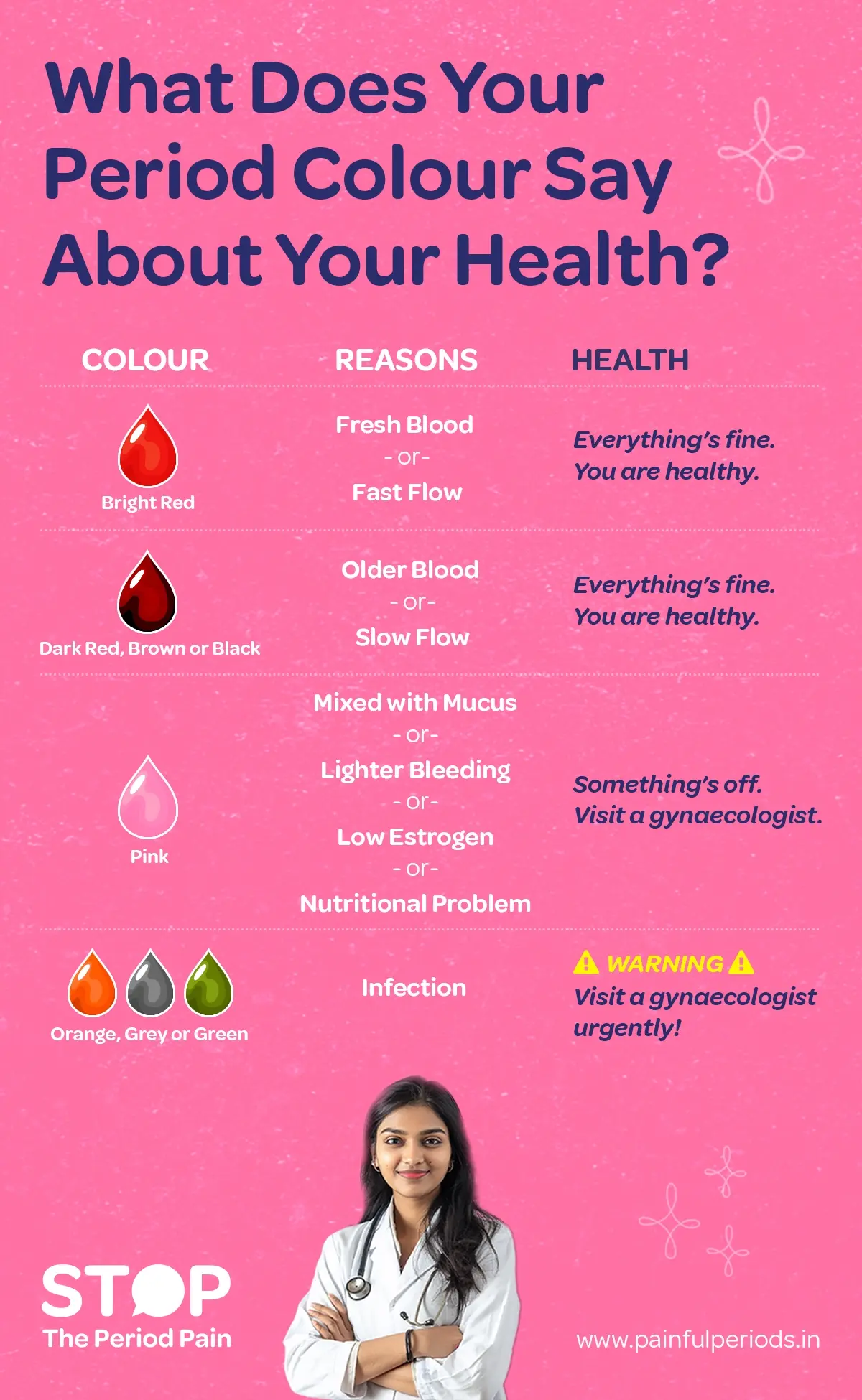
Dark brown or black blood usually indicates older blood. This is often seen at the very beginning or end of your period. It means the blood has taken a bit longer to exit your uterus and has oxidised, turning darker. It’s generally normal if it’s just at the start or end of your flow. However, if it’s persistent throughout your period, or accompanied by unusual odour or itching, it could sometimes point to a slow flow or, less commonly, an infection.
When Your Period Colour Is Bright Red
Zara contributed to the conversation by saying how she frequently experienced periods that were consistently bright red from start to finish, often feeling quite heavy. “It always felt like a very fresh wound,” she described. “And sometimes, I worried if it was too much.”
What it means:
Bright red blood typically signifies fresh blood and a steady flow. This is generally considered normal and healthy during the peak of your period. However, if your period is always bright red and exceptionally heavy, or lasts longer than usual, it could sometimes indicate an imbalance (like lower progesterone levels) or even an underlying condition like fibroids which are quite common in Indian girls and women.
When Your Period Colour Is Pinkish or Watery
The conversation had now completely shifted from which series to binge-watch to the nuances of period colour. As they talked, Kavya shared how her friend, Aditi, who was a state-level badminton player, had noticed her periods becoming very light, almost pinkish or watery.
Aditi, used to her body’s signals, was so worried about the sudden change that she immediately visited her gynaecologist. “It is so different from what I used to have,” she told the doctor. “I am concerned something is going on.” After a check-up, her gynaecologist explained that in athletes, this change could sometimes be a sign of low estrogen levels due to intense physical activity.
What it means:
Pinkish or watery blood can indicate diluted blood, often mixed with cervical fluid. This can be normal, especially at the very beginning of a period or if your flow is light. It might also be a sign of low estrogen levels, which can be caused by factors like extreme exercise, significant weight loss, or perimenopause. Occasionally, it could suggest nutritional deficiencies.
Hit Up Our Period Pain Calculator
For real, how bad is your pain? Our interactive tool uses a 1-10 pain scale and a few quick questions to help you get the full picture. In just a few clicks, you’ll know if your pain is a chill or a major red flag.

When Your Period Colour Is Orange, Grey or Green
Diya added how she once experienced a period with an unusual orange hue, coupled with an unpleasant odour and itching.“I knew instantly something was off,”she recalled, acting quickly to see her gynaecologist.
What it means:
Orange, grey or green period blood, especially when accompanied by a foul odour, itching, or discomfort, is a major red flag. Orange blood can occur when menstrual blood mixes with cervical fluid due to an infection. Grey or off-white discharge is almost always a sign of a vaginal infection, such as bacterial vaginosis. In such cases, immediate consultation with a gynaecologist is essential.
The Red Flag Reminder: When to Consult Your Doctor
While period colour can offer clues, it’s just one piece of the puzzle. Always pay attention to other factors like:
- Consistency: Is it thin, thick, or clumpy?
- Odour: Is there an unusual or foul smell?
- Flow: Is it unusually heavy or light?
- Duration: Is your period significantly shorter or longer than usual?
The Period Pain Factor: Don't Normalise Severe Discomfort
While mild cramps are a normal part of the menstrual cycle, debilitating pain is not. You should speak with a doctor if you experience:
- Pain that is so severe it prevents you from going to school, work, or social activities.
- Cramps that do not respond to period pain relieving medications like non-steroidal anti-inflammatory drugs (NSAIDs).
- Pain that continues even after your period has ended.
- Pain that worsens over time with each cycle.
These could be signs of an underlying condition like endometriosis or adenomyosis. For more information, please consult a healthcare professional.
Reviewed By
About The Author

Dr. Mukund T. Talathi
Dr. Mukund T. Talathi (M.B.B.S., M.D.) is a Consulting Gynaecologist and Fellow of ART (London, UK) with extensive experience in women’s healthcare and fertility treatments. He practices at Swami Krupa Nursing Home, a maternity and multispeciality center in Kamothe, Navi Mumbai, and at Dr. Talathi Hospital, Raigad. He is known for his dedicated, ethical, and patient-centric approach to care.
Your Journey to #StopThePeriodPain Starts Here
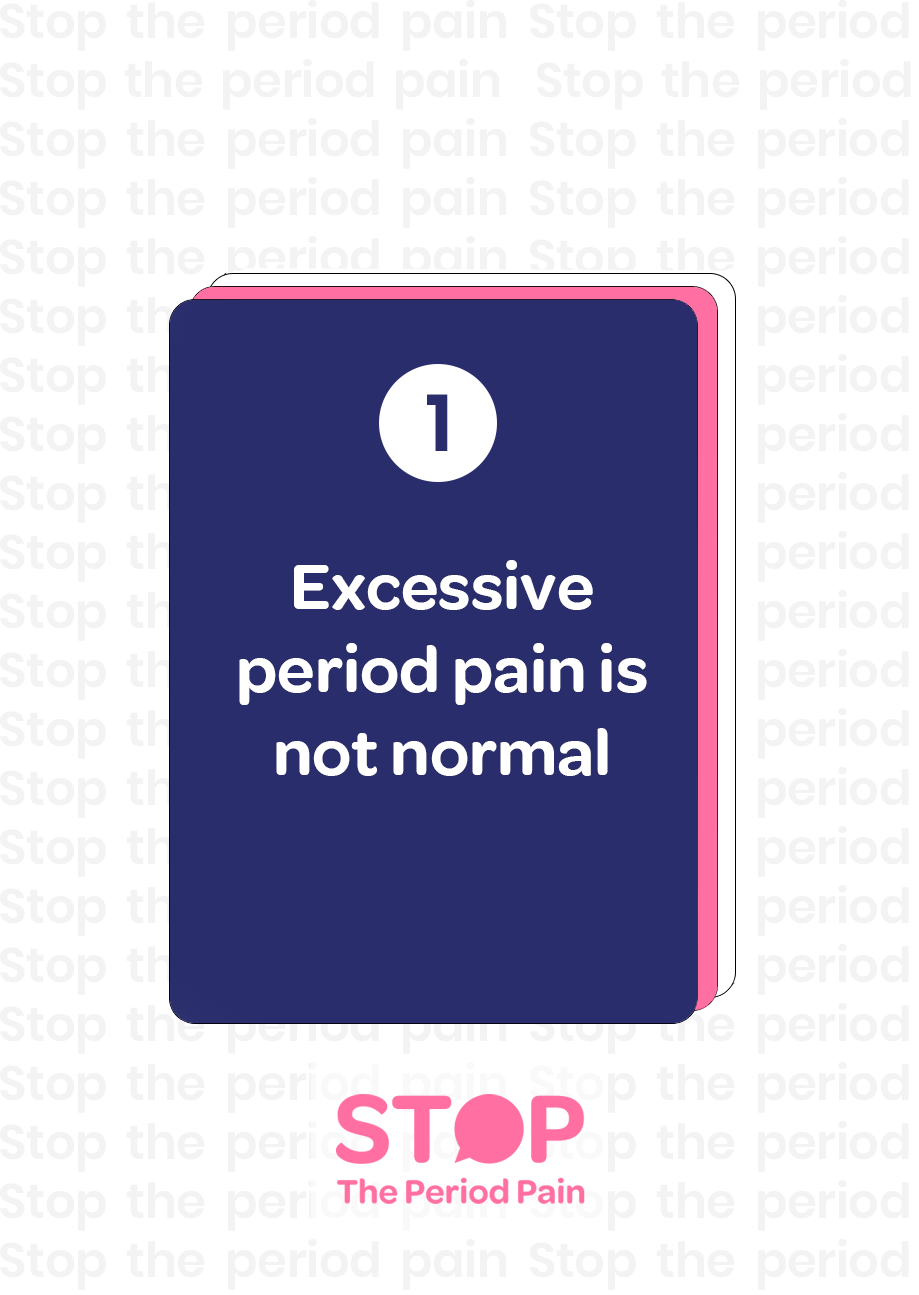
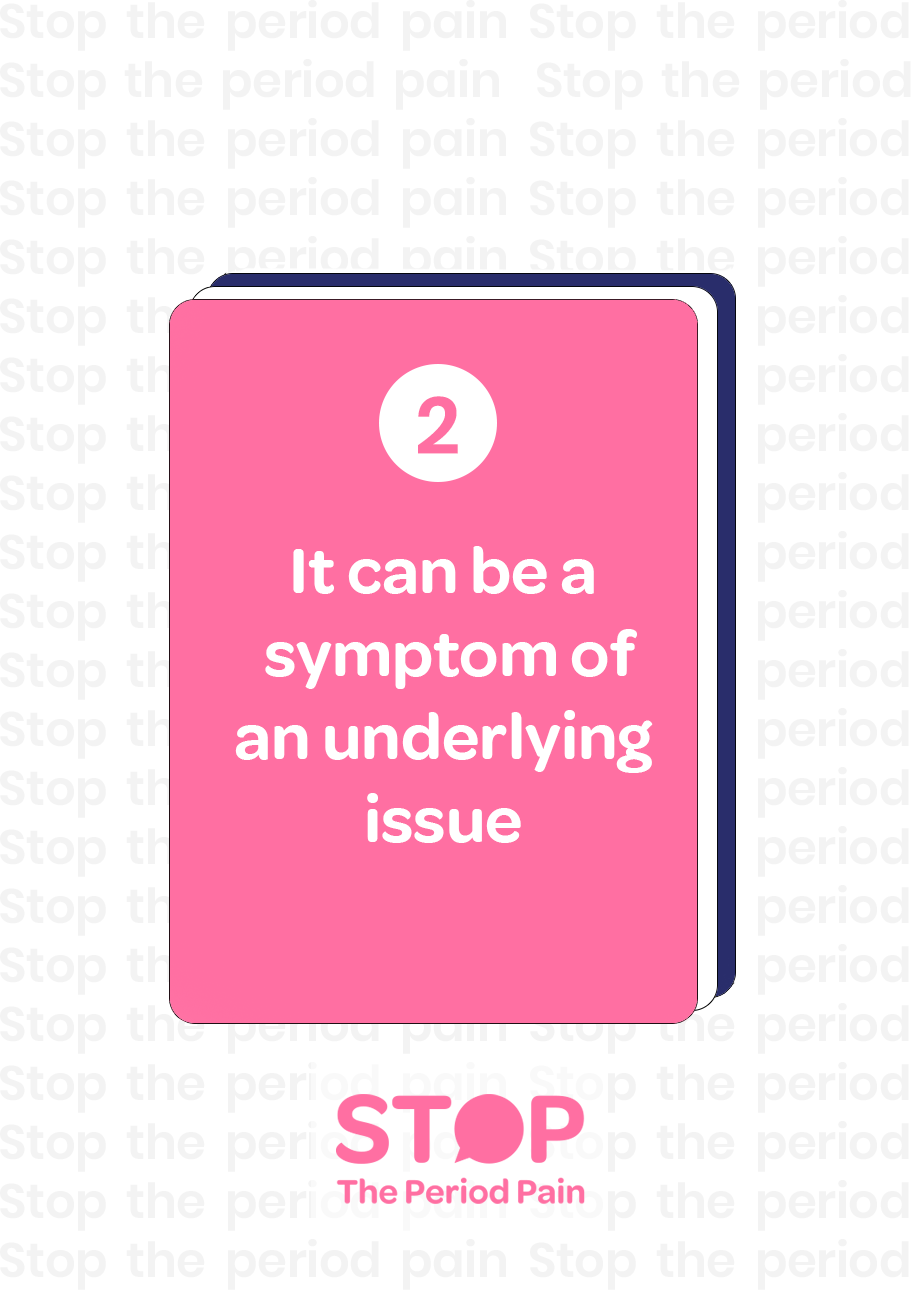
Every month, millions of Indian girls & women suffer in silence, told that their severe period pain (dysmenorrhea) is “normal.” Our mission is to break that silence. #StopThePeriodPain campaign is here to empower you with 3 simple truths:
Moral Of The Story: Period Colour Is Your Body’s Language
Just as the conversation on that Bengaluru balcony brought Zara, Diya, Kavya, and Suhana closer, understanding your body’s signals can bring you closer to your own health. The moral of the story isn’t that every period colour has a secret, but that your body is constantly communicating with you. Don’t ignore its signals, and don’t hesitate to talk about them, whether with friends, family or a trusted gynaecologist. By paying attention to the subtle shifts in your period colour, flow, and pain, you’re taking a vital step in becoming your own best health advocate.
More Stories To Read
Transform your understanding of period pain through engaging and informative stories based on real medical insights.
The Answers You've Been Looking For
Get clear, concise answers to your most pressing questions about period pain.
- What is the cause of period pain?
- When to see a doctor for painful periods?
- What will a gynaecologist do for painful periods?
- Why is my period so clotty and painful?
- What do large blood clots during period mean?
- What are the symptoms of period pain?
- Why does my period pain go down to my thighs?
- Can Menstrual Pain Cause Depression?
- Can dysmenorrhea cause depression?
- Are Painful Periods a Sign of Good Fertility?
Disclaimer:
This content is for informational purposes only and is not a substitute for professional medical advice. The information provided here is based on general trends and may not apply to every individual, as every woman’s body and experience with period pain is unique.
Do not self-diagnose or self-treat. If you are experiencing painful periods, especially if the pain is moderate to severe or accompanied by other concerning symptoms, you must consult with a gynaecologist. Ignoring severe period pain can lead to a significant delay in diagnosing underlying conditions that require proper medical attention. Always prioritise a confident conversation with your gynaecologist over self-treatment.