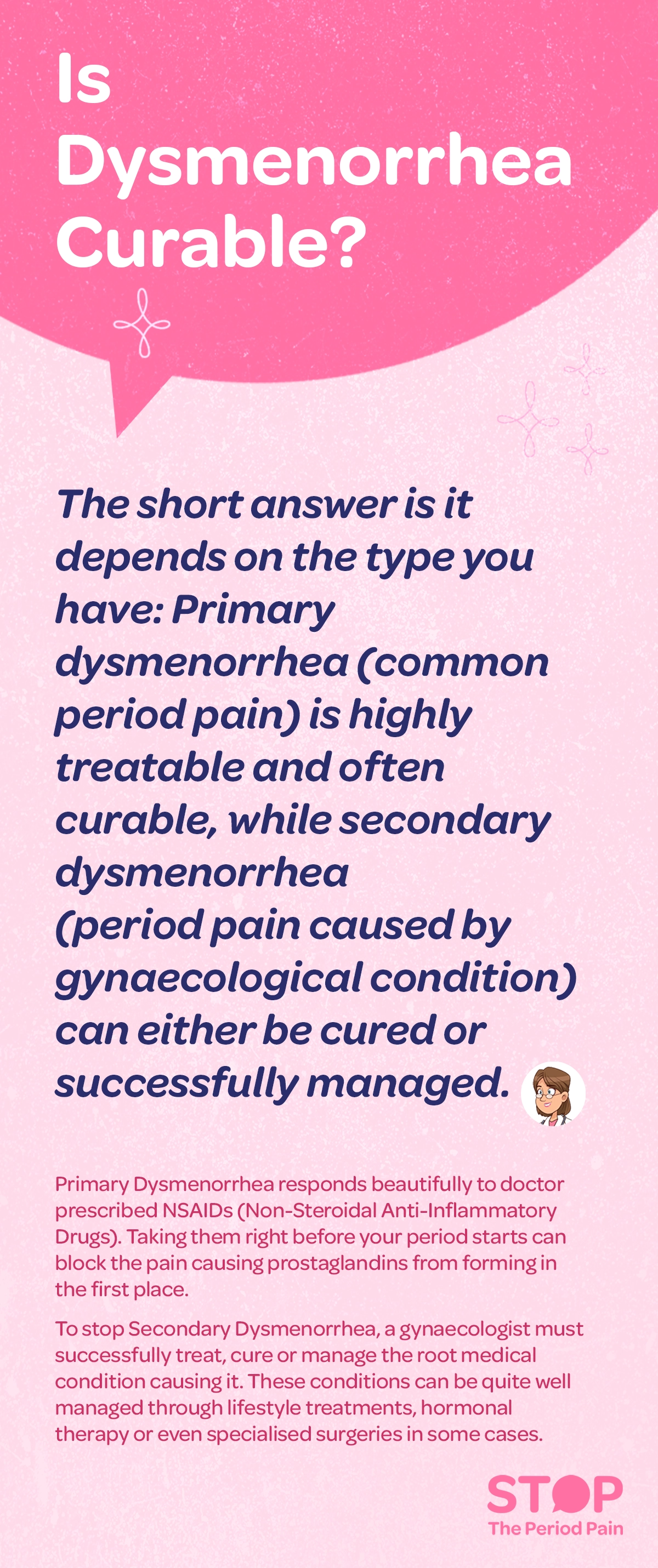
The short answer is it depends on the type you have: Primary dysmenorrhea (common period pain) is highly treatable and often curable, while secondary dysmenorrhea (period pain caused by gynaecological condition) can either be cured or successfully managed.
To understand your options, you first need to know how doctors divide period pain into these two distinct categories:
Primary Dysmenorrhea (Common Period Pain)
This is everyday period pain where there is no hidden disease in your reproductive organs. It is caused purely by your body producing too many prostaglandins—the natural pain chemicals that make your uterus contract to shed its lining.
Is Primary Dysmenorrhea Curable?
Yes, it is highly manageable and often goes away completely over time.
How Is Primary Dysmenorrhea Treated?
It responds beautifully to simple medical care. Taking doctor prescribed NSAIDs (Non-Steroidal Anti-Inflammatory Drugs) right before your period starts can block those prostaglandins from forming in the first place. For many women, primary dysmenorrhea also naturally reduces drastically with age or childbirth.
Secondary Dysmenorrhea (Period Pain Caused by Endometriosis, Adenomyosis, PCOS/ PMOS, Uterine Fibroids)
This is the type where period pain is a symptom of an actual physical condition inside your reproductive organs, such as Endometriosis, Adenomyosis, PCOS/ PMOS, or Uterine Fibroids.
Is Secondary Dysmenorrhea Curable?
To stop this type of period pain, a gynaecologist must successfully treat, cure or manage the root medical condition causing it.
How Is Secondary Dysmenorrhea Treated?
- If it is caused by chronic conditions like Endometriosis, Adenomyosis, or PCOS/ PMOS, there may not be a permanent overnight cure, but it can be managed incredibly well with popular treatments like hormonal therapy, lifestyle adjustments, or specialised laparoscopic surgery so you can live pain-free.
- If it is caused by Uterine Fibroids, removing the fibroids can cure the period pain.
Do not buy into the myth that you are stuck with dysmenorrhea (period pain) suffering forever. Whether your pain requires a simple preventive NSAID every month or targeted medical treatment for an underlying condition, relief from dysmenorrhea is absolutely possible. Visit a gynaecologist and get the relief you deserve.