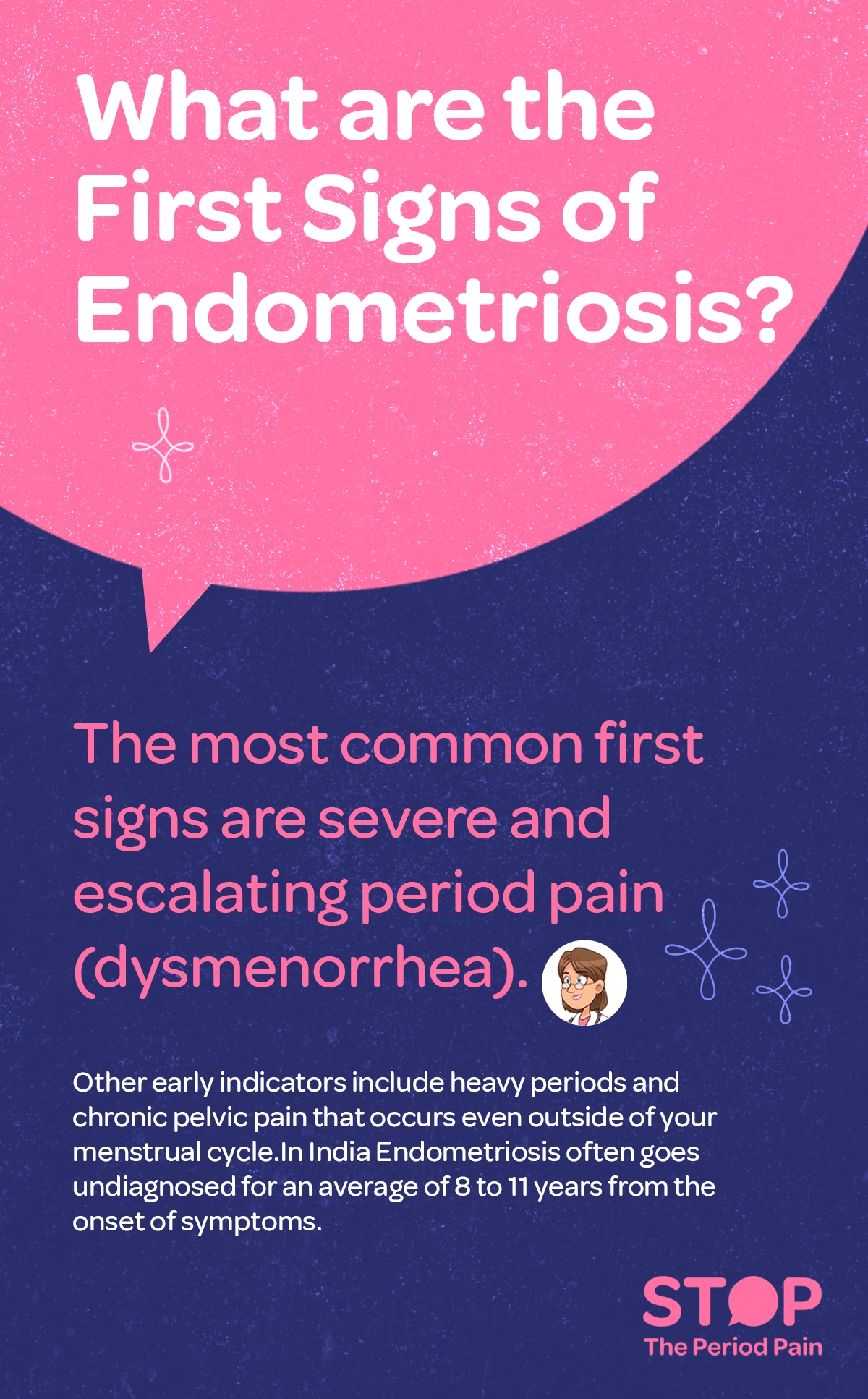
The simple answer is severe, chronic period pain. Medically this type of period pain is called secondary dysmenorrhea

While endometriosis can present differently in each person, the most common first signs are painful and heavy periods that get worse over time. In India, where it is often normalised to endure period pain, this symptom is frequently dismissed. However, it is a critical sign that something is wrong. Other early indicators can include pain during or after sex, pain with bowel movements or urination, and chronic pelvic pain that occurs even when you aren’t on your period.

Endometriosis often goes undiagnosed or misdiagnosed for an average of 8 to 11 years from the onset of symptoms, a delay that can significantly impact a woman’s quality of life and fertility.

infographic titled "What Are the First Signs of Endometriosis?" on a pink and navy blue background. It explains that excess production of prostaglandins or underlying gynaecological conditions like endometriosis, adenomyosis, PCOS (Polycystic Ovary Syndrome), or uterine fibroids can be causes. A note mentions a survey in India found depression to be the second most common symptom among teenage girls with dysmenorrhea (painful periods), highlighting the emotional toll of period pain. The graphic ends with the campaign message "STOP The Period Pain." Which is a knowledge initiative campaign by Blue Cross Laboratories the makers of meftal spas.

Your Journey to #StopThePeriodPain Starts Here

Every month, millions of Indian girls & women suffer in silence, told that their severe period pain (dysmenorrhea) is “normal.” Our mission is to break that silence. #StopThePeriodPain campaign is here to empower you with 3 simple truths:
Period Pain Calculator Section

Hit Up Our Period Pain Calculator

For real, how bad is your pain? Our interactive tool uses a 1-10 pain scale and a few quick questions to help you get the full picture. In just a few clicks, you’ll know if your pain is a chill or a major red flag.