In general, treatments for endometriosis focus on managing period pain and other symptoms, as there is currently no known cure.

Treatment options are varied and are tailored to an individual’s needs, depending on the severity of their symptoms and whether they plan to have children. These options include prescription period pain medication (non-steroidal anti-inflammatory drugs) for milder cases, hormonal treatments such as birth control pills to manage the growth of the tissue, and in more severe cases, minimally invasive surgery (laparoscopy) to remove the growths. In India, a comprehensive approach often combines these medical treatments with lifestyle changes like a modified diet and stress management.

An estimated 4.2 crore women in India suffer from endometriosis.

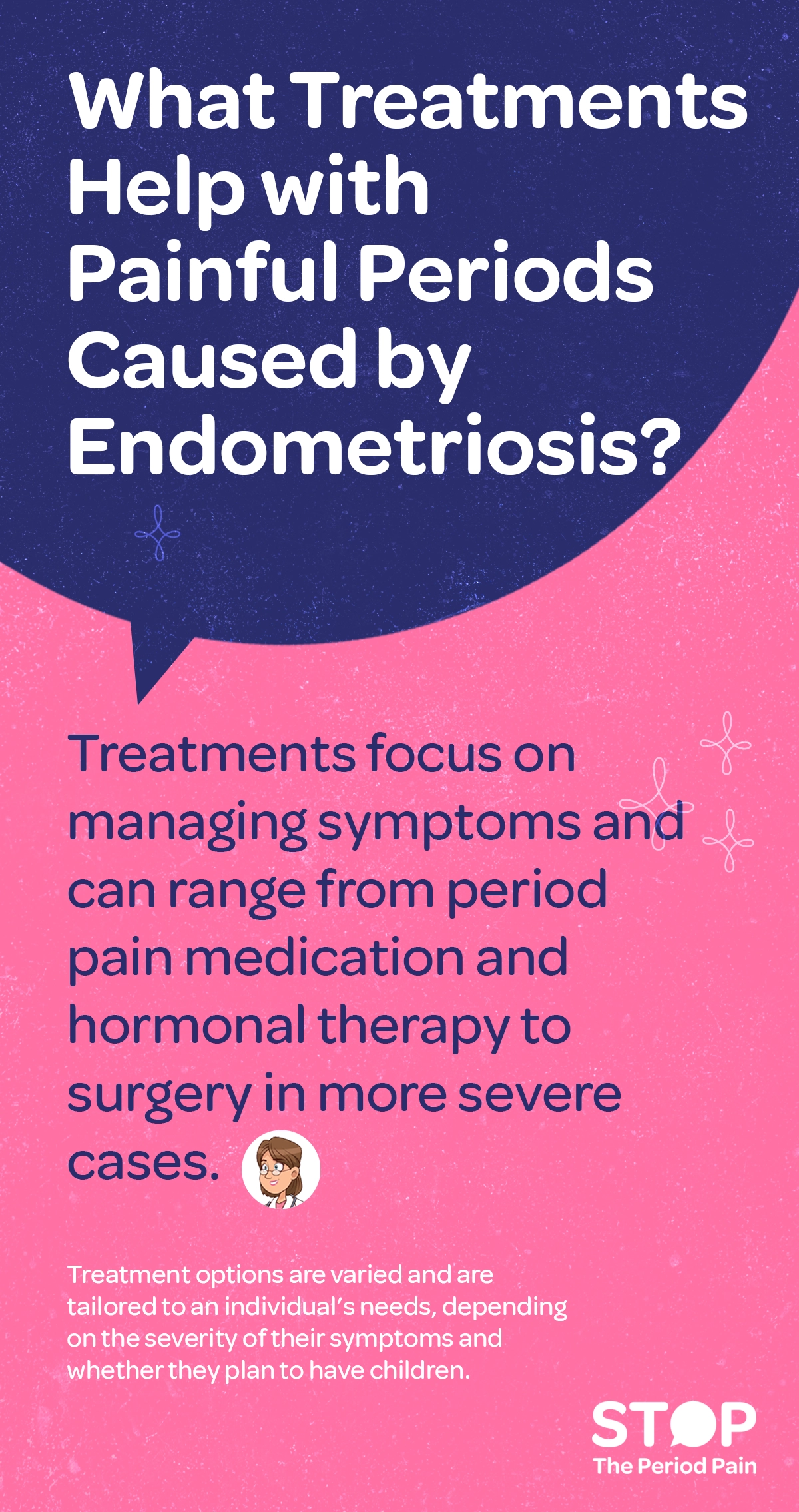
A pink and dark purple graphic with the following text: "What Treatments Help with Painful Periods Caused by Endometriosis?" The text explains that treatments focus on managing symptoms and can range from period pain medication and hormonal therapy to surgery in more severe cases. It also mentions that treatment options are varied and tailored to an individual’s needs, depending on the severity of their symptoms and whether they plan to have children. The graphic includes a friendly illustration of a doctor with glasses and a stethoscope, and a logo at the bottom that says "STOP The Period Pain." The background is a soft pink with light abstract star shapes surrounding the content. The graphic ends in the bottom right corner with the campaign message "STOP The Period Pain." Which is a knowledge initiative campaign by Blue Cross Laboratories the makers of meftal spas.

Your Journey to #StopThePeriodPain Starts Here

Every month, millions of Indian girls & women suffer in silence, told that their severe period pain (dysmenorrhea) is “normal.” Our mission is to break that silence. #StopThePeriodPain campaign is here to empower you with 3 simple truths:
Period Pain Calculator Section

Hit Up Our Period Pain Calculator

For real, how bad is your pain? Our interactive tool uses a 1-10 pain scale and a few quick questions to help you get the full picture. In just a few clicks, you’ll know if your pain is a chill or a major red flag.