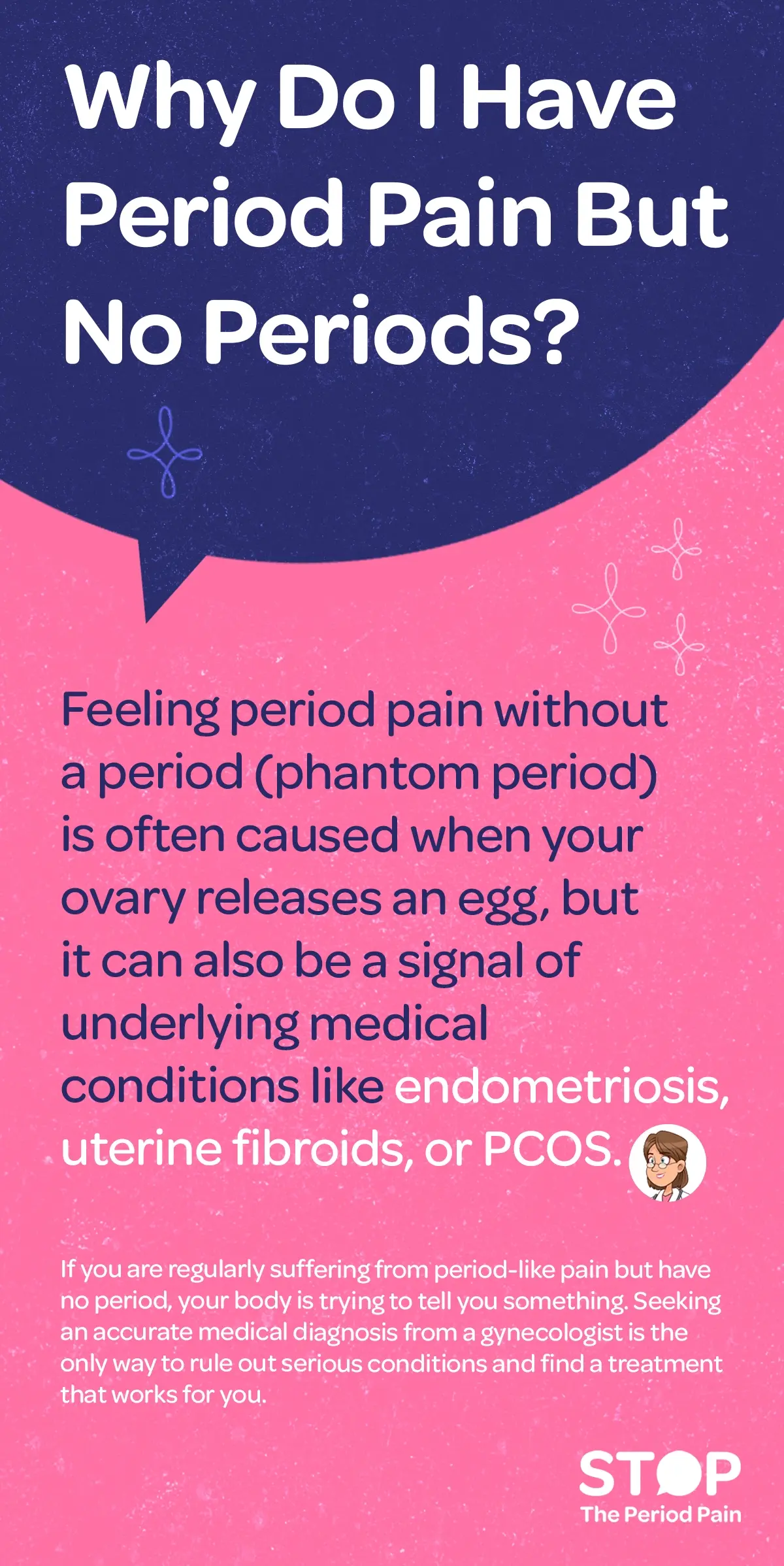
Feeling period pain without a period (phantom period) is often caused when your ovary releases an egg, but it can also be a signal of underlying medical conditions like endometriosis, uterine fibroids, or PCOS.
Below are the common causes of period pain without bleeding:
Ovulation Pain (Mittelschmerz)
Your ovary releases an egg about 10–14 days before your period actually begins. This process can cause sharp or dull cramping on one side of your lower abdomen. For many, this “mid-cycle pain” feels exactly like period cramps, even though your actual period is still days away. This is also called the phantom period.
Cyst Rupture in PCOS
In PCOS, small cysts can form on the ovaries. If one of these cysts ruptures, it can cause sudden, intense pelvic pain. This pain can mimic severe period cramps and may happen at any time during your cycle, regardless of whether you are bleeding.
Endometriosis and Uterine Fibroids
Conditions like endometriosis (where tissue grows outside the uterus) and uterine fibroids (non-cancerous growths) can cause chronic pelvic pain. These conditions can make your pelvic area so sensitive that you feel “period pain” all month long.