Prostaglandin levels spike during your period because their specific job is to help shed the uterine lining when pregnancy hasn’t occurred. If prostaglandin levels don’t rise, your period will not start, and the lining will remain inside the uterus. For a healthy body, that old lining must be cleared out every month to make room for a fresh, healthy one.

Why Prostaglandins Are Higher During Periods - The Biological Understanding.

Your menstrual cycle has three distinct phases, and each phase relies on one of three main components: Estrogen, Progesterone, and Prostaglandins.

Phase 1: The Build Phase (Estrogen).

After your last period ends, estrogen levels in your body begin to rise. The role of estrogen is to build and thicken a fresh, new uterine lining, preparing the uterus in case a pregnancy occurs. This phase lasts approximately 14 days.

Phase 2: The Maintain Phase (Progesterone).

Once an egg is released by the ovaries (ovulation), progesterone takes over. Its job is to protect and stabilise the lining that estrogen just built, making it soft and nutrient-rich. Think of progesterone as the shield that protects the uterine lining. This phase also lasts approximately 14 days.

Phase 3: The Clean-up Phase (Prostaglandins).

If pregnancy does not occur (meaning the egg is not fertilised by male sperm), the body sends a signal, and progesterone levels immediately crash. With this protector shield gone, prostaglandins take over. Their specific role is to break down the uterine lining and push it out of the uterus. This process is your period—and this is why you experience a spike in prostaglandins during this time.
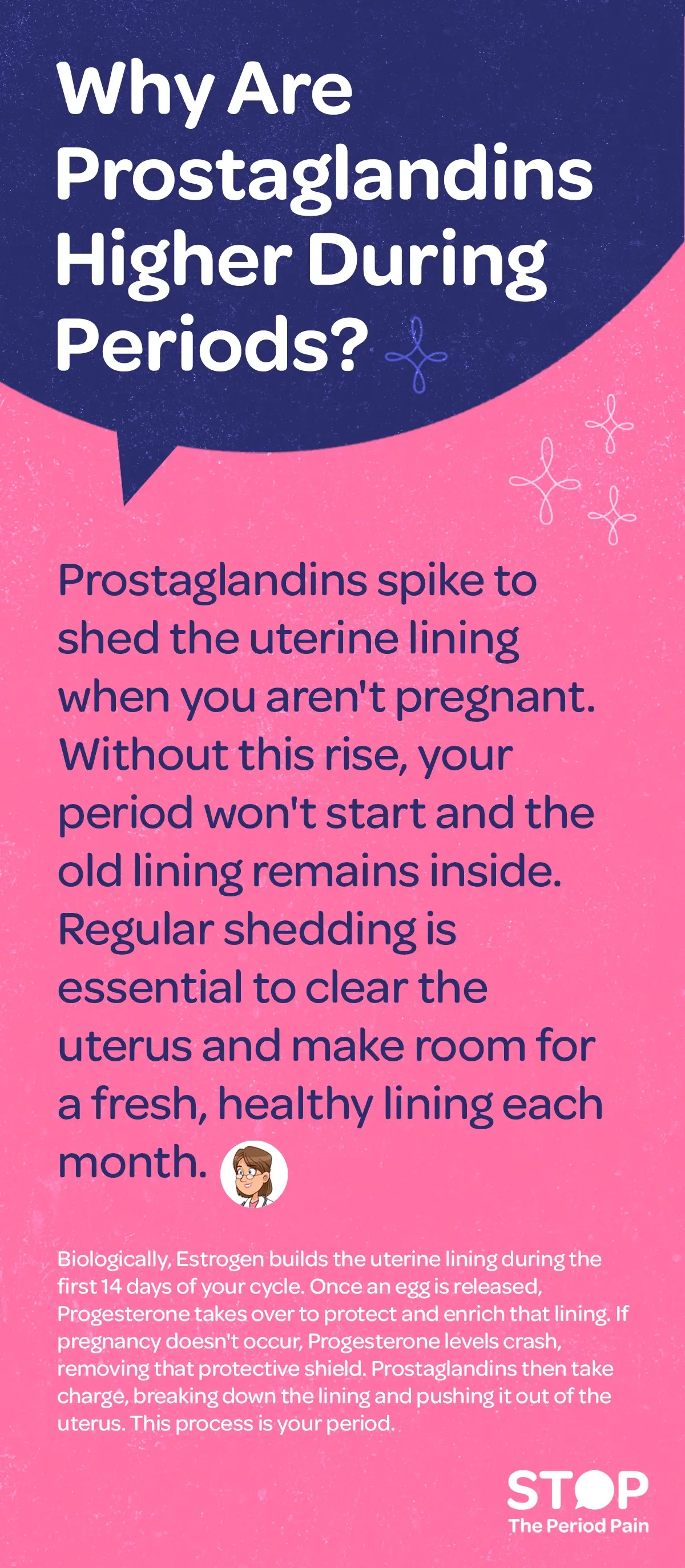
A text-based educational graphic titled “Why Are Prostaglandins Higher During Periods?” explaining that prostaglandins increase during menstruation, a key part of the menstrual cycle, to help shed the uterine lining when pregnancy does not occur, noting that without this rise, a period would not start and the old lining would remain in the uterus, while regular shedding is necessary to clear and renew the lining each month for reproductive health; it further describes the hormonal cycle, stating that estrogen builds the uterine lining during the first half of the cycle, progesterone supports the uterine lining after ovulation, and if pregnancy does not happen, progesterone levels drop, triggering prostaglandins to break down and expel the lining from the uterus, which results in a menstrual period. The graphic ends with the campaign message "STOP The Period Pain." Which is a knowledge initiative campaign by Blue Cross Laboratories the makers of meftal spas.

Your Journey to #StopThePeriodPain Starts Here

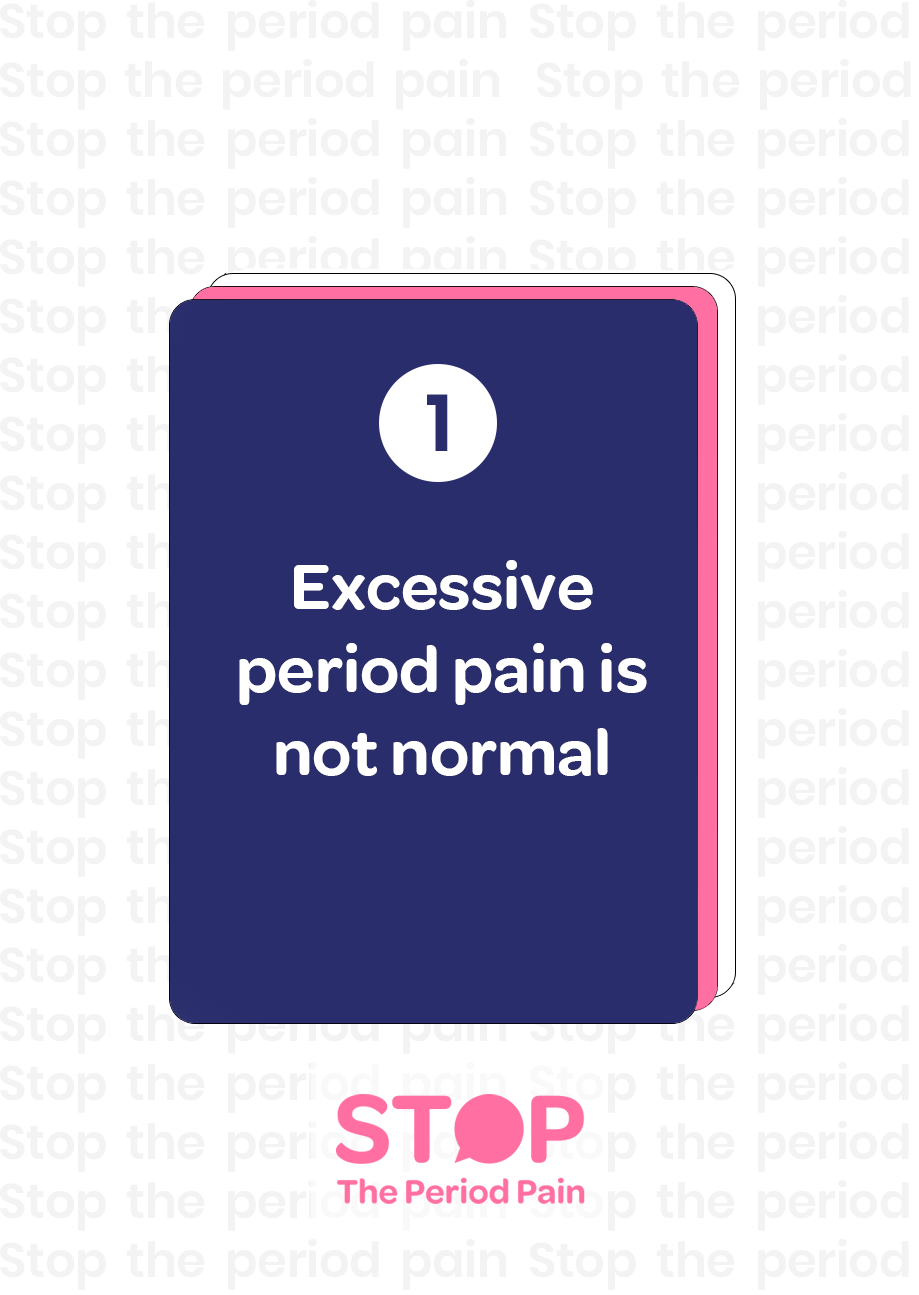
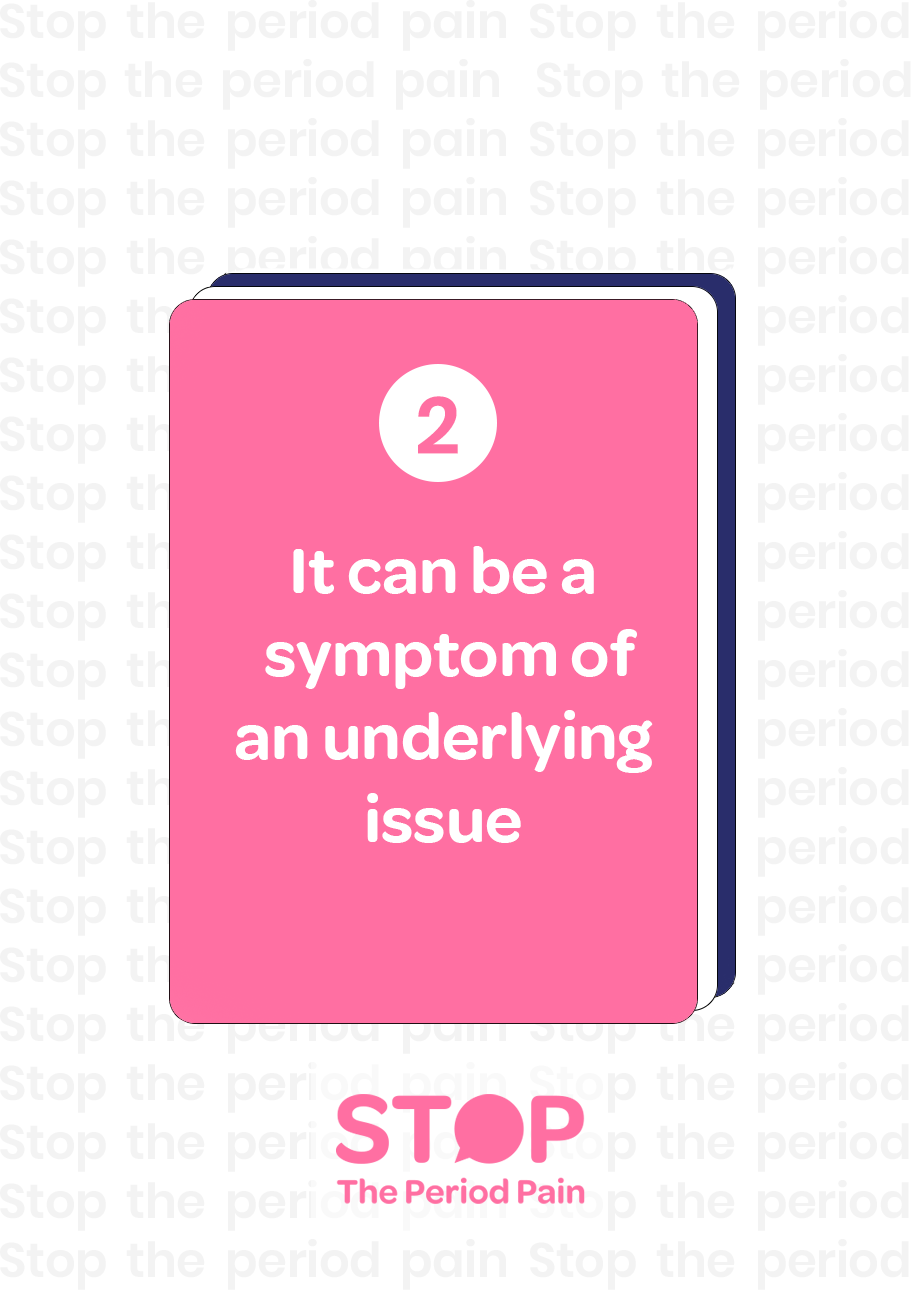
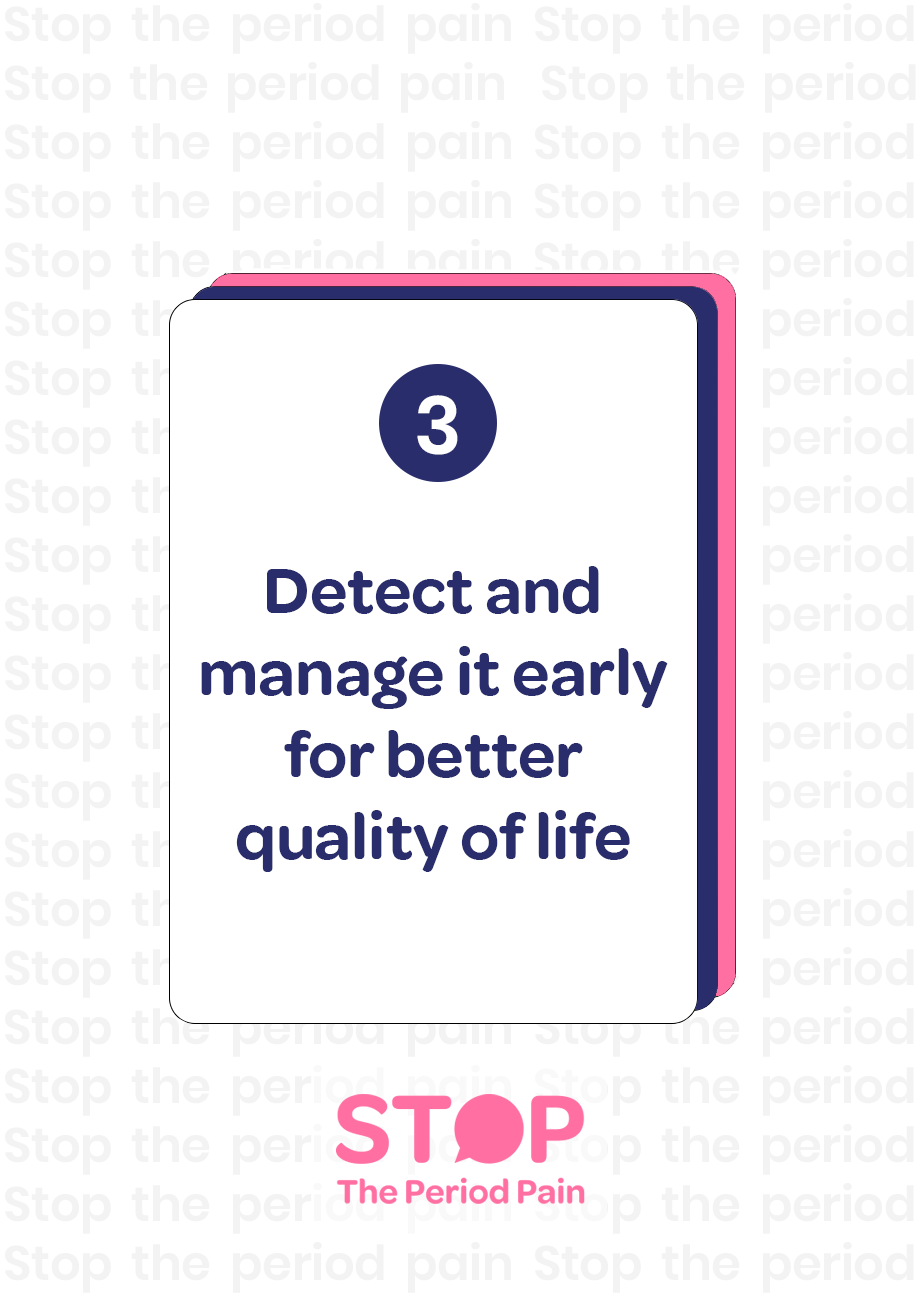
Every month, millions of Indian girls & women suffer in silence, told that their severe period pain (dysmenorrhea) is “normal.” Our mission is to break that silence. #StopThePeriodPain campaign is here to empower you with 3 simple truths:

Period Pain Calculator Section

Hit Up Our Period Pain Calculator

For real, how bad is your pain? Our interactive tool uses a 1-10 pain scale and a few quick questions to help you get the full picture. In just a few clicks, you’ll know if your pain is a chill or a major red flag.

Don’t Take Period Pain Lightly.

Period pain (dysmenorrhea) is a real medical issue.
Visit a gynaecologist and #StopThePeriodPain

Don't take period pain lightly