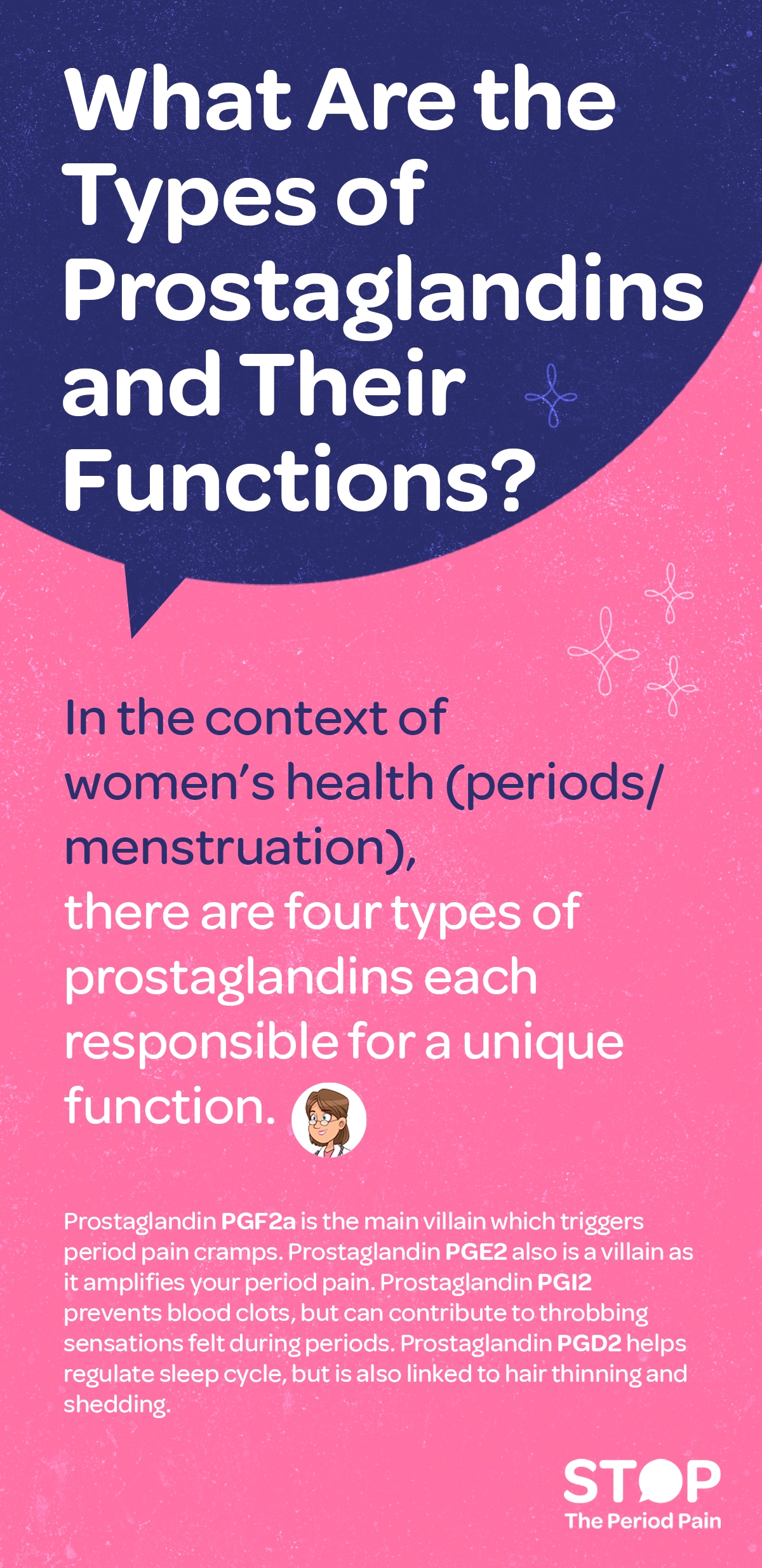
In the context of women’s health (periods/ menstruation), there are four types of prostaglandins each responsible for a unique function.
The four types of prostaglandins that are related to periods/ menstruation are:
Prostaglandin PGF2ɑ (F2 Alpha) - This triggers period cramping
This is the primary villain when it comes to period pain.
- Role: It causes the uterine muscles to contract to shed the lining, causing periods.
- The Problem: In many women in India suffering from severe cramps, the body produces too much PGF2ɑ. This leads to the intense, painful period spasms and even the period flu (the flu-like symptoms you experience during periods)).
Prostaglandin PGE2 - This amplifies period pain
This is the secondary villain when it comes to period pain. Think of this one as the volume knob on your period pain.
- Role: It is involved in inflammation and fever.
- The Problem: It makes your nerve endings extra sensitive. When PGE2 is high, even a normal contraction feels sharp and unbearable. PGE2 this contributes to the heaviness and swelling in the pelvic area.
Prostaglandin PGI2 - This regulates the blood flow
This prostaglandin has a slightly different job than the other types of prostaglandins.
- Role: It helps prevent blood clots and helps blood vessels relax (known as vasodilation in medical terms).
- The Problem: While it’s important for circulation, it can contribute to the “throbbing” sensation sometimes felt during inflammation.
Prostaglandin PGD2 - This regulates sleep and the scalp
- Role: This type is found in the brain and the scalp.
- The Connection: It is involved in regulating sleep cycles but high levels of PGD2 on the scalp are also linked to hair thinning and shedding.