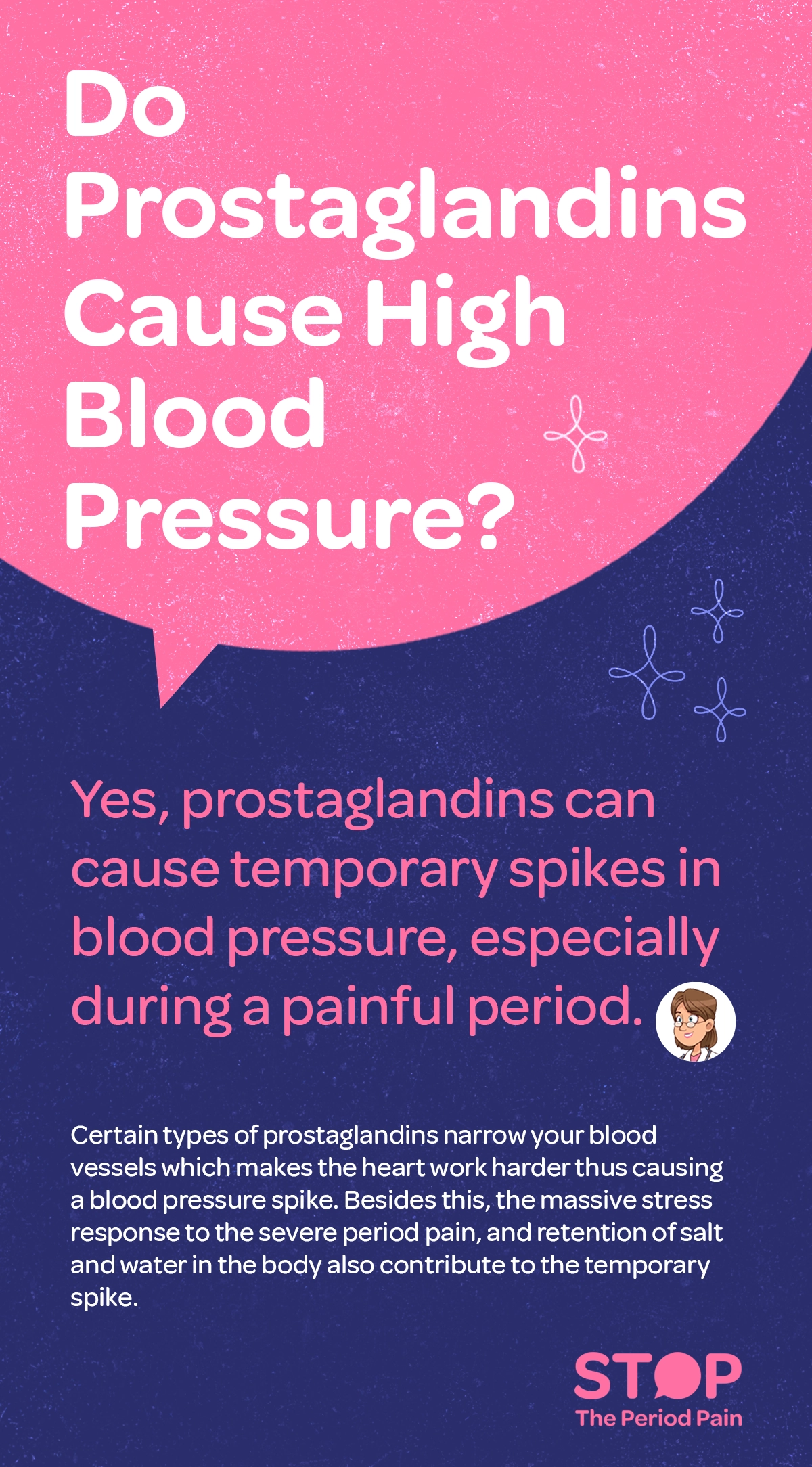
Yes, prostaglandins can cause temporary spikes in blood pressure, especially during a painful period.
You know that prostaglandins are released for the period to begin, and these especially if they are produced in excess affect your blood pressure in the below ways:
- Narrow your blood vessels: Certain types of prostaglandins cause your blood vessels to narrow (medically known as constriction). When vessels narrow, the heart has to work harder to pump blood through them, which can lead to a temporary rise in blood pressure.
- Tigger pain response: Severe period pain (dysmenorrhea) triggers a massive stress response in the body. This stress response releases adrenaline and cortisol, which naturally increase your heart rate and blood pressure.
- Fluid retention: Prostaglandins are linked to the way your kidneys handle salt and water. Excess fluid in the body can put extra pressure on your arteries.
When should you be worried?
For most healthy women, these are temporary fluctuations that return to normal once the period ends. However, if you already have hypertension (high blood pressure), severe period pain can make it harder to manage during those few days. Remember, if you feel dizzy, have a severe headache, or chest palpitations, you should consult a doctor immediately.
How to manage blood pressure spike during period
- Treat the period pain early: By using a targeted non-steroidal anti-inflammatory drug (NSAID), you stop the overproduction of prostaglandins. This prevents the “pain-stress” cycle that causes blood pressure to spike.
- Monitor your salt intake: In India, our diets can be high in salt (pickles, papads, and namkeen). Reducing salt during your period helps minimise fluid retention and keeps blood pressure stable. To know complete list of food that you must avoid during painful periods, read our blog Period Pain Foods To Avoid In Indian Lifestyle For A Happier Cycle.