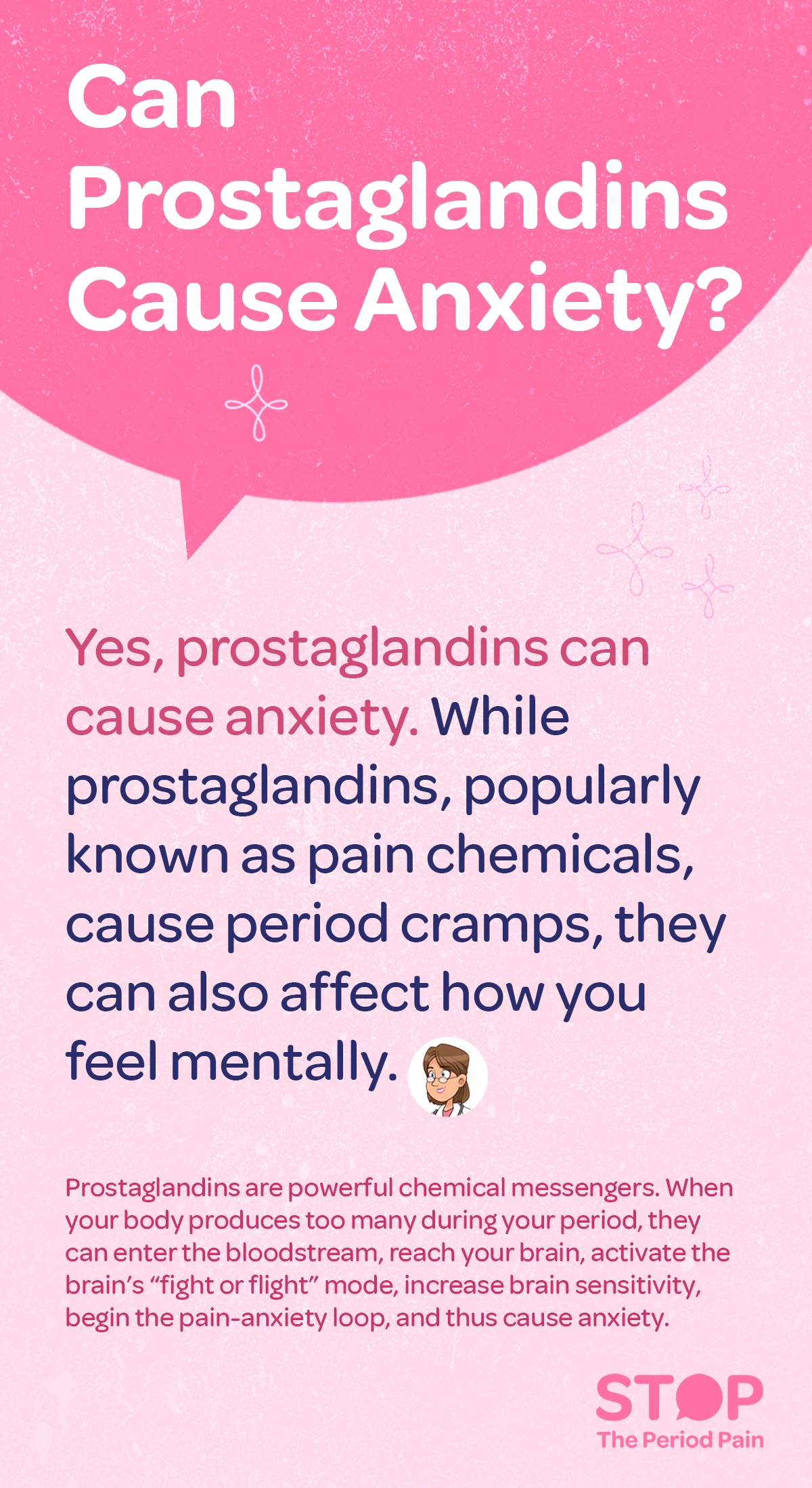
Yes, prostaglandins can cause anxiety. While prostaglandins, popularly known as pain chemicals, cause period cramps, they can also affect how you feel mentally.
The "Period-Brain" Connection
Prostaglandins are powerful chemical messengers. When your body produces too many during your period, they can enter the bloodstream, reach your brain and impact your mood in a few simple ways:
- Activate the “Fight or Flight” Mode: When prostaglandins reach your brain, they signal your nervous system to be on high alert. They can stimulate the sympathetic nervous system—the part of your brain responsible for the “fight or flight” response. This can lead to feelings of restlessness, heart palpitations, shaky, or “on edge” without a clear reason.
- Increase Brain Sensitivity: High levels of inflammation in the body are closely linked to changes in mood. Prostaglandins can affect the way your brain processes neurotransmitters like serotonin (the “feel-good” hormone), making you more prone to irritability or anxiety.
- Begin the Pain-Anxiety Loop: It’s a two-way street. Physical pain caused by prostaglandins naturally increases stress. This stress then triggers more inflammation, which can create a cycle where you feel physically miserable and mentally overwhelmed at the same time.
How Treating the Pain Calms the Mind
In India, we often think of “period moods” and “period pain” as two separate things. You have read how the two are linked. By using an Non-Steroidal Anti-Inflammatory Drug (NSAID) to lower prostaglandin levels, you aren’t just helping your body—you’re helping your mind by:
- Lowering Inflammation: By blocking the production of prostaglandins at the source, you reduce the “inflammatory load” on your entire body.
- Breaking the Stress Cycle: When you effectively manage physical pain, your brain can step out of “crisis mode,” helping you feel calmer and more in control of your workday or social life.
- Improving Sleep: Prostaglandins are often responsible for the “period insomnia” or restless sleep that contributes to next-day anxiety. Reducing them helps you get the rest your mind needs.