More Answer For You
- Are Painful Periods a Sign of Good Fertility?
- Does a Heavier Period Mean More Fertile?
- When to See a Doctor for Painful Periods?
- What will a Gynaecologist Do for Painful Periods?
- Why is My Period So Clotty and Painful?
- What Do Large Blood Clots During Period Mean?
- What are the Symptoms of Period Pain?
- Why Does My Period Pain Go Down to My Thighs?
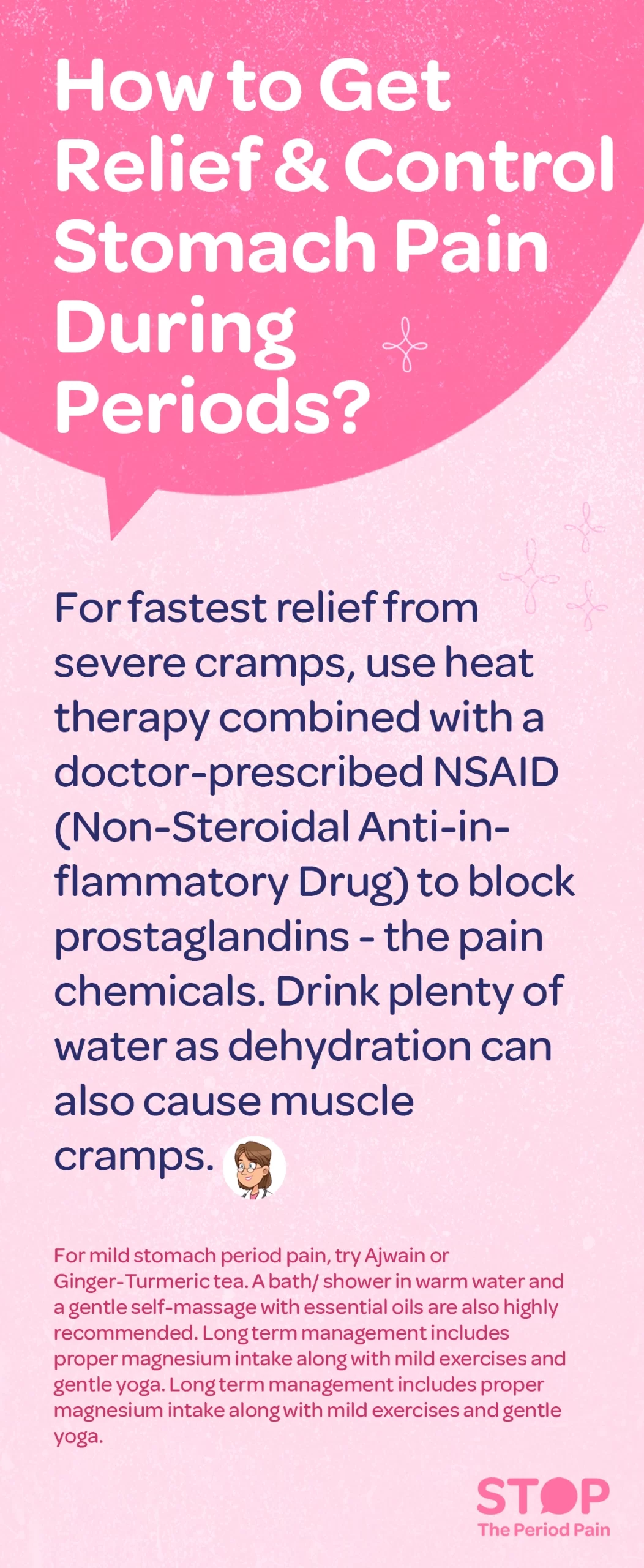
To achieve the fastest relief from severe period stomach pain and cramps, the most effective approach is a combination of immediate heat therapy and a doctor-prescribed Non-Steroidal Anti-Inflammatory Drug (NSAID). This dual action targets both the muscle spasm and the underlying chemical cause.
Instant Relief: The Best Combination
A severe, sharp cramp is a spasmodic pain that often requires a muscle relaxant. Here’s what you must do:
- Heat Therapy First: Immediately apply a heat patch or hot water bag to your lower abdomen (the area below your belly button). Heat is a powerful vasodilator, meaning it widens blood vessels, which quickly relaxes the spasmodic (contracting) uterine muscles.
- Target the Cause (Prostaglandins): For pain to stop quickly, you need to block the chemicals that cause the cramps. Doctors prescribe NSAIDs (Non-Steroidal Anti-Inflammatory Drugs)as they work by inhibiting the production of pain-causing prostaglandins.
Expected Relief Time: When combined, heat therapy and an NSAID can provide noticeable relief from period stomach pain within 15 to 30 minutes.
Drink Water
A spasm is an involuntary muscle contraction often triggered by inflammation, but also by factors like dehydration. Ensure you are consistently drinking enough water, especially in the days leading up to your period, to keep your uterine tissues healthy and flexible.
Natural Strategies To Relieve Mild to Moderate Period Stomach Pain
If you prefer to manage the pain using kitchen remedies, focus on foods and practices that calm your body:
- Ajwain (Carom Seeds): Chew a pinch of Ajwain or drink Ajwain water. Ajwain contains thymol which acts as a natural antispasmodic, easing abdominal discomfort.
- Ginger-Turmeric Tea: Brew fresh ginger with a hint of turmeric. Both are potent anti-inflammatories that help to soothe uterine inflammation and warm the body.
- Warm Bath/Shower: The overall warmth helps relax muscles throughout your pelvic region and lower back, easing general tension and pain.
- Gentle self massage: A gentle self massage with essential oils helps relax the abdominal muscles.
Expected Relief Time: Typically starts within 4 to 6 hours. However, since every girl’s body responds differently, the exact onset of relief may vary.
Long-Term Ways to Control Stomach Pain During Periods
Sustained relief comes from continuous healthy practices that reduce inflammation and improve overall well-being throughout your cycle.
- Diet: Boost your intake of Magnesium (found in leafy greens, nuts, dark chocolate) to help muscles, including your uterus, relax more effectively.
- Exercise: Regular light exercise like walking or gentle yoga releases endorphins, your body’s natural painkillers and mood boosters, which directly counter cramp pain.
Your Journey to #StopThePeriodPain Starts Here
Every month, millions of Indian girls & women suffer in silence, told that their severe period pain (dysmenorrhea) is “normal.” Our mission is to break that silence. #StopThePeriodPain campaign is here to empower you with 3 simple truths:
More Answer For You
- Are Painful Periods a Sign of Good Fertility?
- Does a Heavier Period Mean More Fertile?
- When to See a Doctor for Painful Periods?
- What will a Gynaecologist Do for Painful Periods?
- Why is My Period So Clotty and Painful?
- What Do Large Blood Clots During Period Mean?
- What are the Symptoms of Period Pain?
- Why Does My Period Pain Go Down to My Thighs?
Hit Up Our Period Pain Calculator
For real, how bad is your pain? Our interactive tool uses a 1-10 pain scale and a few quick questions to help you get the full picture. In just a few clicks, you’ll know if your pain is a chill or a major red flag.

References:
- Self-aromatherapy massage of the abdomen for the reduction of menstrual pain and anxiety during menstruation
- Times of India – Menstrual cramps: 10 home remedies that guarantee immediate relief
- Times of India – Why ‘Period pain is normal’ might be the biggest myth in women’s health
- Indian Journal of Clinical Practice – Role of Prostaglandins in Pathogenesis of Dysmenorrhea and Place of Mefenamic Acid and Dicyclomine in its Management