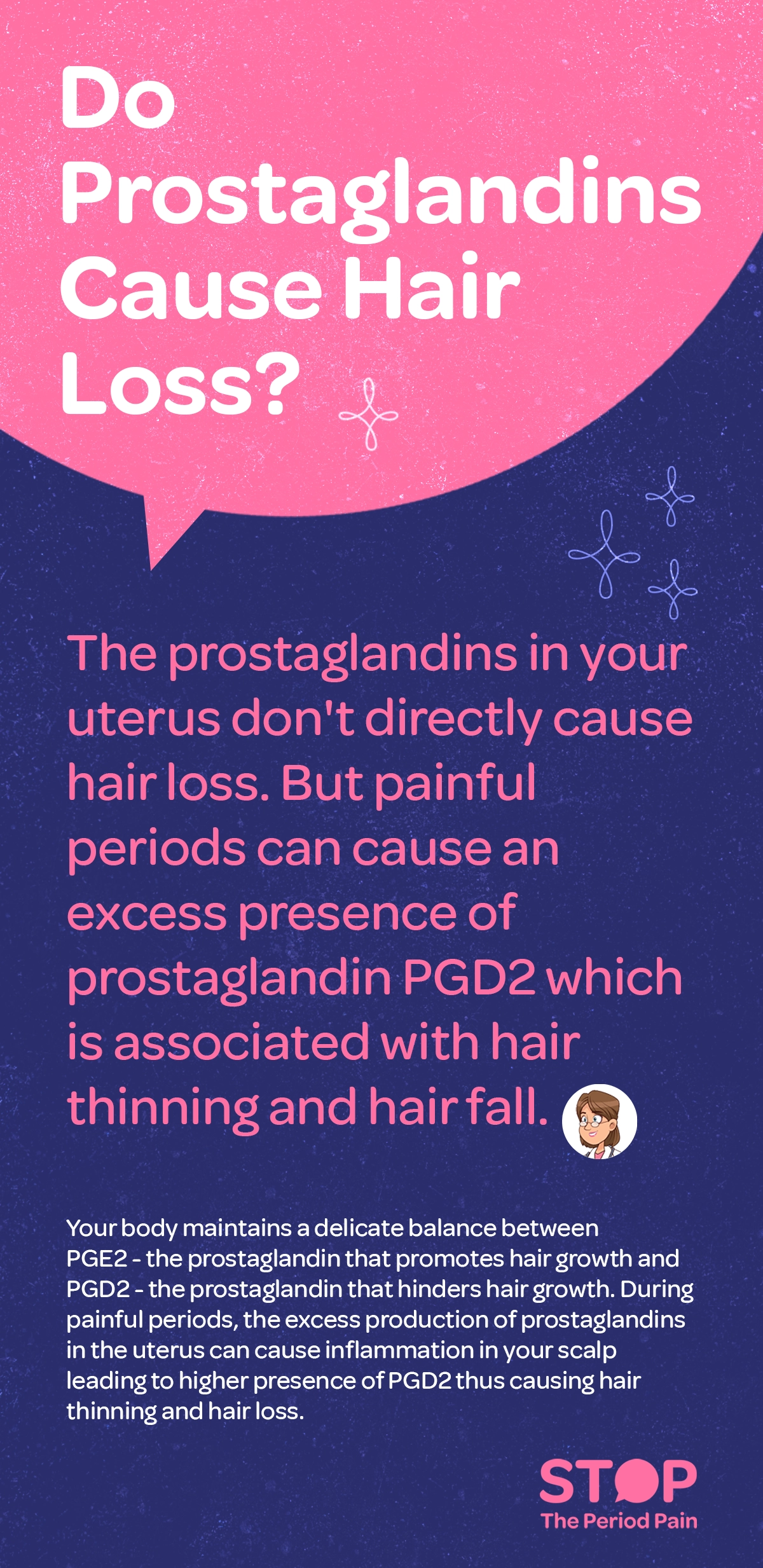
The prostaglandins in your uterus don’t directly cause hair loss. But during periods, especially if you have dysmenorrhea, the balance between different types of prostaglandins can change leading to hair loss.

Your body maintains a delicate balance between 2 types of prostaglandins:

PGD2 is the bad prostaglandin. It hinders hair growth.

Research has shown that prostaglandin PGD2 is found in high levels on the scalps of people experiencing thinning hair. This prostaglandin tells the hair follicle to stop growing and enter a resting phase earlier than it should.

PGE2 is the good prostaglandin. It supports hair growth.

This prostaglandin actually helps stimulate hair growth and keeps the follicles healthy.

Why do women experience hair fall during periods?

In India, many women notice more hair fall during their menstrual cycle and often wonder if it’s related to their cramps. Here is what is likely happening:

  • Inflammation: When your body produces excess prostaglandins, it creates inflammation throughout the body. This inflammation can sometimes affect the balance of prostaglandins in other parts of the body, including your scalp.
  • The Stress Factor: Severe period pain causes high stress. Stress is a well-known trigger for temporary hair shedding.
  • Iron Levels: Heavy periods (which often go hand-in-hand with painful cramps) can lead to low iron levels. In India, iron deficiency is a very common cause of hair thinning in women.

How to protect your hair during painful periods?

  • Manage inflammation: Using an non-steroidal anti-inflammatory drug (NSAID) helps keep your body’s overall prostaglandin levels in check, preventing the “inflammatory storm” in your body.
  • Scalp Nutrition: Ensure your diet is rich in Iron and Protein—essential for hair health—especially if you have heavy cycles which often accompany painful periods.
  • Gentle Care: Avoid tight hairstyles or heavy chemical treatments during your period when your scalp might be more sensitive due to inflammation and higher presence of PGD2 – the bad prostaglandin.
Informational infographic titled “Do Prostaglandins Cause Hair Loss” (hair loss causes, prostaglandins and hair loss, hormonal hair loss). The visual explains the relationship between menstrual pain, painful periods, prostaglandins, and hair thinning (period-related hair loss, female hair thinning). On one side, an illustration of a uterus highlights increased prostaglandin production during painful periods (menstrual cramps inflammation, prostaglandin hormones). Text explains that prostaglandins in the uterus do not directly cause hair loss, but severe period pain can increase levels of prostaglandin PGD2, which is associated with hair thinning and hair fall (PGD2 hair loss, hair shedding causes). On the other side, a scalp and hair follicle illustration shows the balance between PGE2, which supports hair growth, and PGD2, which inhibits hair growth (hair growth cycle, hair follicle health). Arrows indicate that excess prostaglandins can lead to inflammation that affects the scalp, increasing PGD2 levels and potentially causing hair thinning and hair loss (scalp inflammation, hormonal imbalance hair loss). The overall tone is educational and medical, using simple diagrams and label. The graphic portraits the campaign message "STOP The Period Pain." Which is a knowledge initiative campaign by Blue Cross Laboratories the makers of meftal spas

Your Journey to #StopThePeriodPain Starts Here

Every month, millions of Indian girls & women suffer in silence, told that their severe period pain (dysmenorrhea) is “normal.” Our mission is to break that silence. #StopThePeriodPain campaign is here to empower you with 3 simple truths:

Period Pain Calculator Section

Hit Up Our Period Pain Calculator

For real, how bad is your pain? Our interactive tool uses a 1-10 pain scale and a few quick questions to help you get the full picture. In just a few clicks, you’ll know if your pain is a chill or a major red flag.

Don’t Take Period Pain Lightly.

Period pain (dysmenorrhea) is a real medical issue.
Visit a gynaecologist and #StopThePeriodPain

Don't take period pain lightly