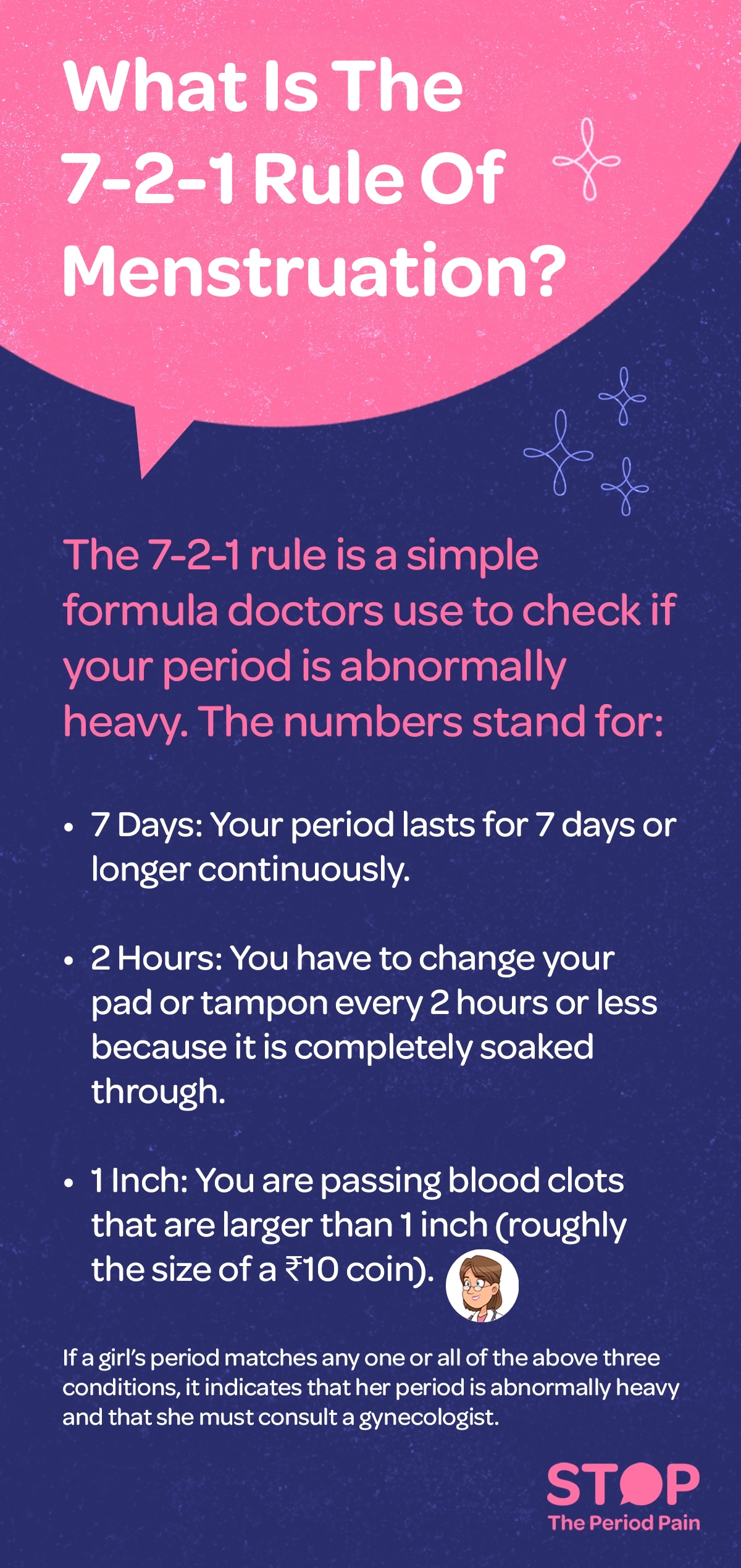
The 7-2-1 rule is a simple formula doctors use to check if your period is abnormally heavy. The numbers stand for:
- 7 Days: Your period lasts for 7 days or longer continuously.
- 2 Hours: You have to change your pad or tampon every 2 hours or less because it is completely soaked through.
- 1 Inch: You are passing blood clots that are larger than 1 inch (roughly the size of a ₹10 coin).
If a girl’s period matches any one or all of the above three conditions, it indicates that her period is abnormally heavy and that she must consult a gynecologist.
Why does the 7-2-1 period rule matter scientifically?
Meeting any of these criteria means the volume of blood loss is high enough to cause chronic iron-deficiency anemia, leading to fatigue and weakness. In India, nearly 59% of women already suffer from diet-related iron deficiency anemia. Hence losing so much blood every month can make the situation much worse.
It indicates to a doctor the need to screen for underlying gynaecological issues like uterine fibroids, hormonal imbalances or bleeding disorders.
Why does the 7-2-1 period rule matter culturally in India?
In India, a lot of women are told that heavy periods are just normal or run in the family, turning a real medical problem into a tradition that women are expected to just tolerate. Instead of relying on vague family advice or feeling confused about your period flow, the 7-2-1 rule gives a woman a simple way to determine if she is losing more than a normal quantity of her blood. This helps her take the right step and consult a doctor for proper care before her health gets worse.