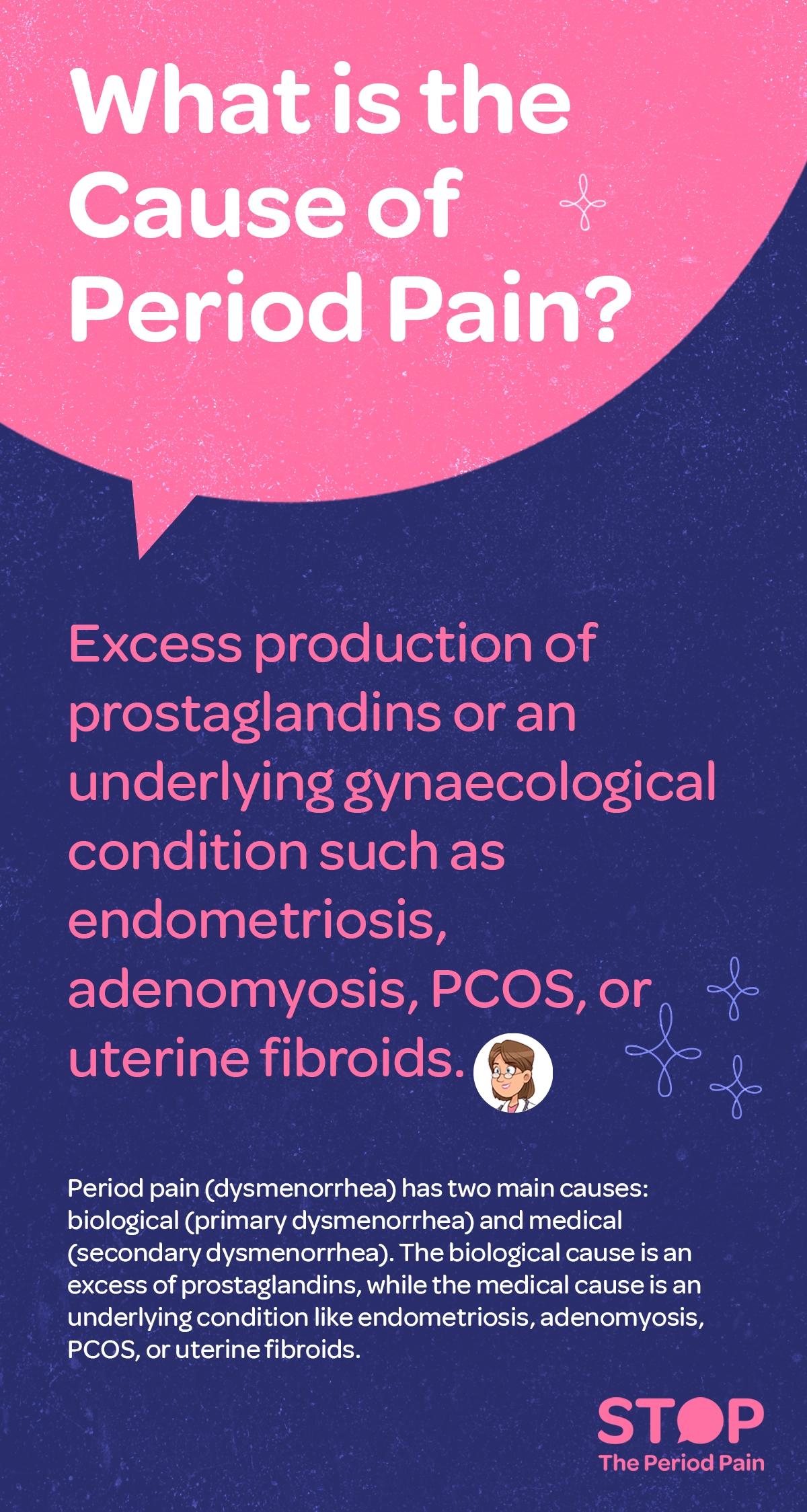
Period pain (dysmenorrhea) could have a biological cause. This is when the body goes into overdrive and produces excess hormone-like compounds called prostaglandins.

Period pain (dysmenorrhea) could have a biological cause. This is when the body goes into overdrive and produces excess hormone-like compounds called prostaglandins.

Alternatively, period pain could have a medical cause. This is when a girl is suffering from an underlying condition such as endometriosis, adenomyosis, PCOS, or uterine fibroids.

Biological cause (primary dysmenorrhea) is the most common form of menstrual pain, affecting an estimated 60-90% of teenage girls and young women in India, according to one study. This is the pain that is most often dismissed with the phrase “Sabko hota hai.”

Medical cause (secondary dysmenorrhea) is a major cause for concern because the normalisation of pain often leads to a significant delay in diagnosis. For instance, a survey found that on average, endometriosis goes undiagnosed for nearly 10 years in India, precisely because the period pain is normalised and not taken seriously. This delay can lead to long-term health complications that could have been managed with early intervention.

An infographic image about the causes of period pain. The top section is a dark blue speech bubble with the text 'What Is The Cause Of Period Pain?'. The main body, on a pink background, explains the causes are 'Excess production of prostaglandins or an underlying gynaecological condition such as endometriosis, adenomyosis, PCOS, or uterine fibroids.' The bottom right corner displays three logos of STOP The Period Pain, Meftal Spas, and Blue Cross Laboratories.

Your Journey to #StopThePeriodPain Starts Here

Every month, millions of Indian girls & women suffer in silence, told that their severe period pain (dysmenorrhea) is “normal.” Our mission is to break that silence. #StopThePeriodPain campaign is here to empower you with 3 simple truths:
Period Pain Calculator Section

Hit Up Our Period Pain Calculator

For real, how bad is your pain? Our interactive tool uses a 1-10 pain scale and a few quick questions to help you get the full picture. In just a few clicks, you’ll know if your pain is a chill or a major red flag.