For Priya (Yes, the same girl from our period pain page), every month was a countdown to a quiet dread. Her period wasn’t just an inconvenience; it was a thief, stealing at least a day, sometimes two, from her college life. The pain was so debilitating it would leave her curled in a ball, a hot water bottle her only comfort. Her mom, who had her own experiences with painful periods, would simply bring her a warm cup of tea and a blanket, offering a hug and the timeless, “Beta, period pain sabko hota hai. This too shall pass.”
But one month, the pain didn’t pass. It pain was so severe it kept Priya home for three consecutive days. The missed classes, the worry on her mom’s face, and the sheer helplessness of it all finally tipped the scales.
“We’re going to see the gynaecologist, beta,” her mom said, her voice firm. “This doesn’t seem to be just normal pain. We need to know what’s going on.”
And so, they found themselves in the calm, reassuring presence of Dr. (Mrs) Sharma. Priya, still feeling drained, explained everything—the pain, the missed college, the feeling of being completely derailed by her cycle.
Dr. (Mrs) Sharma listened patiently, then smiled warmly. “Priya, what you’re describing is called dysmenorrhea. It means ‘painful periods.‘ What you’ve been experiencing isn’t just typical discomfort; it’s a severe form that can also be a sign of underlying conditions like PCOS, endometriosis, adenomyosis or uterine fibroids. It’s a very common complaint, and I’m glad you came to see me. It’s the first step to finding a solution.”
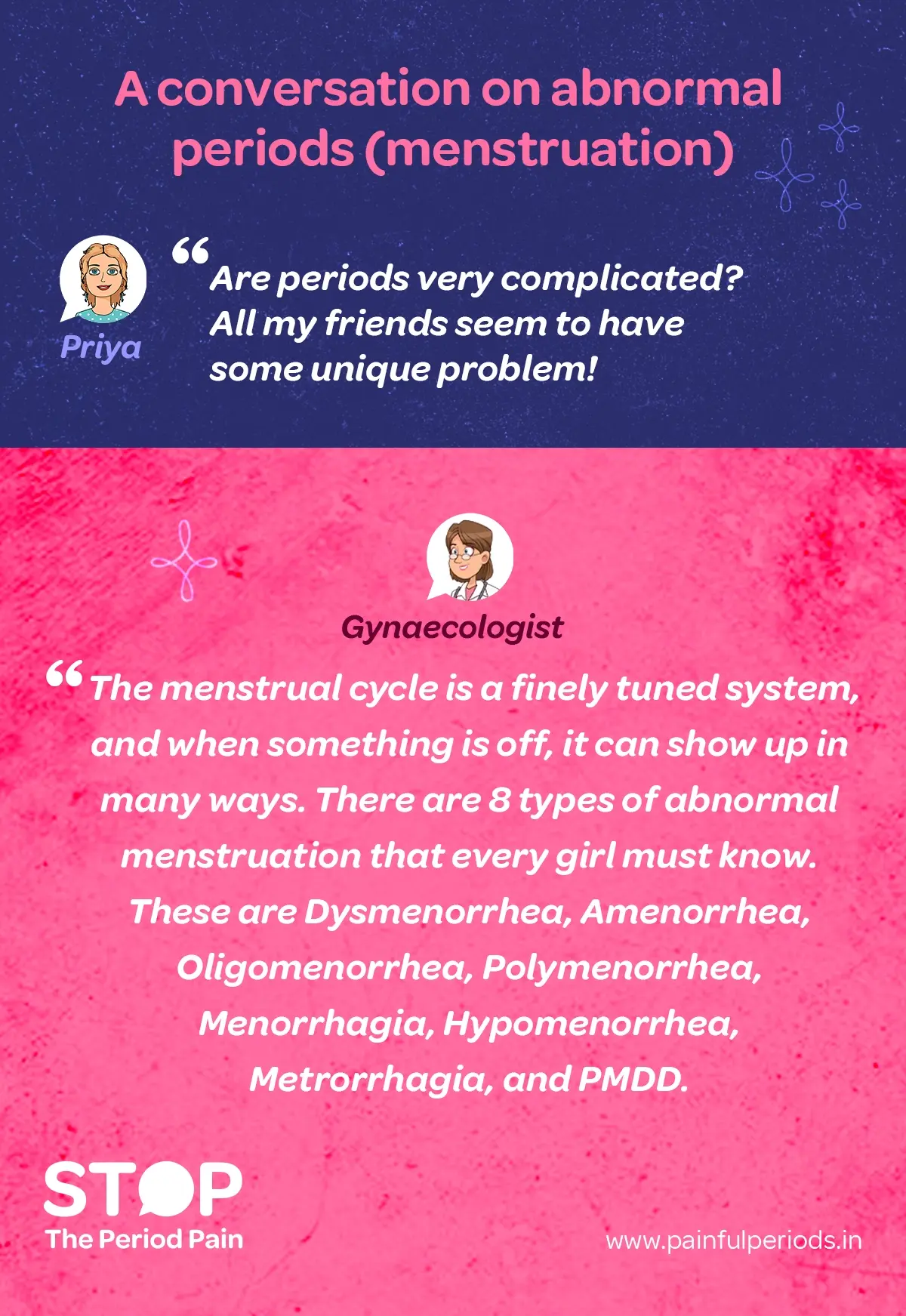
“Are all periods this complicated?” Priya asked, feeling a mix of relief and confusion.
“That’s an excellent question,” Dr. Sharma replied. “The menstrual cycle is a finely tuned system, and when something is off, it can show up in many ways. For your knowledge, let me tell you about all the ‘8 types of abnormal menstruation’ that many girls and women face. It’s important to know what’s normal and what’s not.”
In This Story
- Dysmenorrhea (Painful Periods)
- Amenorrhea (Absence of Periods)
- Oligomenorrhea (Infrequent Periods)
- Polymenorrhea (Frequent Periods)
- Menorrhagia (Heavy Bleeding)
- Hypomenorrhea (Light Bleeding)
- Metrorrhagia (Bleeding Between Periods)
- PMDD (Premenstrual Dysphoric Disorder)
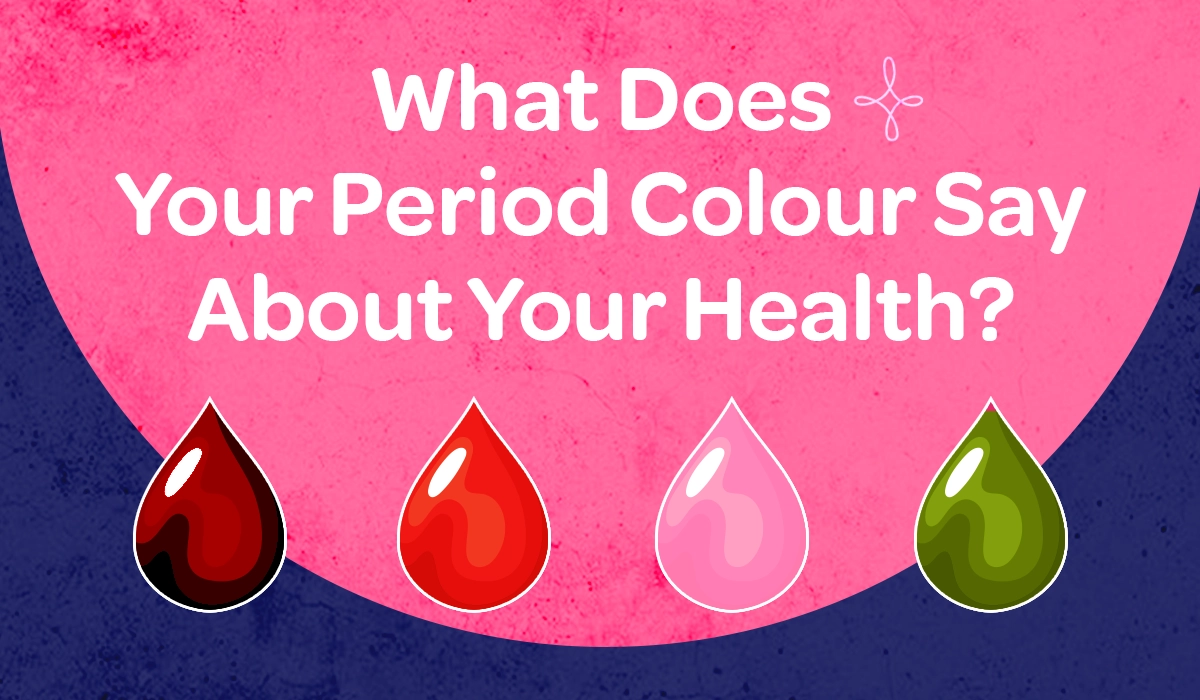
- Period Colour Is Your Body’s Language
- Referenced By
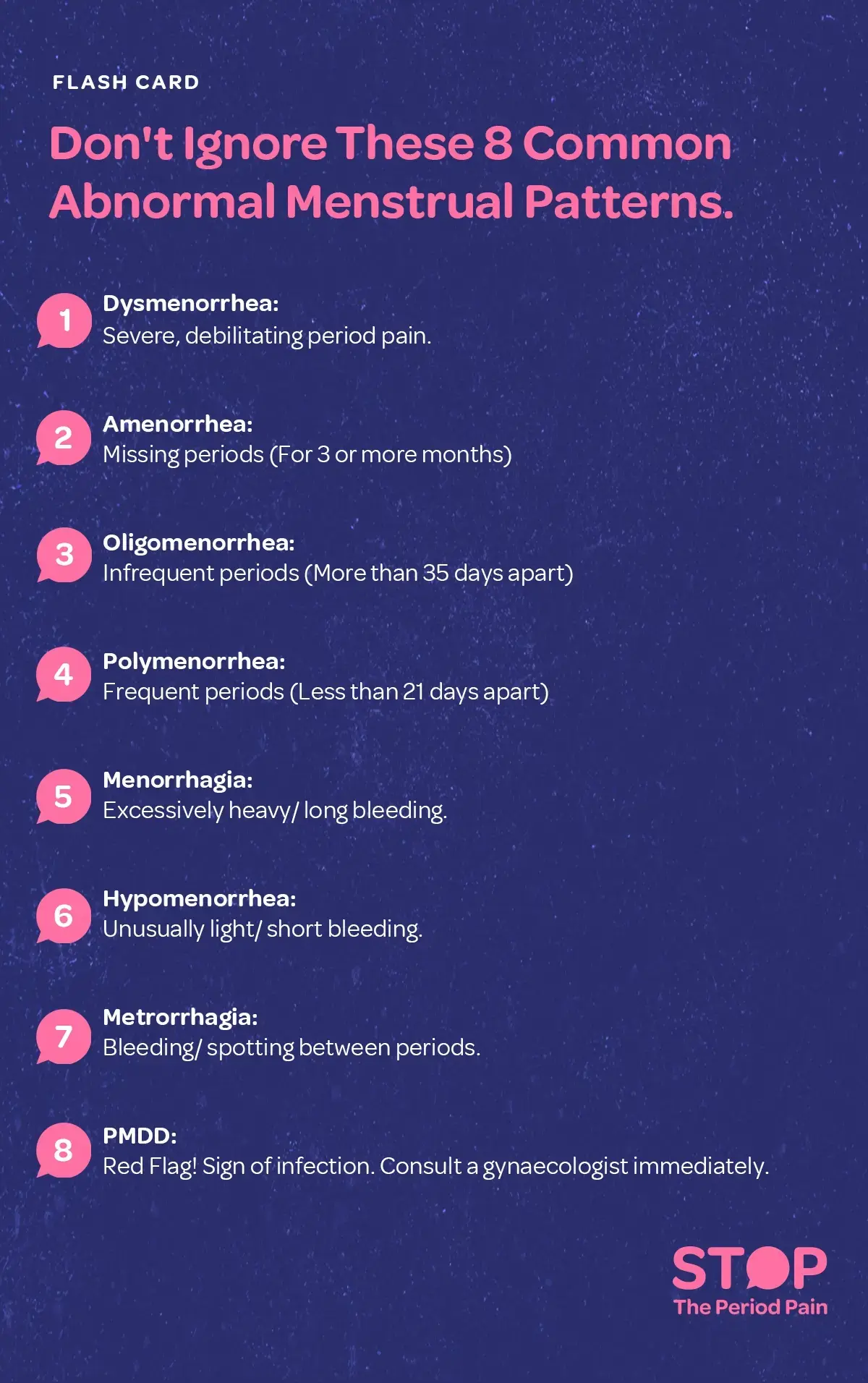
1. Dysmenorrhea (Painful Periods)
“The first is called dysmenorrhea. It means ‘painful periods.’ There are two types. The first is primary dysmenorrhea, which is what most girls experience. It’s caused by prostaglandins, chemicals that make your uterus contract. The second type is secondary dysmenorrhea, and this is where we look for an underlying cause like endometriosis, PCOS, adenomyosis or uterine fibroids. It’s severe pain that develops later in life”
2. Amenorrhea (Absence of Periods)
“Think of it as a no-show. This is when periods are completely absent. It can happen due to many reasons like intense exercise, significant weight loss, extreme stress, hormonal imbalances (such as PCOS), or certain medical conditions like problems with the thyroid gland. If you or a friend ever miss three or more periods in a row, it’s a good idea to get it checked out.”
3. Oligomenorrhea (Infrequent Periods)
“This is when your period is more of a rare visitor. Instead of coming every month, it shows up very infrequently—say, more than 35 days apart. It’s a common symptom of hormonal issues like PCOS.”
4. Polymenorrhea (Frequent Periods)
“On the other end of the spectrum, this is when your period comes too often, less than 21 days apart. It can be exhausting and lead to fatigue due to frequent blood loss, and it might indicate hormonal imbalances or ovulatory dysfunction.”
5. Menorrhagia (Heavy Bleeding)
This is when a period turns into a flood. Bleeding that is excessively heavy or lasts for a prolonged time is called menorrhagia. It often requires changing your pad or tampon every hour and can lead to iron deficiency anemia. It can be caused by conditions like uterine fibroids or endometriosis or adenomyosis”
Hit Up Our Period Pain Calculator
For real, how bad is your pain? Our interactive tool uses a 1-10 pain scale and a few quick questions to help you get the full picture. In just a few clicks, you’ll know if your pain is a chill or a major red flag.

6. Hypomenorrhea (Light Bleeding)
“This is the opposite of heavy bleeding. It’s when your period is unusually light and lasts for only a day or two. While it can be normal for some, it might also be a sign of low estrogen levels or, in some cases, uterine adhesions (Asherman’s syndrome) after a surgical procedure.”
7. Metrorrhagia (Bleeding Between Periods)
“Imagine a surprise guest showing up unannounced. This is when you experience irregular bleeding or spotting between your regular cycles. It can be caused by anything from hormonal fluctuations to small growths like uterine polyps or fibroids, or even an infection.”
8. PMDD (Premenstrual Dysphoric Disorder)
“Finally, there’s PMDD. It’s like a severe version of PMS. This is when the mood swings, irritability, and anxiety are so intense in the week or two before your period that they disrupt your daily life. For example, a minor disagreement with a friend might trigger extreme sadness, or you might feel so anxious you can’t focus on your college work. It’s a severe mood disorder that needs to be addressed, often with a combination of therapy and medication.”
Priya’s Moment of Clarity
Dr. Sharma finished her explanation, her voice gentle and clear. “Priya, your period is a vital sign, just like your temperature or heart rate. It tells a story about your health. The most important thing is to listen to your body and never hesitate to ask for help. We’ll find the right treatment for you so that you don’t have to miss a single day of college again.”
Priya, who had been listening intently, let out a deep breath she didn’t know she was holding. “So, this isn’t just… something I have to live with?” she asked, a hint of hope in her voice.
Her mother, seated beside her, reached over and squeezed her hand. “Beta, I always thought it was. I’m so sorry I didn’t push you to see a gynaecologist sooner.”
“It’s okay, Maa,” Priya replied, squeezing back. “We know now. It’s not just pain. It’s a sign.”
Dr. Sharma smiled, looking from one to the other. “Exactly. And the knowledge you have now is the first step toward a healthier, more predictable future. We’ll work on a plan to get you back to your routine, without the fear of your period holding you back.”
Priya felt a sense of clarity and empowerment. The knowledge that her pain had a name, and that she wasn’t alone in her struggles, was the first step toward a healthier, more predictable future. Priya decided that when she went back to college, she would talk to her friends about all the 8 types of abnormal menstruation. The knowledge was too important to keep to herself; it was something that needed to be shared with every girl who thought her pain was just a normal part of life.
Your Journey to #StopThePeriodPain Starts Here
Every month, millions of Indian girls & women suffer in silence, told that their severe period pain (dysmenorrhea) is “normal.” Our mission is to break that silence. #StopThePeriodPain campaign is here to empower you with 3 simple truths:
Moral Of The Story: Listen to Your Body, Speak Up for Yourself
Priya’s journey teaches us that our bodies are constantly communicating with us. For years, she accepted her pain as a normal part of life, but by finally listening to her body’s “shout” for help, she found clarity and a path to a healthier future. The most important lesson is this: never normalise your period pain or dismiss your concerns. Your period is a vital sign, just like your temperature or heart rate. By paying attention to its rhythm, flow, and any changes, you’re taking the first step in becoming your own best health advocate. And just like Priya, don’t be afraid to share your story—because by talking about it, you empower not just yourself, but every other girl who needs to know she’s not alone.
More Stories To Read
Transform your understanding of period pain through engaging and informative stories based on real medical insights.
The Answers You've Been Looking For
Get clear, concise answers to your most pressing questions about period pain.
- What is the cause of period pain?
- Can endometriosis cause pain outside of periods?
- How Is Endometriosis Diagnosed in Women with Painful Periods?
- What Treatments Help with Painful Periods Caused by Endometriosis?
- How Can I Tell If My Cramps Are Due to Adenomyosis?
- Can PCOS cause severe period pain?
- Does irregular menstruation with PCOS make period pain worse?
- Can uterine fibroids cause dysmenorrhea (painful periods)?
- How do fibroids cause painful and heavy periods?
- Does adenomyosis cause pain when not menstruating?
Disclaimer:
This content is for informational purposes only and is not a substitute for professional medical advice. The information provided here is based on general trends and may not apply to every individual, as every woman’s body and experience with period pain is unique.
Do not self-diagnose or self-treat. If you are experiencing painful periods, especially if the pain is moderate to severe or accompanied by other concerning symptoms, you must consult with a gynaecologist. Ignoring severe period pain can lead to a significant delay in diagnosing underlying conditions that require proper medical attention. Always prioritise a confident conversation with your gynaecologist over self-treatment.