High prostaglandin levels are typically confirmed by severe Day 1 period pain, presence of symptoms like period poops, nausea, lightheadedness or headaches, and a positive response to NSAID medications that specifically block the excess production of prostaglandins.

Remember, there isn’t any blood test to measure the level of prostaglandins. Hence doctors rely on clinical presentation – which essentially means they diagnose the prostaglandin levels on the specific combination of your reported symptoms, their timing, and how your body reacts to targeted treatment.

Here is how to identify the signs yourself:

The Timing Of Your Period Pain

Prostaglandin production is at its highest right when bleeding starts. If your pain is most violent in the first 24 hours and then tapers off significantly, it is a classic sign of a prostaglandin surge.

The Nature Of The Period Cramps

Prostaglandins cause the uterine muscle to lose oxygen (hypoxia) as it contracts. If your cramps feel like sharp, rhythmic waves that radiate to your lower back and thighs, your levels are likely high.

Presence Of Other Symptoms

Prostaglandins are meant to stay in the uterus, but when levels are excessive, they leak into the bloodstream and affect other smooth muscles.

Response To Medication

Non-Steroidal Anti-Inflammatory Drugs (NSAIDs) work specifically by blocking the enzyme that creates prostaglandins. If these medicines significantly reduce your pain when taken before the period cramps peak, it confirms that prostaglandins were the primary culprit for your period cramps.

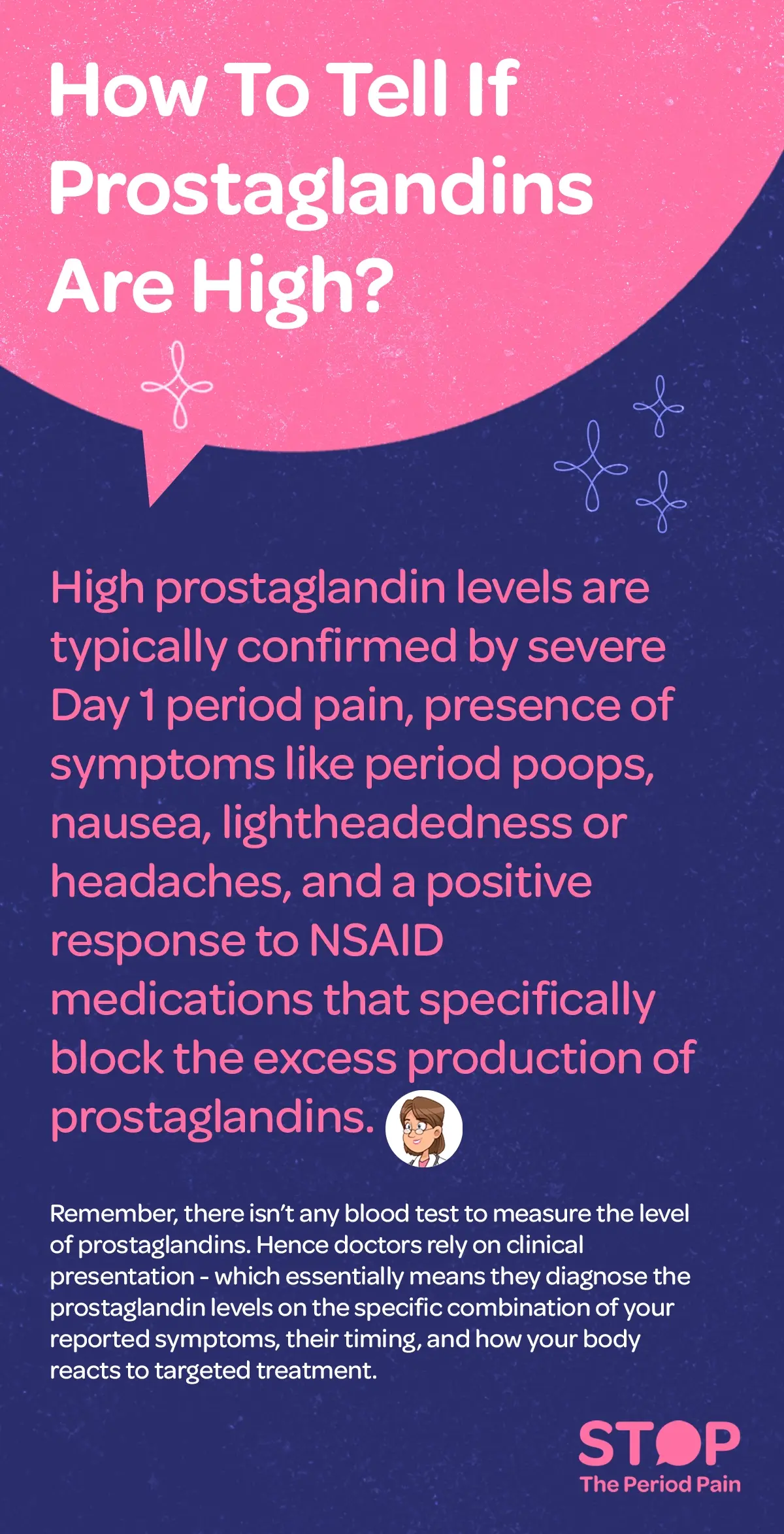
A text-based informational graphic titled “How to tell if prostaglandins are high?” explains that elevated prostaglandin levels during menstruation are typically indicated by severe pain on the first day of a period, along with symptoms such as frequent bowel movements (“period poops”), nausea, lightheadedness, and headaches, and that a noticeable improvement when taking NSAID medications—which block prostaglandin production—can also signal higher levels; it further clarifies that there is no blood test to measure prostaglandins, so doctors rely on clinical presentation, meaning they assess the combination of reported symptoms, their timing, and the body’s response to targeted treatment to make a diagnosis, and the overall design is simple and text-focused with no imagery, emphasizing educational health information, naturally incorporating high-intent keywords such as severe period pain relief, menstrual cramps causes, high prostaglandins symptoms, painful periods treatment, period pain first day, NSAIDs for cramps, menstrual health symptoms, and how to reduce period pain. The graphic ends with the campaign message "STOP The Period Pain." Which is a knowledge initiative campaign by Blue Cross Laboratories the makers of meftal spas.

Your Journey to #StopThePeriodPain Starts Here

Every month, millions of Indian girls & women suffer in silence, told that their severe period pain (dysmenorrhea) is “normal.” Our mission is to break that silence. #StopThePeriodPain campaign is here to empower you with 3 simple truths:

Period Pain Calculator Section

Hit Up Our Period Pain Calculator

For real, how bad is your pain? Our interactive tool uses a 1-10 pain scale and a few quick questions to help you get the full picture. In just a few clicks, you’ll know if your pain is a chill or a major red flag.

Don’t Take Period Pain Lightly.

Period pain (dysmenorrhea) is a real medical issue.
Visit a gynaecologist and #StopThePeriodPain

Don't take period pain lightly